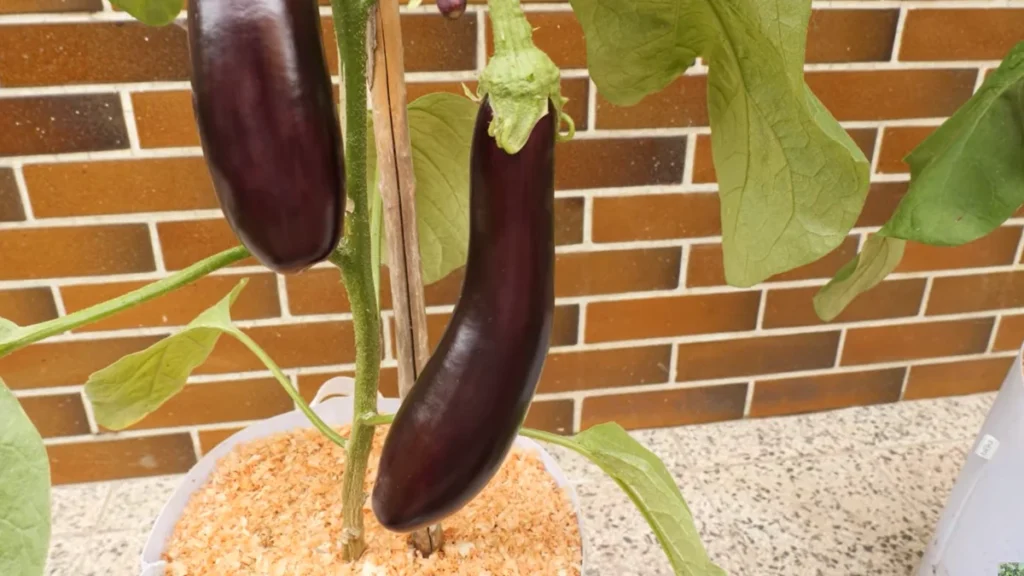
Growing eggplants in containers can feel uncertain on a balcony. The plants often look strong at first, with large leaves and steady growth, but fruiting can be unpredictable. Some balconies seem to support them easily, while others struggle even with similar care. This leaves many balcony gardeners wondering whether eggplants are truly suited to container growing in small spaces. So, do eggplants grow well in containers?
Eggplants can grow well in containers on a balcony when there is enough direct sunlight, stable warmth, and sufficient root space. However, on balconies, growth often depends less on the plant itself and more on how heat, wind, and container limits affect flowering and fruit development.
This question comes up often because eggplants behave differently from smaller balcony vegetables. They are more sensitive to environmental shifts, especially temperature and airflow. What works in a backyard garden does not always translate directly to a balcony setup.
This article explains why eggplants sometimes thrive in containers and sometimes struggle, and what conditions make the biggest difference on a balcony.
Table of Contents
Balcony Reality Check
Balconies create a very different growing environment compared to open gardens. Sunlight is not just about hours — it comes in angles, reflections, and sometimes intense bursts from nearby walls or glass. Eggplants respond strongly to these subtle differences.
Wind is another hidden factor. Even a gentle but constant breeze between buildings can interfere with pollination and stress the plant. Unlike leafy greens, eggplants rely on stable conditions to move from flowering to fruiting.
Container space also plays a major role. Eggplants develop deeper and more demanding root systems than many common balcony plants. In limited soil, their growth may appear healthy above the surface while quietly struggling below.
Weight limits, pot size, and heat retention all combine to shape how well eggplants perform. These are not problems — just conditions that need to be understood.
What Most Advice Misses
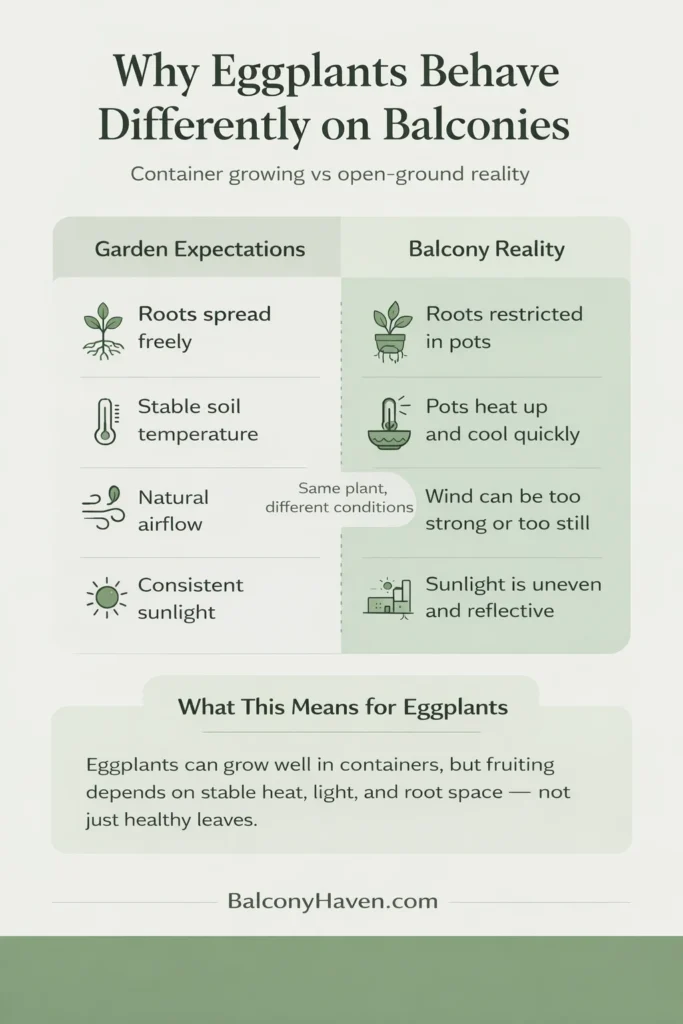
Most gardening advice assumes open ground conditions, where roots can spread freely and temperature changes are gradual. In that setting, eggplants are often described as easy warm-season crops.
On a balcony, however, containers heat up faster, dry out unevenly, and restrict root expansion. This changes how the plant allocates energy. Instead of focusing on fruiting, it may prioritise survival and leaf growth.
Another assumption is that “full sun” is always beneficial. On balconies, full sun can sometimes mean reflected heat that stresses the plant rather than supporting it. This is especially noticeable in darker pots or enclosed spaces.
The result is confusion — the plant looks healthy, but fruiting is delayed or inconsistent.
How Container Size Shapes Eggplant Growth
Eggplants respond strongly to root space, more than many other balcony vegetables. In smaller containers, they tend to grow leaves quickly but hesitate to produce fruit.
This happens because the plant senses limited resources below the soil. Instead of committing energy to fruiting, it maintains steady vegetative growth.
On balconies, this effect is more noticeable due to heat fluctuations. Smaller pots heat up and cool down faster, creating an unstable root environment. This can interrupt flowering cycles without obvious signs on the leaves.
This is similar to what happens with tomatoes in restricted containers, where root space directly influences fruit production. If you’ve seen how container size affects yields in Best Pot Size for Balcony Tomatoes, the same principle applies here, often even more strongly.
Sunlight Quality Matters More Than Duration
Eggplants are often described as sun-loving plants, but on balconies, the type of sunlight matters as much as the number of hours.
Morning sun tends to be steady and gentle, allowing the plant to build energy gradually. Afternoon sun, especially when reflected off surfaces, can create sudden heat spikes that stress flowers and reduce fruit set.
This is why some balconies with fewer sunlight hours still produce better results than those with longer but harsher exposure.
Understanding how your balcony receives light is more useful than simply counting hours. If sunlight patterns are unclear, observing shadows and light movement — similar to what is discussed in How to Measure Sunlight on a Balcony — can reveal why eggplants behave differently in the same building.
| Factor | What Happens | What It Means |
|---|---|---|
| Small container | Fast leaf growth, weak fruiting | Roots feel limited |
| Harsh afternoon sun | Flower stress or drop | Heat is too intense |
| Gentle morning sun | Steady growth and flowering | Balanced energy |
| Strong wind | Flower drop | Pollination disrupted |
| Stable warmth | Better fruit set | Consistent conditions |
Wind and Pollination on Balconies
Eggplants rely on pollination to produce fruit, but they are not heavily dependent on insects. Instead, gentle movement helps release pollen within the flowers.
On balconies, wind can either help or disrupt this process.
- Light airflow can assist pollination
- Strong or constant wind can shake flowers excessively
- Enclosed balconies may reduce natural movement
When wind is too strong, flowers may drop before fruit develops. When there is too little movement, pollination may be incomplete.
This balance is often overlooked, but it explains why two similar balconies can produce very different results.
Heat Retention in Containers
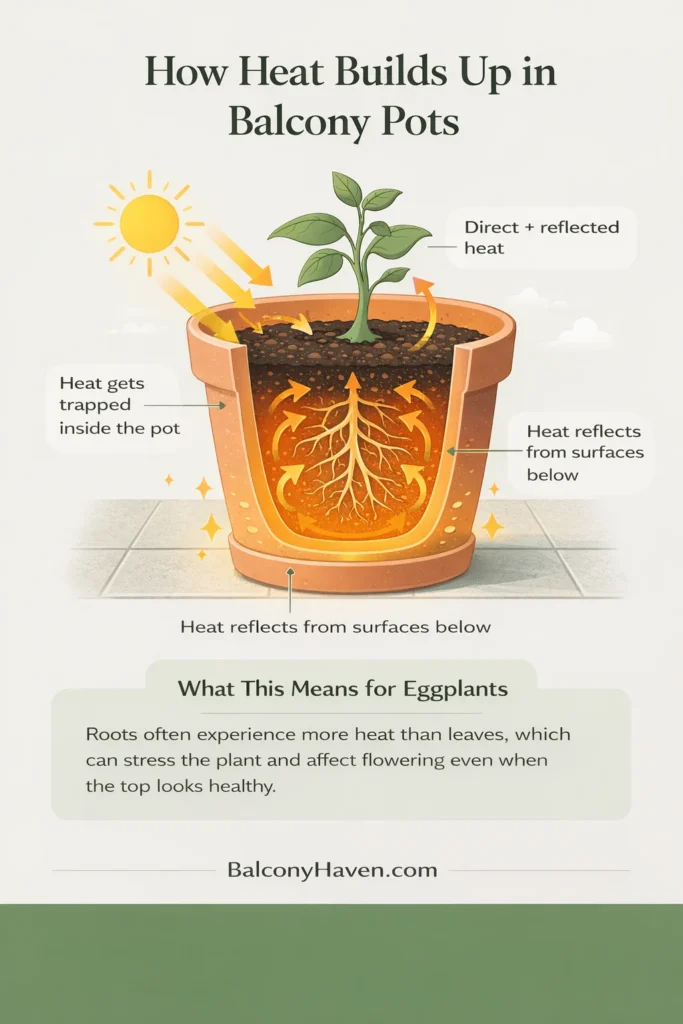
Containers absorb and release heat differently depending on their material and placement. Eggplants prefer warm conditions, but consistent warmth is more important than extreme heat.
On balconies, pots can overheat during the day and cool quickly at night. This creates a cycle that affects flowering and fruit development.
Dark-coloured pots, concrete floors, and enclosed spaces tend to increase heat buildup. While this may seem beneficial, it can push the plant beyond its comfort range.
This effect is closely related to what happens in Overheating Balcony Pots in Summer, where root temperature becomes a limiting factor rather than sunlight itself.
Practical Insights
Eggplants can adapt well to container growing, but only when the balcony environment supports steady conditions.
- Larger containers tend to support more consistent fruiting
- Gentle, stable sunlight often works better than intense exposure
- Moderate airflow supports pollination without stressing flowers
- Heat balance matters more than maximum warmth
- Root stability influences flowering more than visible growth
Common Misunderstandings
Eggplants in containers are often misunderstood because they appear healthy even when conditions are not ideal for fruiting.
- “If the plant looks healthy, fruit will come” — not always true
- “More sun always improves growth” — excessive heat can reduce fruiting
- “Any large pot is enough” — root stability matters more than size alone
- “Wind is always helpful” — strong wind can reduce flower retention
- “Balcony vegetables behave like garden plants” — conditions are fundamentally different
Local & Seasonal Context
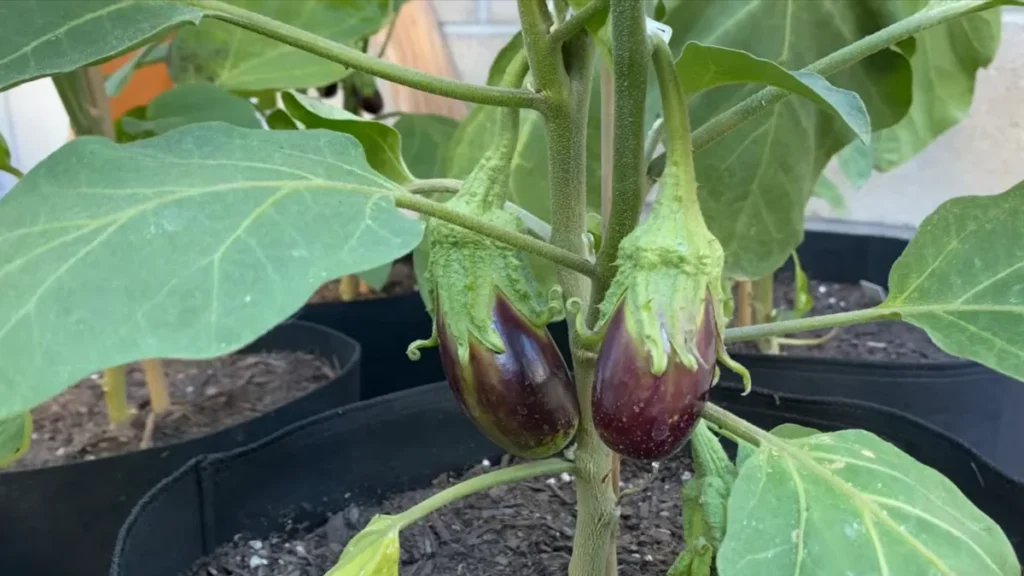
In many parts of Australia, balconies can experience strong seasonal contrasts. Summer heat can be intense, especially on west-facing balconies, while cooler months may slow growth even when sunlight is available.
Eggplants tend to perform best during stable warm periods, where temperature does not swing dramatically between day and night. Coastal areas may introduce additional wind exposure, while inner-city balconies often deal with reflected heat.
These local conditions shape how well eggplants adapt to container growing, sometimes more than care or effort.
Balcony Haven Note
I’ve noticed that eggplants on balconies can look incredibly healthy for weeks without producing a single fruit, and it often feels confusing at first. On one balcony, they thrived with steady sun and minimal wind, while on another, they stayed leafy despite similar care. It reminds me of how unpredictable fruiting can be in small spaces, similar to what happens in Why Are My Balcony Plants Growing but Not Producing Fruits?, where growth doesn’t always lead to harvest.
FAQ
Do eggplants need deep pots on a balcony?
They tend to perform better when roots have stable space to grow. Shallow containers can support early growth, but deeper soil often leads to more consistent fruiting.
Can eggplants grow with partial sunlight?
They can grow with moderate sunlight, but fruiting may be slower or less reliable if light is limited or inconsistent.
Why are my eggplant flowers dropping?
This often happens due to temperature fluctuations, strong wind, or incomplete pollination. The plant may appear healthy while struggling to maintain flowers.
Are eggplants harder than tomatoes in containers?
In many balcony conditions, they can be slightly more sensitive because they rely heavily on stable warmth and root conditions.
Final Thoughts
Eggplants can grow well in containers on a balcony, but success depends on how stable the environment feels to the plant rather than how much effort is applied. Small shifts in sunlight, wind, and container conditions can quietly influence whether the plant focuses on leaves or fruit.
What often looks like inconsistency is simply the plant responding to its surroundings. Once those conditions become more balanced, eggplants tend to settle into a steady growth pattern.
Every balcony behaves differently, but understanding these patterns makes it much easier to see why eggplants sometimes thrive — and sometimes just grow.
Happy Balcony Gardening!
Leave a Reply