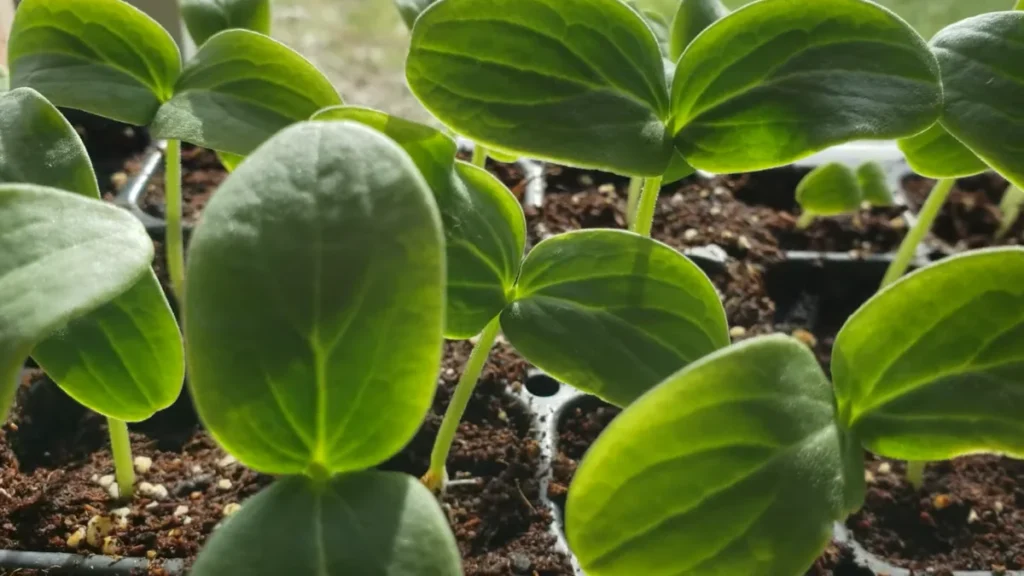
Seedlings often look healthy indoors, but once they are moved to a balcony, they can suddenly wilt, stop growing, or even die within just a few days. This can feel confusing because nothing seems to have changed — except the location. So why do seedlings die after moving to a balcony?
In most cases, it’s because they are suddenly exposed to stronger sunlight, wind, and faster soil drying than they were used to indoors. This rapid change creates stress, especially when leaves lose moisture faster than roots can absorb it.
Moving seedlings gradually—starting with shade, reducing wind exposure, and slowly increasing light—helps them adjust and survive.
This guide explains what’s really happening during that transition and how to move seedlings safely without losing them. Instead of general gardening advice, we’ll focus specifically on how balcony conditions affect young plants and what you can do to make the transition easier.
Table of Contents
Balcony-Specific Constraints
Balconies are not just “small gardens.” They behave very differently from both indoor spaces and ground soil.
Wind moves freely and continuously, even when it feels calm. Sunlight can become more intense because it reflects off walls, glass, and flooring. At the same time, containers heat up much faster than garden beds, which directly affects the roots.
Space also limits how much soil you can use. Smaller pots dry out quickly, but they can also trap water at the bottom if drainage is restricted. If you want to understand how drainage affects root health, see Drainage Tips for Small Balcony Containers .
Because of these combined factors, seedlings are not simply “weak.” They are just unprepared for how fast balcony conditions change.
What Actually Happens When You Move Seedlings Outside
Seedlings grow best in stable environments. Indoors, temperature, airflow, and light remain fairly consistent. This allows them to develop soft leaves and delicate root systems.
When they are moved to a balcony, the change is immediate. Sunlight becomes stronger, airflow increases, and moisture disappears faster from both leaves and soil. The plant cannot adjust instantly, so it begins to lose balance between water intake and water loss.
This is why seedlings often wilt even when the soil is still moist. It is not always a watering issue — it is a sudden environmental shock.
How to Move Seedlings to a Balcony Safely
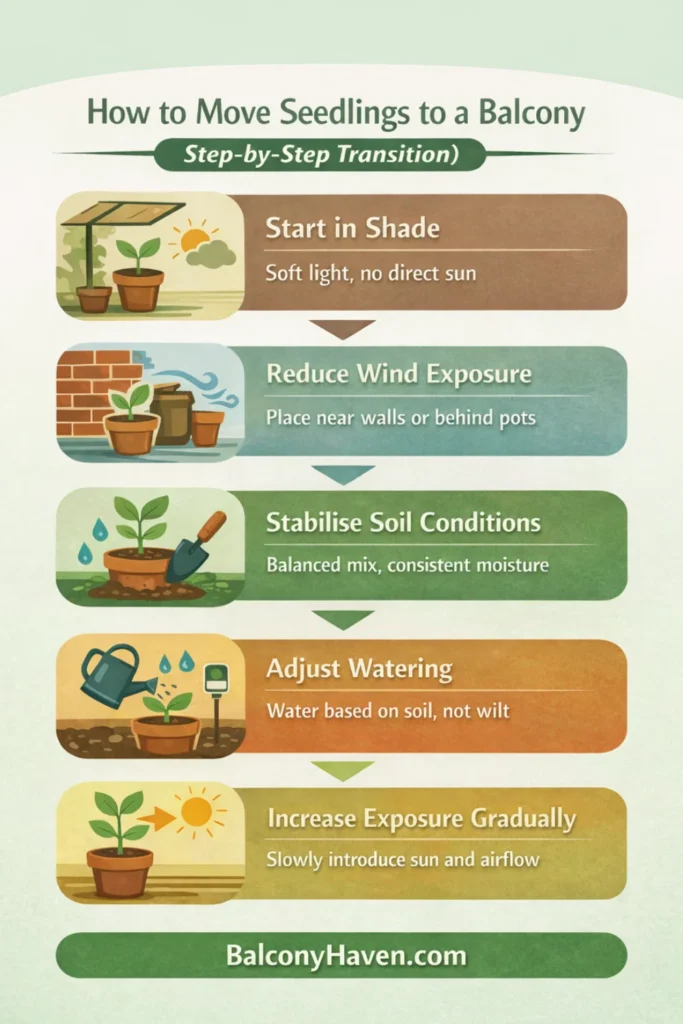
Start With Gentle Light, Not Direct Sun
The biggest mistake is placing seedlings straight into full sun. Indoor-grown plants are not used to direct exposure, so their leaves can burn quickly.
A better approach is to begin in shaded or partially shaded areas. Corners of the balcony or spots near walls usually provide softer light. If you are unsure how much sunlight your space receives, measuring it first can help — see How to Measure Sunlight on a Balcony .
Reduce Wind Exposure in the Beginning
Wind stress is often overlooked, but it plays a major role in why seedlings fail. Even light airflow pulls moisture from leaves faster than roots can replace it.
Instead of placing seedlings in open areas, start them in protected spots. Positions near walls, behind larger pots, or slightly tucked into corners can reduce exposure. Over time, you can slowly move them into more open areas once they become stronger.
Keep the Soil Environment Stable
On a balcony, soil does not behave the same way as in a garden. It can dry out quickly during the day but remain damp deeper in the pot. This creates an unstable environment for roots.
A well-balanced soil mix helps maintain consistency. If the mix is too dense, water stays trapped. If it is too light, it dries too quickly. A structured mix designed for containers works best, as explained in Best Soil Mix for Balcony Herb Gardens .
Adjust Watering Without Overcorrecting
It is natural to water more when seedlings start wilting. However, this can make things worse.
The leaves may be losing moisture due to wind and sun, while the roots are still adjusting and not absorbing water efficiently. Overwatering during this stage can stress the roots further.
Instead, water based on the soil condition rather than the appearance of the leaves. Allow the top layer to dry slightly before watering again, and avoid keeping the soil constantly wet.
Increase Exposure Gradually
As seedlings begin to adjust, their leaves become slightly thicker and more resilient. This is a sign that they are adapting.
At this stage, you can slowly increase their exposure to sunlight and airflow. Move them step by step rather than all at once. This gradual adjustment helps them develop strength without being overwhelmed.
Options & Variations Based on Balcony Type
Not all balconies behave the same way, so the transition process may need small adjustments.
On smaller balconies, heat tends to build up faster, which means seedlings may need longer time in shaded areas before moving into brighter spots. On windy balconies, protection becomes more important than light at the beginning.
Balconies with strong afternoon sun often require slower transitions compared to those with gentle morning light. Meanwhile, shaded balconies are easier for seedlings to adjust to, but growth may take longer due to lower light levels.
Practical Tips
A few small adjustments can make the transition much smoother and reduce plant stress.
- Move seedlings outside in the morning rather than midday
- Avoid transplanting and moving outdoors on the same day
- Use slightly larger pots to slow down soil drying
- Group plants together to reduce wind exposure
- Keep positions consistent instead of moving pots frequently
Common Mistakes
Seedlings often fail because of simple but common habits.
- Placing them directly into full sun too early
- Ignoring the effect of wind on moisture loss
- Watering too frequently during the adjustment phase
- Using very small containers that dry too quickly
- Changing their position too often
Timing and Seasonal Context
The time of year can affect how well seedlings adapt to balcony conditions.
During hot periods, sunlight is stronger and soil dries faster, which makes the transition more stressful. In cooler conditions, growth slows down, which can delay adaptation but also reduce stress.
In most cases, mild weather provides the best balance, allowing seedlings to adjust without extreme pressure from heat or cold.
Balcony Haven Note
From my experience, seedlings don’t really “die” because balconies are too harsh — they struggle because the change happens too fast.
I’ve found that when the transition is slowed down, even delicate seedlings can adapt and grow stronger than expected. It’s less about perfect conditions and more about giving plants time to catch up with their new environment.
FAQ
Why do seedlings wilt even when the soil is wet?
This usually happens because leaves are losing moisture faster than roots can absorb it. Wind and sunlight increase this effect, especially on balconies.
How long does it take for seedlings to adjust?
Most seedlings begin adjusting within a few days, but full adaptation can take one to two weeks depending on conditions.
Should I keep seedlings in full shade at first?
Partial shade is usually best at the beginning. Full shade can slow growth too much, while full sun can overwhelm them.
Can seedlings recover after wilting?
In many cases, yes. If the roots are still healthy, seedlings can recover once conditions become more stable.
Is morning or evening better for moving seedlings?
Morning is usually better, as it allows plants to adjust gradually before the strongest sunlight of the day.
Final Thoughts
Seedlings dying after moving to a balcony is rarely about doing something wrong — it’s usually about moving too fast between two very different environments.
Indoors, everything is stable and predictable. On a balcony, light, wind, and temperature can change within hours. When seedlings are given time to adjust step by step, they don’t just survive — they develop stronger leaves, better root balance, and become more resilient overall.
If there’s one thing to remember, it’s this: treat the move as a transition, not a relocation. Slowing down the process, even by a few days, can make a big difference in how well your plants adapt.
Balcony gardening becomes much easier once you start reading how your plants respond. Small signs like slight drooping, leaf texture changes, or faster drying soil are not failures — they are feedback. And the more you notice these early, the more confident and successful your growing becomes.
Leave a Reply