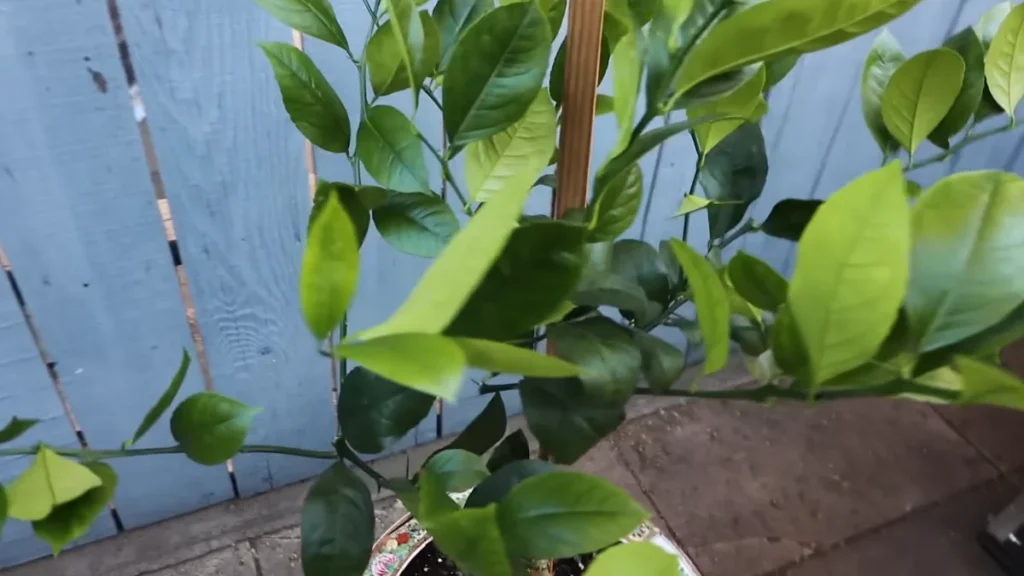
Can Lemon Trees Grow in Small Balcony Pots?
Growing fruit trees on a balcony sounds unrealistic at first. Lemon trees feel like something meant for backyards, open soil, and lots of space — not apartment living with weight limits and narrow corners.
Lemon trees can grow successfully in small balcony pots when the container provides enough root space, drainage is reliable, and the balcony receives sufficient sunlight. Dwarf lemon varieties are especially well suited to pots and can remain productive without being planted in the ground.
When lemon trees struggle on balconies, it’s usually not because of the plant itself. Issues tend to come from pots that are too small, inconsistent watering, or balconies that don’t get enough light during the day.
This article explains what actually matters when growing lemon trees in small balcony pots, what to expect realistically, and how to work with apartment conditions rather than against them.
Table of Contents
Understanding the Balcony Reality
Balconies create a very different growing environment compared to backyards. Space is limited, containers dry out faster, and weight restrictions often affect pot choice. Wind exposure and reflected heat from walls can also stress plants more than expected.
Lemon trees can adapt well to containers, but they still rely on stable conditions. Roots need room to grow, soil needs to drain freely, and the tree must receive enough direct sun to support flowering and fruiting. Without these basics, growth slows and fruit production becomes unreliable.
Balcony success comes from matching the plant to the space, not trying to force a full-sized tree into unsuitable conditions.
What Size Pot Works for Lemon Trees on a Balcony?
Small Pots (What to Expect)
Lemon trees can survive in small pots, but growth will be limited. In containers under 25 litres, the tree may stay alive but struggle to hold fruit long-term. Roots become crowded quickly, which affects water uptake and nutrient flow.
Small pots also dry out faster, increasing the risk of stress during hot weather. These containers are better suited for very young trees or short-term growing rather than long-term fruiting.
Recommended Pot Size for Small Balconies
For most small balconies, a pot between 30 and 40 litres offers the best balance. This size provides enough depth for roots while remaining manageable in weight and footprint.
At this size, lemon trees are more stable, watering is less frequent, and fruit development is more consistent. Most dwarf lemon varieties perform well in this range without overwhelming the space.
Larger Pots (If Space Allows)
If your balcony can safely support it, larger containers allow even better root development and moisture retention. Trees in larger pots are more forgiving if watering is slightly delayed and tend to handle heat more easily.
That said, larger pots are not essential for success. Many balcony-grown lemon trees fruit reliably in moderate-sized containers.
Lemon Varieties That Grow Well in Balcony Pots
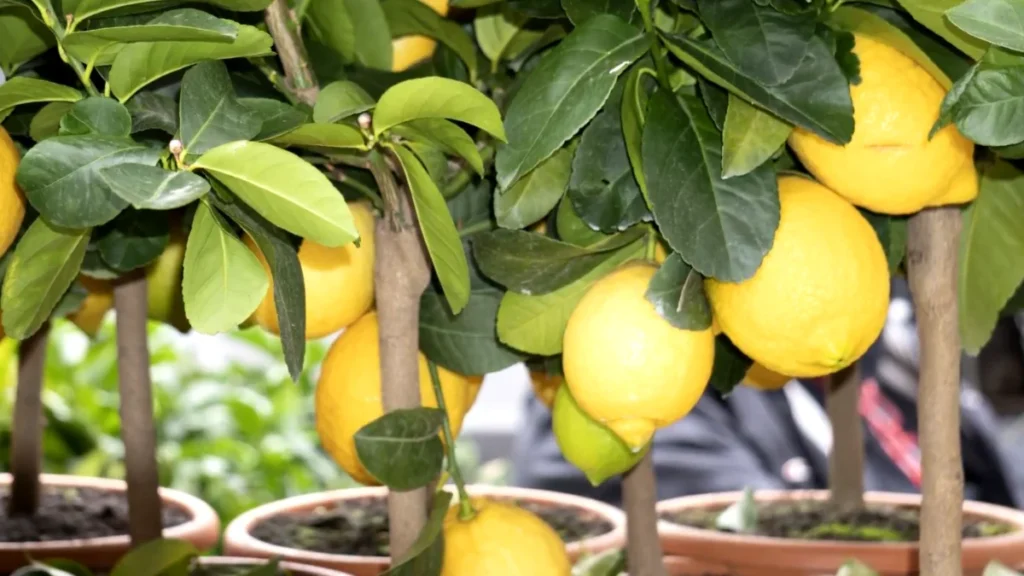
Not all lemon trees are suitable for container growing. Some varieties naturally stay compact and adapt better to restricted root space, making them far more reliable on balconies.
Dwarf lemon varieties are the safest choice for pots. They are bred to grow slower, stay smaller, and produce fruit without needing deep ground soil. These varieties also respond better to pruning and tend to handle container life with less stress.
Common lemon varieties that perform well in pots include:
- Dwarf Meyer lemon – Known for its compact size, reliable fruiting, and tolerance of container conditions
- Dwarf Eureka lemon – A productive option that adapts well to pots when given enough sun
- Dwarf Lisbon lemon – More vigorous, but manageable in larger balcony containers
- Improved dwarf lemon hybrids – Often bred specifically for patios and courtyards
Standard (full-sized) lemon trees are generally not suitable for small balcony pots. They grow faster, require much larger root systems, and are harder to keep stable in containers over time.
Choosing a variety designed for pots reduces stress on the tree and makes balcony growing more predictable and manageable.
Do Lemon Trees Prefer Deep or Wide Pots?
Lemon trees benefit more from depth than width. Their roots grow downward as much as outward, and deeper pots help stabilise moisture and temperature around the root zone.
Shallow pots dry out quickly and increase stress during warm weather. A deeper container allows the tree to remain more consistent between watering cycles, which supports healthier leaves and fruit retention.
Can Lemon Trees Grow in Plastic Pots?
Plastic pots work well for balcony lemon trees, especially in apartments where weight matters. They are lighter than ceramic or concrete and easier to move when needed.
What matters most is drainage. Plastic containers must have sufficient drainage holes to prevent water from sitting around the roots. Without proper drainage, root problems can develop regardless of pot material.
Practical Tips for Growing Lemon Trees in Small Balcony Pots
Growing lemons in containers is more about balance than perfection.
- Choose a dwarf lemon variety suited to container growing
- Use a free-draining potting mix designed for citrus
- Place the pot where it receives as much direct sun as possible
- Water deeply but allow excess water to drain freely
- Rotate the pot occasionally to balance sun exposure
Small, steady adjustments usually work better than frequent changes.
Common Mistakes Balcony Growers Make
Even experienced gardeners run into issues when growing citrus on balconies.
- Using pots that are too small for long-term growth
- Allowing water to sit in saucers beneath the pot
- Placing the tree in low-light areas
- Overwatering to compensate for leaf drop
- Expecting heavy fruiting too early
Most problems improve once container size, light, and drainage are addressed.
Australian Balcony Conditions and Lemon Trees
In Australia, balconies often experience strong sunlight combined with heat reflected from walls and concrete. This can dry pots faster than expected, especially in summer.
Lemon trees handle warmth well, but sudden drying stresses roots. Using mulch on top of the soil and choosing light-coloured pots can help moderate temperature swings. Wind protection is also important in higher apartments where airflow is stronger.
Balcony Haven Note
On my own balcony, I don’t grow lemon trees, but I’ve noticed that container size and sunlight make a noticeable difference for everything I do grow. Plants seem far more affected by space and exposure than by trying to follow exact techniques. This tends to vary from one balcony to another depending on layout and conditions.
If you’re growing lemon trees in small balcony pots, drainage often matters just as much as pot size. Poor drainage can lead to waterlogged soil, stressed roots, and slow growth — even when everything else seems right.
Drainage tips for small balcony containers explains how drainage works in apartment settings, why some pots struggle more than others, and how small adjustments can improve water flow without changing your entire setup.
Frequently Asked Questions
Which lemon tree is best for a small balcony?
Dwarf lemon varieties are the best option for balconies. They are bred to stay compact, adapt well to containers, and produce fruit without needing large root systems.
Is it better to overwater or underwater a lemon tree?
Lemon trees cope better with slight dryness than constant wet soil. Overwatering is a common cause of stress in container-grown citrus, especially when drainage is poor.
Can lemon trees produce fruit in small pots?
Yes, lemon trees can fruit in small balcony pots, particularly dwarf varieties. Fruit numbers may be lower than ground-grown trees, but healthy growth and harvests are still achievable.
How much sun does a balcony lemon tree need?
Lemon trees prefer full sun. Balconies that receive at least 6 hours of direct sunlight give the best chance of flowering and fruiting.
Final Thoughts
Lemon trees can grow successfully in small balcony pots when their basic needs are met. Container size, drainage, and sunlight matter far more than trying to replicate backyard conditions or chasing ideal setups. When these foundations are stable, lemon trees tend to adjust well to container life.
Balcony gardening is less about doing everything perfectly and more about working within real limits. Small balconies naturally shape how plants grow, how quickly soil dries, and how much light reaches the leaves. Paying attention to these patterns often leads to better results than constant changes or upgrades.
With a suitable pot, consistent light, and good drainage, growing a lemon tree on a balcony becomes a realistic and manageable project. Progress usually comes gradually, and even modest success can be surprisingly rewarding in an apartment setting.
Happy Balcony Gardening!
Leave a Reply