Organising plants in a small balcony sounds simple, until you actually try to do it. Once pots are placed, moved, watered, and shuffled around a few times, the balcony can start to feel cluttered rather than calming. Unlike garden beds, balconies don’t forgive messy layouts — every pot affects light, airflow, weight, and access. So, how to organise plants in a small balcony?
The best way to organise plants in a small balcony is to group them by how they behave — such as water needs, heat tolerance, and airflow — while using vertical space carefully and keeping clear walking areas. This approach keeps plants healthier and makes the balcony feel open rather than crowded.
This guide will help you organise plants in a small balcony in a way that supports plant health and daily use, not just looks. You’ll learn how to group plants by behaviour, how to use vertical space without blocking airflow, and how to create a layout that still feels open and easy to maintain. This isn’t about styling tricks or expensive shelving systems — it’s about making smart, realistic choices for apartment living.
Table of Contents
Balcony-Specific Constraints That Shape Plant Organisation
Balcony plant organisation isn’t the same as arranging plants in a backyard or patio. Space is limited, weight matters, and the environment is more extreme. Wind funnels between buildings, sun hits at sharp angles, and water has to drain carefully.
Most small balconies also need to stay usable. You still need room to step outside, water plants safely, and move pots when seasons change. Organising plants too tightly or too high can quickly cause problems like blocked airflow, uneven drying, and accidental water spills.
These constraints are why plant organisation on balconies must be functional first, then visually tidy — not the other way around.
How to Organise Plants in a Small Balcony (Step-by-Step)
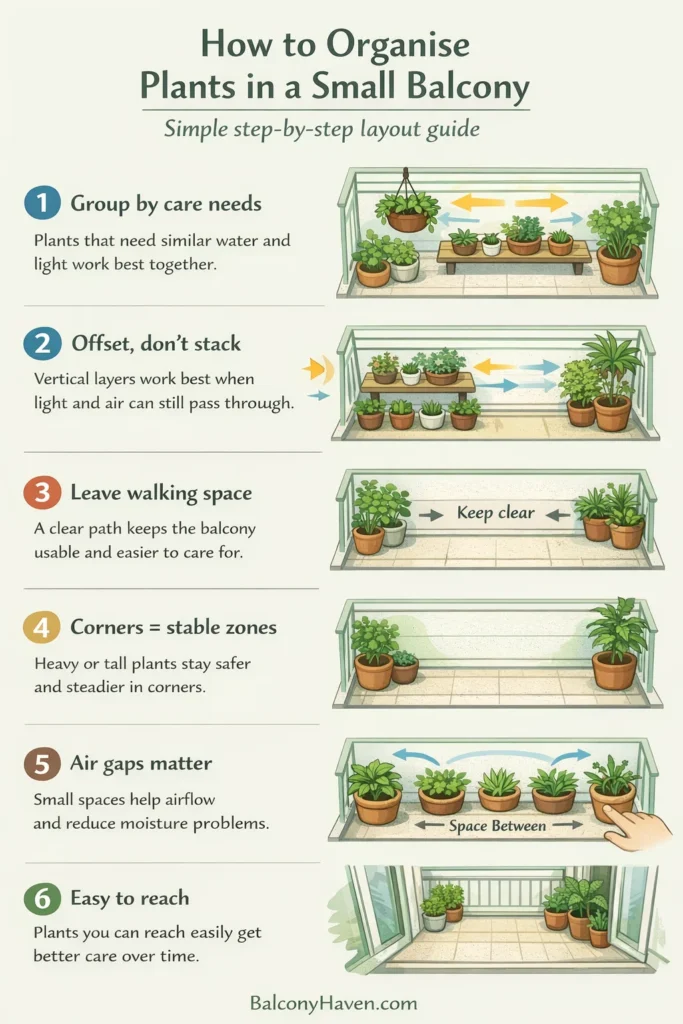
Step 1: Organise Plants by How They Behave, Not by Size
The biggest organising mistake on small balconies is grouping plants only by height or pot size. A better approach is to organise plants by how they behave during the day.
Some plants dry out quickly and need frequent watering. Others hold moisture longer and prefer stable conditions. Some plants tolerate heat and wind, while others wilt easily. When plants with very different needs are placed side by side, care becomes inconsistent.
A more effective method is to group plants into behaviour zones:
- Fast-drying plants (small pots, herbs, leafy greens)
- Slow-drying plants (larger pots, fruiting plants)
- Heat-tolerant plants
- Sensitive plants that dislike wind or harsh sun
This makes watering easier, reduces stress on plants, and helps you spot problems faster.
Step 2: Create Clear Vertical Layers Without Stacking Pots
Vertical space is useful on small balconies, but stacking pots directly above one another often causes shade, dripping water, and poor airflow. Instead of piling upward, think in gentle layers.
Use the balcony floor for heavier, stable pots. Place medium plants on low stands or benches, and reserve higher positions for lightweight planters or hanging baskets. Each layer should still allow light and air to pass through.
If a plant’s leaves are permanently shaded by another pot above it, the layout needs adjusting. Vertical organisation works best when plants are offset, not directly stacked.
Step 3: Keep the Centre Path Clear (This Is Not Optional)
A small balcony feels crowded when the centre becomes blocked. Even if space is tight, keeping a narrow clear path makes the balcony easier to use and visually calmer.
Organise plants along the edges or corners first. Leave enough room to step out, turn, and water without brushing against leaves or knocking pots over. This also helps prevent accidental damage and makes daily care quicker.
A usable balcony encourages consistent plant care — and that matters more than fitting in one extra pot.
Step 4: Use Corners as “Anchor Zones”
Corners are the most stable organising points on a balcony. They receive less foot traffic and often offer some wind protection. Larger or heavier plants belong here.
Use corners for:
- Tall plants that don’t need frequent moving
- Grouped pots that share similar water needs
- Plants that benefit from partial shelter
Once corner zones are set, filling the remaining space becomes much easier and more balanced.
Step 5: Leave Air Gaps Between Pots on Purpose
Plants should never be packed tightly just to save space. Small air gaps between pots help reduce humidity buildup, slow fungal growth, and allow leaves to dry after watering.
Even a few centimetres of space improves airflow. This is especially important on balconies where walls and railings already restrict movement of air.
If pots touch constantly, the layout is too dense.
Step 6: Make Every Plant Easy to Reach
If a plant is hard to reach, it will eventually be neglected. Organise plants so watering, checking leaves, and rotating pots can be done without lifting heavy containers or stretching awkwardly.
Plants that need frequent care should be placed closest to the balcony door. Less demanding plants can sit further out or in corners.
This simple rule quietly improves plant health over time.
Options & Variations for Different Balcony Types
| Balcony situation | How to organise plants | Why this works on balconies |
|---|---|---|
| Very narrow balcony | Place plants along one long side and keep the other side open | Keeps a clear walking path and prevents the space from feeling boxed in |
| Balcony with morning sun | Put sun-loving plants where the light hits first, with shade-tolerant plants behind | Ensures each plant gets the light it needs without competing or blocking others |
| Rental apartment | Use lightweight stands and movable groupings instead of fixed shelving | Makes it easy to adjust layouts as seasons change and avoids permanent fixtures |
Practical Tips That Make a Real Difference
A few small adjustments can dramatically improve how organised your balcony feels:
- Rotate plant positions every few weeks to balance light exposure
- Group pots on trays to visually tidy clusters without crowding
- Keep at least one empty spot for moving plants during heat or storms
- Avoid placing pots directly against walls that trap heat
- Step back occasionally and view the balcony from inside — clutter is easier to spot that way
Common Mistakes That Make Small Balconies Feel Messy
Many balconies feel crowded not because they have too many plants, but because of poor placement:
- Placing tall plants directly in front of shorter ones
- Mixing plants with very different watering needs
- Blocking airflow with solid shelving
- Filling every available floor space
- Forgetting to leave walking room
Avoiding these mistakes often frees up space without removing any plants.
Seasonal Adjustments Matter More Than You Think
Plant organisation isn’t permanent. In warmer months, plants often need more airflow and spacing. During cooler seasons, they can sit slightly closer together.
Be ready to adjust layouts as sun angles change and growth speeds shift. A flexible setup always performs better than a fixed one.
Balcony Haven Note
On my own balcony, organisation only started working once I stopped arranging plants by how they looked and focused on how air moved between them. Leaving small gaps made a bigger difference than adding more shelves.
If spacing and airflow have been tricky on your balcony, Balcony pot spacing for airflow explains how even small adjustments between pots can reduce stress and help plants grow more evenly, especially in tight apartment layouts. Published Articles
Frequently Asked Questions
How many plants is too many for a small balcony?
There’s no fixed number. If airflow is blocked, watering feels rushed, or you can’t move comfortably, it’s too many. A good check is whether you can reach every pot without lifting another one — if not, the layout is likely overcrowded.
Should I group the same plants together?
Grouping by care needs is more important than grouping by plant type. Plants that dry at similar speeds and tolerate the same light conditions are easier to manage when placed together.
Is vertical shelving always a good idea?
Only if it allows light and airflow through. Solid shelves often cause more problems than they solve. Open-frame stands or staggered levels work better than flat, solid tiers that trap heat and moisture.
Do hanging plants help save space?
Yes, when used lightly. Too many can block light and drip water onto plants below. They work best for lightweight plants that don’t need frequent watering or constant checking.
Final Thoughts
Organising plants in a small balcony isn’t about squeezing everything in — it’s about helping plants and people share the space comfortably. A well-organised balcony feels calmer, is easier to care for, and supports healthier growth over time.
Start with behaviour, not appearance. Leave space on purpose. Adjust as seasons change. Small, thoughtful changes almost always work better than big rearrangements.
Your balcony doesn’t need to be perfect — it just needs to work for you.
Happy Balcony Gardening!
Leave a Reply