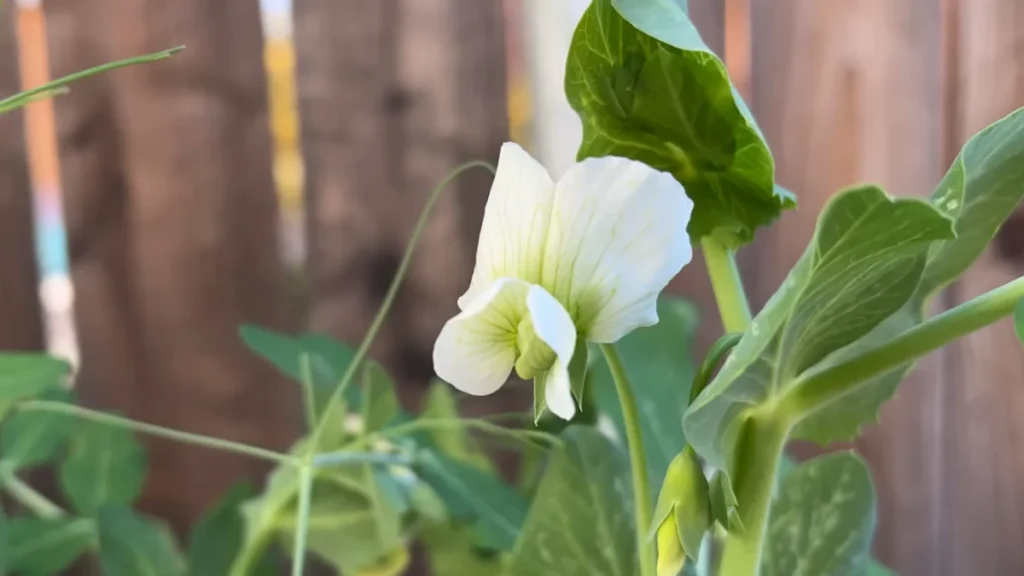
Peas look light and simple. Their vines are thin, their leaves are soft, and they climb instead of spreading like tomatoes. Because of that, many balcony gardeners assume they don’t need much soil underneath. But on a balcony, that assumption can cause problems — so how deep do pots need to be for peas?
In reality, peas grow best in pots that are at least 20–25 cm deep, with 25–30 cm preferred on windy or sunny balconies. While peas don’t have extremely deep roots, they still need enough soil depth to keep moisture and temperature stable — especially once they begin climbing.
On balconies, pot depth isn’t really about giving roots “room to stretch.” It’s about protecting them from heat, wind, and sudden drying. Peas don’t fail because they run out of space — they fail because their root environment becomes unstable.
Table of Contents
Why Pot Depth Is Different on a Balcony
Garden advice often says peas grow well in around 20 cm of soil. That advice isn’t wrong — but it assumes ground-level stability.
Balconies change everything.
Containers heat up from the sides. Wind pulls moisture out faster than expected. Drainage must be controlled so water doesn’t drip below (especially if you’ve dealt with this in How to Stop Water Dripping on Lower Balconies). Even lightweight pots can shift slightly in strong wind, loosening the root zone.
When soil conditions fluctuate too much, pea plants respond quickly. Leaves pale, growth slows, and flowering becomes inconsistent. You may have seen similar stress patterns explained in Why Are My Plants Losing Their Colour? — roots react first, leaves show it later.
That’s why choosing the right depth on a balcony is less about “bigger is better” and more about creating a steady underground climate.
So, How Deep Do Pots Need to Be for Peas?
A Simple Depth Comparison Table
| Balcony Condition | Minimum Depth | Ideal Depth |
|---|---|---|
| Sheltered balcony | 20 cm | 25 cm |
| Windy balcony | 25 cm | 30 cm |
| Hot / west-facing | 25 cm | 30 cm |
| Tall climbing peas | 25 cm | 30+ cm |
For most balcony setups, peas grow best in containers that are at least 20–25 cm deep.
If your balcony is windy, west-facing, or exposed to strong afternoon sun, aiming closer to 25–30 cm gives better results.
That extra depth does three quiet but important things:
- It buffers temperature swings
- It slows down surface drying
- It anchors climbing vines more securely
Peas do not have extremely deep taproots like carrots. Instead, they form a moderate central root with spreading side roots. They prefer consistent moisture and cool soil more than unlimited vertical space.
Why Slightly Deeper Pots Often Perform Better
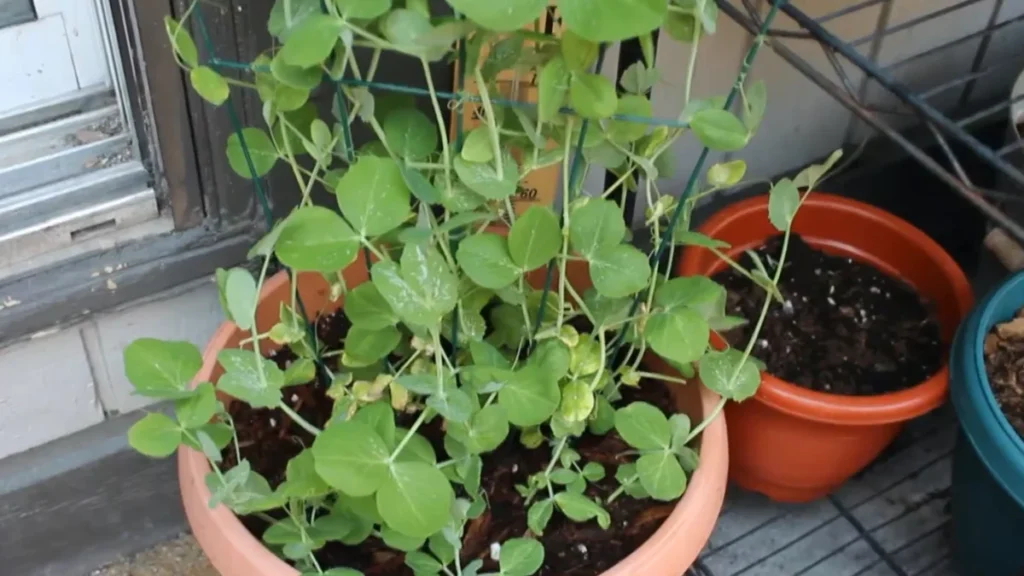
Peas grow upward quickly. Once vines start climbing, the plant’s centre of gravity shifts higher. In shallow containers, this creates instability.
If the soil mass is too thin, several things can happen:
- The pot dries unevenly.
- Roots stop exploring.
- The plant becomes top-heavy.
This is especially noticeable on windy balconies — something many gardeners discover when dealing with plants like chillies in Can Chili Plants Grow on a Windy Balcony?
A slightly deeper container acts like a stabilising base. It holds moisture longer and gives the trellis structure something solid to anchor into.
Depth vs Width: A Common Misunderstanding
Here’s something rarely explained clearly.
A very tall, narrow pot is not automatically better than a medium-depth wide planter.
Pea roots spread sideways once established. A wide 25 cm trough often performs better than a narrow 40 cm cylinder. The horizontal space allows roots to branch naturally instead of compressing vertically.
If you’re comparing container behaviour more broadly, this logic connects closely with Deep vs Shallow Pots for Balcony Veggies — structure and proportion matter more than extreme size.
On balconies, wide rectangular planters usually outperform tall decorative columns for climbing crops like peas.
Adjusting Depth for Your Balcony Type
Not all balconies behave the same way.
A sheltered, east-facing balcony with gentle morning sun can grow peas comfortably in 20–25 cm containers. Soil dries more slowly, and temperature swings are milder.
A high-rise, west-facing balcony exposed to strong afternoon heat behaves differently. In those cases, 25–30 cm depth provides important buffering against overheating. If you’ve struggled with overheating containers before, the patterns discussed in Overheating Balcony Pots in Summer become especially relevant.
The goal is not maximum depth. The goal is consistent root conditions.
Practical Considerations When Choosing the Pot
When selecting a container for peas, depth is only one part of the decision.
Drainage matters. Peas dislike sitting in water, and poor drainage can quickly lead to problems like those explained in Root Rot in Small Balcony Pots.
Container colour also plays a role. Dark plastic pots absorb more heat. On very sunny balconies, this can warm the root zone faster than expected. Lighter-coloured containers help moderate temperature swings.
Trellis placement should be considered before planting. Once peas begin climbing, adjusting supports becomes difficult without disturbing roots.
None of these require complicated systems. They simply require thinking of the pot as part of the plant’s environment — not just a soil holder.
Common Mistakes With Pea Containers
Pea issues on balconies are often subtle at first. Growth seems fine, then stalls halfway through the season.
The most common causes are:
- Using pots under 15 cm deep
- Choosing narrow decorative planters
- Ignoring wind exposure
- Overwatering shallow containers
- Copying backyard spacing rules directly
These mistakes usually show up as slow flowering or thin pods rather than complete plant failure.
Seasonal Timing Matters
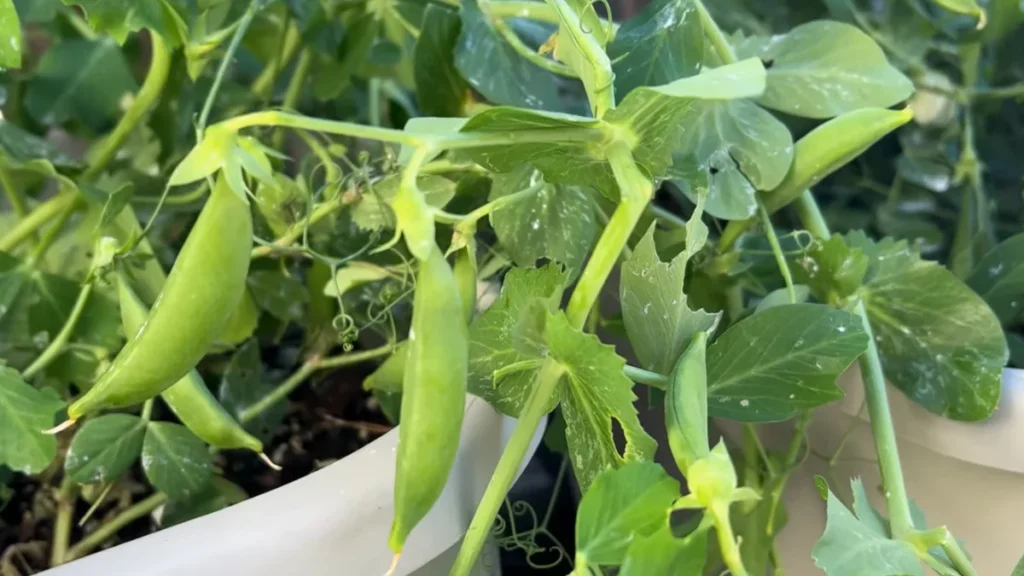
Peas prefer cooler conditions. On most Australian balconies, they perform best in autumn through early winter, or in early spring before strong heat arrives.
If you’re planning a small edible rotation across seasons, this thinking fits well with the ideas in Best edible plants for tiny balconies, where container limits shape what performs reliably.
Depth becomes less critical in cool weather — but in transitional seasons, buffering matters.
Balcony Haven Note
The first time I grew peas on a balcony, I assumed they were easy because they looked delicate. I gave them a shallow planter and a tall trellis, and they climbed beautifully — right up until the first windy week.
What surprised me wasn’t that they stopped growing. It was how quickly they reacted. The vines still looked healthy, but the soil underneath had become unstable and dry. That experience reminded me of the same pattern I later wrote about in Balcony soil drying out too fast — on balconies, the surface can look fine while the root zone is quietly struggling.
That’s when I realised peas aren’t shallow-rooted — they’re shallow-tolerant only when conditions stay steady. And on balconies, steadiness rarely happens by accident.
Frequently Asked Questions
Can peas grow in 15 cm deep pots?
They may sprout and climb initially, but production usually declines once vines mature. Root stability becomes limited.
Do peas need deep pots like tomatoes?
No. Tomatoes require deeper anchoring, as explained in Best Pot Size for Balcony Tomatoes. Peas need moderate depth with good width.
Are grow bags suitable for peas?
Yes, provided they are at least 25 cm deep and wide enough for root spread. Their flexibility can actually help with airflow if managed well, similar to the observations in Using Grow Bags on Balconies.
Final Thoughts
Peas don’t need massive containers. They need steady roots.
On most balconies, 20–25 cm depth is the practical minimum, and 25–30 cm offers extra stability in windy or hot conditions. Choose width over extreme height, and think about how your balcony behaves throughout the day.
When you stop focusing on “how deep can it go?” and start asking “how stable will it stay?” — pea growing becomes far more predictable.
Happy Balcony Gardening!
Leave a Reply