Many balcony gardeners notice it slowly. Water begins sitting on the surface longer, the soil feels heavy instead of fluffy, and small pots become difficult to poke even with a finger. Plants may still look alive for a while, but something underneath starts changing. On balconies, this often happens faster than people expect because containers experience harsher drying, stronger temperature swings, and repeated watering cycles in a much smaller space than a garden bed.
Balcony soil becoming hard and compact is usually caused by repeated drying and shrinking inside containers, combined with limited root space, heat exposure, and fine particles settling downward over time. Unlike ground soil, balcony potting mix cannot naturally loosen itself through worms, deeper moisture movement, or surrounding soil activity. The result is a denser surface that can slowly affect airflow, drainage, and root comfort inside the pot.
What makes this confusing is that many balcony gardeners already use “good quality potting mix” and still experience compacted soil. Advice that works in backyard gardens often assumes deeper soil layers, larger root zones, and more stable temperatures. Balcony containers behave differently because they dry from multiple directions at once — especially from the sides of the pot.
This article explains why balcony pot soil hardens over time, why it happens differently on balconies compared to gardens, and why some containers become compact much faster than others. It also explores the small environmental details that many gardening articles completely overlook.
Table of Contents
Balcony Reality Check
Balconies create unusual soil conditions that are easy to underestimate. Containers are exposed to direct sun, reflected heat from walls and flooring, wind tunnels between buildings, and rapid moisture changes throughout the day. Even a shaded balcony can experience strong drying because elevated spaces often have more moving air than ground gardens.
Small containers make this even more noticeable. In garden beds, moisture spreads sideways and downward through surrounding soil. Balcony pots do not have that buffer. Once the soil repeatedly dries and shrinks inside the container, the particles slowly press closer together each time watering returns.
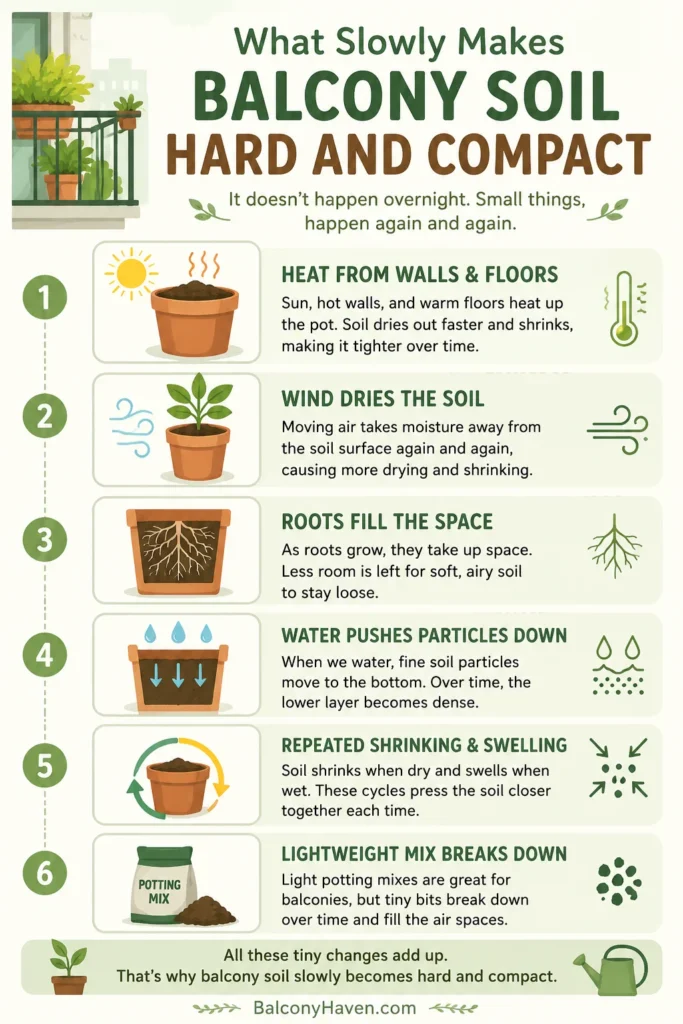
Weight limitations also influence the type of soil people use on balconies. Lightweight mixes are popular because heavy soil becomes difficult to move and may place pressure on apartment structures. But lighter mixes sometimes break down faster over time, especially after months of watering, sun exposure, and root growth.
The pot itself also changes how soil behaves. Dark plastic pots often heat up faster than ceramic containers, while narrow planters can dry unevenly from top to bottom. Articles like Overheating Balcony Pots in Summer and Do Plants Grow Better in Plastic or Ceramic Pots? explore how container materials quietly affect root conditions in ways many gardeners do not initially notice.
What Most Advice Misses
A lot of gardening advice treats compacted soil as a simple watering problem or assumes poor gardening habits are responsible. But on balconies, soil compaction can happen even when someone waters carefully and uses proper potting mix.
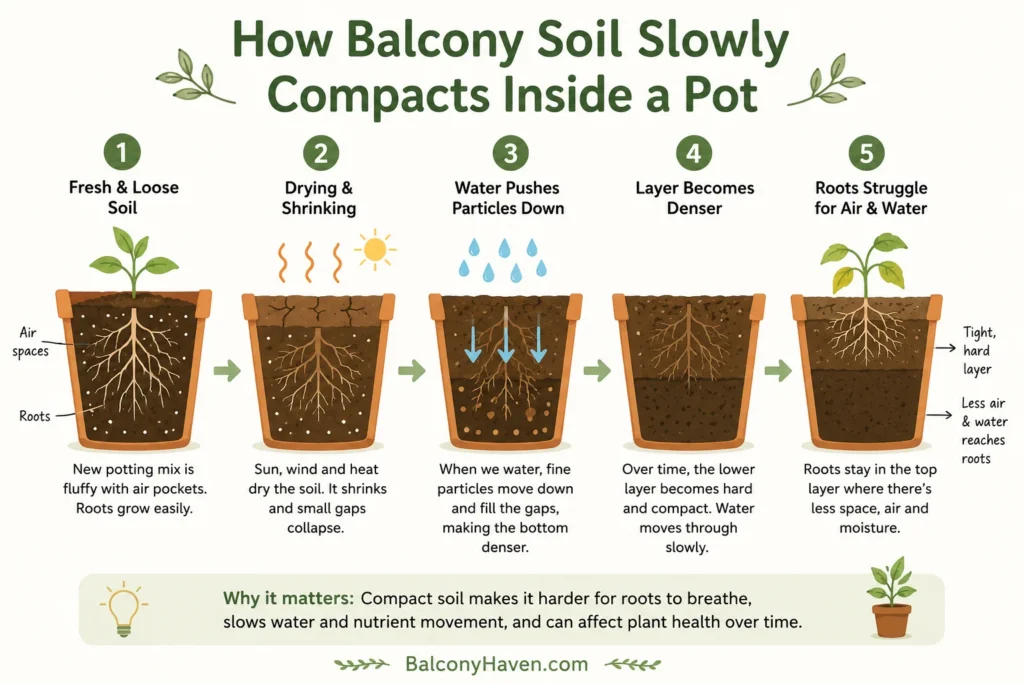
One overlooked issue is repeated shrinking and swelling. Balcony containers often experience fast moisture cycles because they are surrounded by moving air and exposed surfaces. As the soil dries, tiny gaps inside the mix collapse inward. When watered again, the soil expands unevenly instead of fully reopening. Over time, the structure becomes tighter and denser.
Another thing many articles miss is how balconies create “artificial gravity pressure.” In tall containers, watering repeatedly pushes fine particles downward because there is nowhere else for them to spread naturally. In a garden bed, deeper soil layers absorb this pressure differently. In balcony pots, the lower section gradually becomes more compressed.
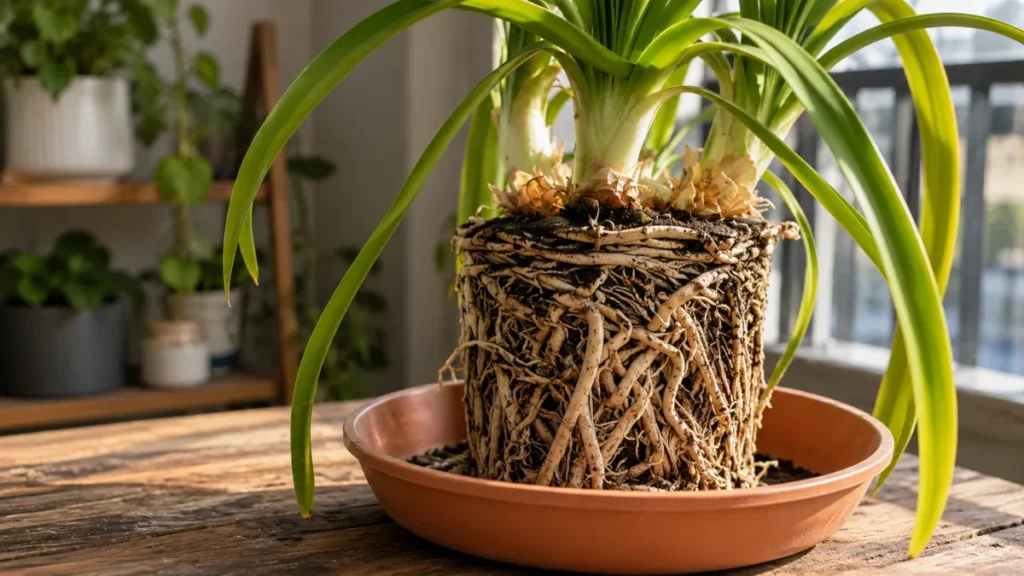
Even roots themselves can contribute. Healthy roots are usually a good sign, but crowded balcony containers sometimes become so root-filled that the remaining soil spaces disappear. This creates a firm, compact feeling even when the plant still appears healthy above the surface.
Why Balcony Soil Becomes Compact in Containers
Small Pots Often Become Compact Faster
Compact soil is especially common in small balcony containers because there is less room for air movement inside the pot. Moisture changes affect the entire container quickly instead of gradually.
Herbs, strawberries, and chillies often show this problem first. Their roots spread densely through small pots, leaving little open space behind. Once watering cycles continue through hot weather, the remaining soil becomes tighter and heavier.
This partly explains why some small pots feel almost “solid” after several months. The soil has not turned bad overnight. It has slowly compressed through repeated drying, root pressure, and particle settling.
This is also why articles like Deep vs Shallow Pots for Balcony Veggies matter more than people realise. Container depth changes how moisture moves and how pressure builds inside the potting mix itself.
Heat Changes Soil Texture More Than People Expect
Heat affects more than leaves. It changes the physical behaviour of balcony soil too.
On exposed balconies, containers can heat from the sides, underneath, and above all at once. Warm soil dries unevenly, especially near the edges of the pot. Some sections shrink harder than others, causing the mix to tighten internally.
This is one reason compacted balcony soil often appears near west-facing walls, metal railings, or concrete flooring that stores afternoon heat. The soil may technically still contain nutrients, but its structure becomes less open and breathable.
Interestingly, some balcony gardeners notice that compacted soil becomes worse in containers placed directly on hot tiles compared with pots raised slightly above the floor. The lower section of the pot remains warmer for longer periods, which speeds up drying and shrinking cycles inside the mix.
The article Balcony Soil Drying Out Too Fast (What Actually Helps) discusses how balcony surfaces themselves can influence soil behaviour much more than expected.
Water Movement Matters More Than Most Realise
Water itself can either worsen or reduce soil compaction depending on how it moves through the container.
Heavy sudden watering sometimes forces fine particles downward, especially in lightweight potting mixes. Over time, this creates dense lower layers inside the pot even if the surface still looks normal.
Meanwhile, extremely dry soil can become resistant to water absorption altogether. Water begins running down the edges of the container instead of soaking evenly through the middle. This creates alternating wet and dry sections that slowly harden differently over time.
Some self-watering containers behave differently because moisture enters more gradually from below rather than collapsing the surface downward repeatedly. This partly explains why certain balcony gardeners notice softer, more stable soil texture in those setups.
Balcony Wind Quietly Contributes Too
Wind is often associated with damaged leaves, but it also affects soil structure.
Moving air increases evaporation from both the soil surface and the container walls. On balconies with constant airflow, the soil repeatedly dries faster than expected even when temperatures seem mild.
This rapid moisture loss creates stronger shrinking cycles inside the potting mix. Over months, these cycles slowly compress the soil structure.
Enclosed balconies sometimes experience less compaction because moisture remains more stable throughout the day. Open balconies with direct airflow often experience harsher drying conditions, especially in upper apartment levels.
Table: Balcony Conditions That Increase Soil Compaction Faster
| Balcony Condition | What Happens to Soil |
|---|---|
| Small pots | Soil compresses faster |
| Hot tiled flooring | Faster drying and shrinking |
| Strong wind exposure | More moisture loss |
| Heavy root systems | Less open soil space |
| Lightweight potting mix | Breaks down faster |
| Afternoon sun balconies | Higher soil temperature |
Practical Insights
Compacted balcony soil usually develops through multiple small environmental pressures rather than one single mistake.
- Small containers compress faster than large ones
- Heat exposure changes how soil particles settle
- Wind increases shrinking and drying cycles
- Root-heavy plants can reduce open soil space
- Lightweight potting mixes may break down faster over time
- Uneven watering patterns sometimes create dense layers inside pots
Common Misunderstandings
Many compacted soil problems become more frustrating because balcony gardening advice is often oversimplified.
- Hard soil does not always mean the potting mix is “bad”
- Healthy-looking plants can still have compacted root zones
- Balcony heat affects soil structure differently from gardens
- Water sitting on top does not always mean overwatering
- Small pots naturally change texture faster than deep containers
- Compact soil can happen even with premium potting mix
Local & Seasonal Context
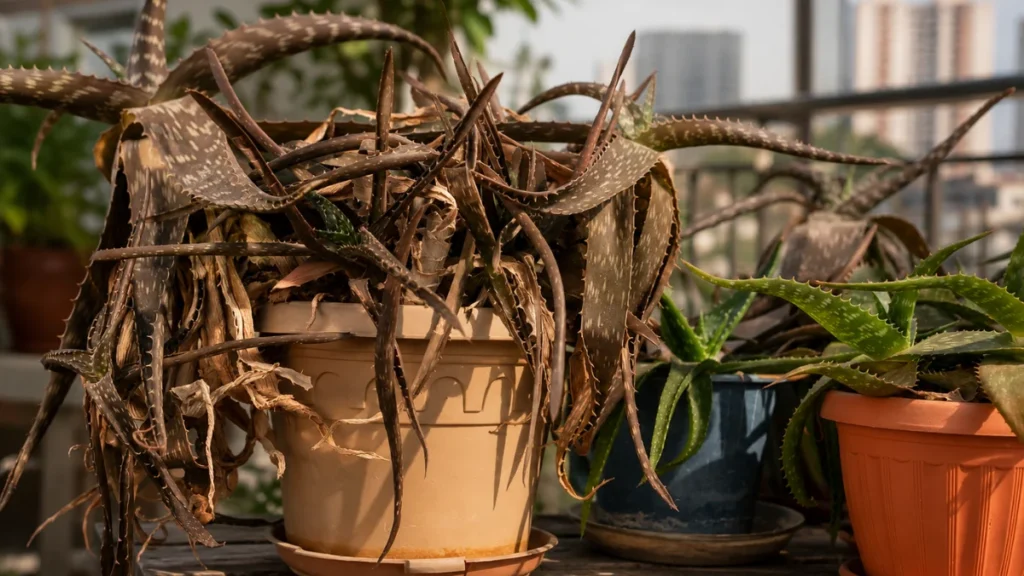
In many Australian balconies, soil compaction becomes more noticeable during warmer months because containers experience longer drying periods between watering. Afternoon sun reflecting off apartment walls or concrete flooring can intensify this effect even on balconies that are not officially “full sun.”
Coastal humidity can sometimes slow the drying process slightly, but windy apartment balconies often still experience rapid surface moisture loss. Seasonal weather shifts also matter because cooler months may temporarily soften soil behaviour before summer tightening begins again.
Balcony Haven Note
I started noticing this more clearly with my chilli plants because their pots seemed to harden faster than some of my other containers. A few pots looked completely normal from above, but the soil underneath felt much denser after long hot weeks on the balcony. I also noticed that containers sitting directly on warm flooring became compact sooner than the ones raised slightly higher. That was also when Overheating Balcony Pots in Summer started making much more sense because the balcony itself was quietly affecting the soil structure over time.
Frequently Asked Questions
Can compacted balcony soil still grow healthy plants?
Sometimes yes, especially for a while. Plants can continue surviving even when the soil structure becomes dense. But over time, roots may experience less airflow and uneven moisture movement inside the pot.
Why does water stay on top of my balcony soil?
Compacted soil often develops tighter surface layers that resist water absorption. Very dry balcony soil can also shrink away from the container edges, causing water to move unevenly instead of soaking through naturally.
Does balcony soil compact faster indoors or outdoors?
Outdoor balconies usually experience faster compaction because of heat, wind, and repeated drying cycles. Indoor containers often stay more stable because temperatures and airflow change less dramatically.
Do roots make soil compact?
In some cases, yes. Dense root systems can slowly fill open spaces inside small containers, leaving the soil feeling tighter and firmer over time.
Why do some pots stay soft while others become hard?
Container material, sun exposure, airflow, pot depth, and watering patterns all influence how quickly soil changes texture. Two pots on the same balcony can behave very differently depending on their position and plant type.
Final Thoughts
Balcony soil becoming hard and compact is usually less about gardening mistakes and more about how small containers react to repeated environmental pressure over time. Heat, airflow, root growth, watering cycles, and container size all quietly reshape the soil structure month after month.
What makes balcony gardening different is that these changes happen in a much smaller and more exposed environment than traditional gardens. The soil cannot balance itself naturally the same way ground soil often does.
Once balcony gardeners begin noticing how containers respond to heat, airflow, and moisture movement, compacted soil starts making far more sense. Small observations often explain more than complicated gardening rules ever can.
Happy Balcony Gardening!
Leave a Reply