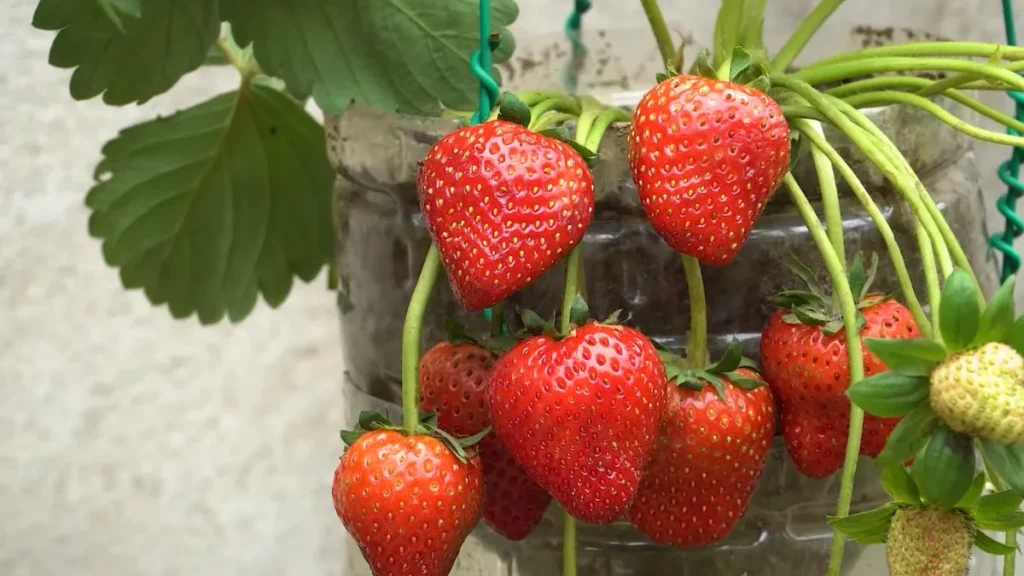
Strawberries are one of the most rewarding fruits to grow on a balcony. They stay compact, produce sweet berries in small containers, and can even trail beautifully from hanging planters. But many balcony growers notice that strawberry plants sometimes grow leaves but produce very few berries, or the plants slowly decline after a few months. So, what is the best soil for potted strawberries?
The best soil for potted strawberries is a light, well-draining potting mix that holds moisture without becoming heavy. A balanced mix often includes potting soil, compost for nutrients, and a drainage material like perlite or pine bark.
This combination keeps strawberry roots moist but airy. That balance is especially important on balconies, where containers heat up, dry out, and restrict root space more than garden beds.
In many cases, the problem is not sunlight or watering — it is the soil. Choosing the best soil for potted strawberries matters even more on balconies because containers dry faster, heat up more quickly, and offer limited root space compared with garden beds. This guide explains how to build a soil mix that keeps strawberry roots healthy, stable, and productive in balcony conditions.
Table of Contents
Balcony-Specific Constraints
Growing strawberries in pots is different from growing them in garden soil. Balcony environments change how soil behaves in several important ways.
First, containers limit root expansion. Strawberry plants naturally spread shallow roots sideways, but in pots they must rely on the small amount of soil available. This means the soil must hold moisture while still allowing enough airflow for roots.
Second, balconies often experience stronger wind and faster drying. Even if the soil mix works well in a backyard garden, it can become too dry or compact in containers exposed to wind. If you’ve ever noticed your pots drying out quickly, you might have seen the same problem described in “Balcony Soil Drying Out Too Fast (What Actually Helps)”.
Third, pot weight matters for apartment balconies. Heavy garden soil may seem rich and healthy, but it can make containers unnecessarily heavy. Many balcony gardeners solve this by choosing lighter mixes and lightweight containers, similar to the approach discussed in “Lightweight Pots for Apartment Balconies”.
Because of these constraints, strawberry soil for balconies must balance moisture retention, airflow, and weight at the same time.
How to Prepare the Best Soil for Potted Strawberries
Step 1: Start With a Lightweight Potting Base
The foundation of good strawberry soil is a high-quality potting mix. Regular garden soil is usually too dense for containers and can easily become compacted.
A good potting base should feel loose and crumbly when squeezed in your hand. It should hold moisture but still break apart easily instead of forming a heavy clump.
In most cases, potting mixes designed for vegetables or herbs work well. These mixes usually contain composted organic material combined with lightweight ingredients that improve drainage.
This is similar to the soil structure used in balcony herb containers, which is explained further in “Best Soil Mix for Balcony Herb Gardens.”
Step 2: Add Materials That Improve Drainage
Strawberries dislike sitting in wet soil. If water stays around their roots for too long, plants may slowly weaken or develop root problems.
Balcony containers especially need good drainage because water cannot move away as easily as it does in open ground.
Common materials that help improve drainage include:
- Perlite
- Pine bark pieces
- Coconut coir fibres
- Small amounts of coarse sand
These ingredients create tiny air spaces inside the soil. The air spaces allow excess water to drain away while still leaving enough moisture behind for the plant.
Proper drainage is also connected to container design. Pots without good drainage holes can trap water and create problems like those described in “Drainage Tips for Small Balcony Containers.”
Step 3: Include Organic Matter for Nutrients
Strawberries are relatively light feeders, but they still need a steady supply of nutrients to produce flowers and fruit.
A small amount of organic material in the soil helps provide slow, natural nutrition. Compost is one of the most common choices because it improves both fertility and soil texture.
Good organic additions may include:
- Well-aged compost
- Worm castings
- A small amount of organic vegetable fertiliser
These ingredients slowly release nutrients into the soil while also helping the mix retain moisture.
The goal is not to make the soil extremely rich. Strawberries often grow better in balanced soil rather than overly fertilised soil.
Step 4: Keep the Soil Slightly Moist, Not Heavy
The ideal strawberry soil holds moisture without becoming soggy.
When watering strawberries in containers, the soil should feel slightly damp but still airy. If the soil stays wet for long periods, the roots may struggle to breathe.
This balance becomes especially important on balconies where temperature changes quickly. Hot afternoons can dry containers rapidly, while cooler evenings may keep moisture trapped inside.
If you often notice plants drooping shortly after watering, it may be worth reviewing conditions similar to those discussed in “Balcony Plants Drooping After Watering.”
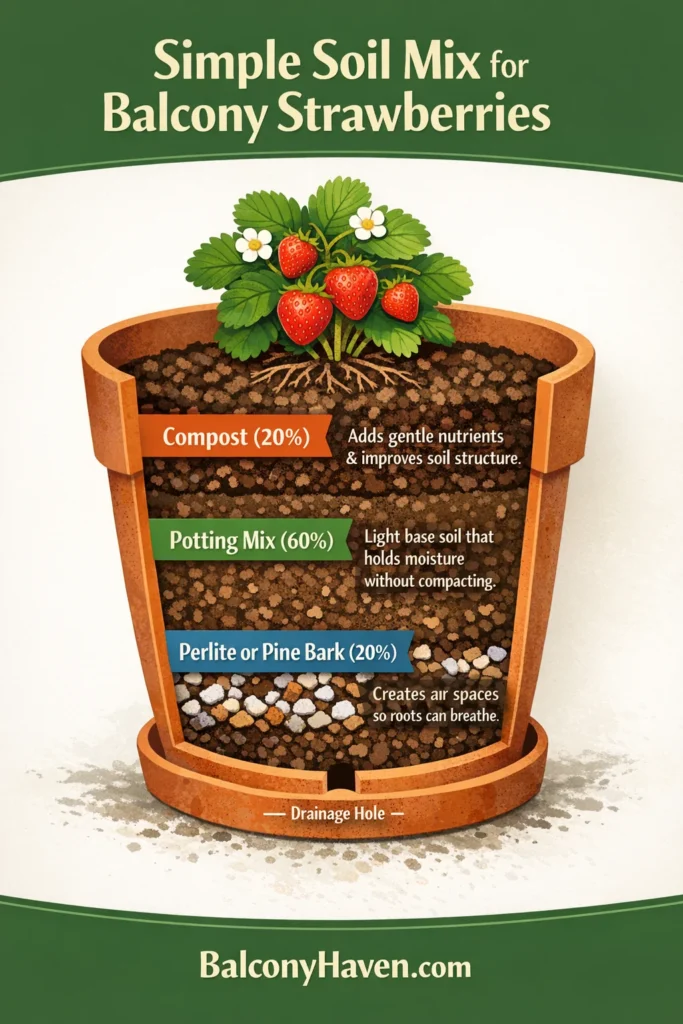
Step 5: The Simple Soil Mix Many Balcony Growers Use
For most balcony strawberry pots, a simple soil combination works well.
A commonly used mix is:
- 60% high-quality potting mix
- 20% compost
- 20% drainage material (perlite or bark)
This mixture keeps the soil light, breathable, and stable enough to support fruit production.
The exact ratio does not need to be perfect. What matters most is maintaining a soil structure that does not become dense or waterlogged.
Options & Variations for Different Balconies
Different balcony environments may benefit from slightly different soil adjustments.
| Balcony Condition | Soil Adjustment |
|---|---|
| Small balconies with strong wind | Add slightly more compost to help the soil retain moisture. |
| Hot west-facing balconies | Increase moisture-holding materials such as coconut coir. |
| Shaded balconies | Keep the soil lighter to prevent slow evaporation and excess moisture. |
Sun exposure can strongly affect plant performance. If you are unsure about your balcony’s sunlight pattern, measuring light first can help — as explained in How to measure sunlight on a balcony.
Practical Tips for Better Strawberry Soil
Even with the right soil mix, a few small adjustments can improve strawberry growth on balconies.
- Choose pots at least 20–25 cm deep for stable root growth.
- Avoid compressing soil when filling containers.
- Water slowly so moisture spreads evenly through the pot.
- Replace soil each season if plants stop producing well.
- Add a thin mulch layer (such as pine bark) to reduce evaporation.
- Leave small air gaps at the top of the pot instead of filling soil to the rim.
These small habits help maintain soil structure and reduce stress on strawberry roots.
Common Mistakes With Strawberry Pot Soil
Many balcony strawberry problems come from soil issues rather than plant care.
Common mistakes include:
- Using heavy garden soil in containers
- Overfilling pots without drainage materials
- Packing soil too tightly when planting
- Allowing pots to stay constantly wet
- Choosing very small containers that heat quickly
These mistakes often lead to slow growth or root problems such as those described in “Root Rot in Small Balcony Pots.”
Seasonal Context That Matters
Strawberries respond strongly to temperature changes, especially in containers.
During warm weather, soil dries much faster on balconies. Containers exposed to direct sun may heat up significantly, which affects root stability and moisture levels.
In cooler seasons, soil moisture tends to remain longer. This means watering should be adjusted gradually rather than following a strict schedule.
Balcony growing works best when soil moisture responds to conditions instead of fixed routines.
Balcony Haven Note
Over time I’ve noticed that strawberries are surprisingly sensitive to the structure of soil rather than just nutrients. Two pots can receive the same sunlight and watering, yet the plant in the lighter, airier soil almost always grows stronger.
If you’ve already experimented with containers — like growing strawberries in narrow balcony planters or arranging multiple pots in a small space — you may notice the same pattern. Soil that feels breathable and loose tends to support healthier roots and more consistent fruiting, especially in compact balcony setups. Published Articles
Frequently Asked Questions
Can I use regular garden soil for potted strawberries?
Garden soil is usually too dense for containers. It can compact over time and prevent proper airflow around strawberry roots.
Do strawberries prefer acidic soil?
Yes, strawberries generally prefer slightly acidic soil. Most commercial potting mixes naturally fall within the suitable range.
Should I fertilise strawberries in pots?
Light feeding during the growing season can help support flowering and fruit production, but excessive fertiliser may encourage leaf growth instead of berries.
Do strawberries need deep soil?
Strawberries have shallow roots, but they still benefit from pots around 20–25 cm deep to stabilise moisture and temperature.
How often should strawberry soil be replaced?
Many balcony gardeners refresh or replace soil every growing season to maintain soil structure and nutrient balance.
Final Thoughts
Growing strawberries on a balcony can be surprisingly simple once the soil structure is right. Instead of focusing only on watering or fertilising, it helps to think about how soil behaves inside containers.
A light, well-balanced soil mix allows strawberry roots to breathe, absorb moisture steadily, and stay stable through changing weather. When the soil environment is healthy, strawberry plants often become easier to manage and more productive.
Balcony gardening rarely needs complicated formulas. Small adjustments to soil structure, container size, and watering habits usually make the biggest difference over time.
Happy Balcony Gardening!
Leave a Reply