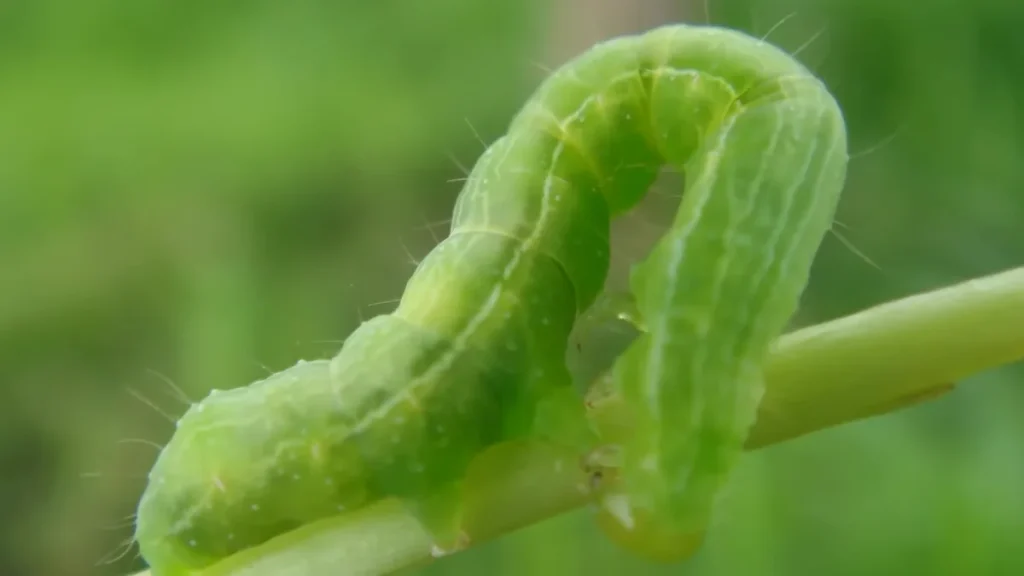
Small holes appearing in plant leaves can feel confusing — especially on a balcony. Unlike garden beds where insects and wildlife are expected, balconies often feel protected and controlled. When leaves suddenly develop tiny bites, irregular gaps, or lace-like damage, many balcony gardeners assume something unusual is happening. So why are my plant leaves getting holes?
Plant leaves usually get holes because insects or nighttime feeders are chewing the leaf tissue. On balconies, the most common causes are caterpillars, beetles, slugs, or other small leaf-eating insects carried in by wind or nearby plants. The shape and size of the holes often reveal the cause — small round holes usually come from beetles, while larger irregular gaps are often made by caterpillars or slugs feeding during the night.
Even on higher floors, a small group of insects can easily reach balcony plants and begin feeding before gardeners notice the damage. Because balconies concentrate plants into a small space, even minor pest activity can become very visible. This guide explains what typically causes holes in balcony plant leaves, how to identify the real culprit, and what simple actions can stop the damage without turning your balcony into a chemical battlefield.
Table of Contents
Why This Happens More on Balconies Than People Expect
Balconies might look isolated, but they behave like small ecosystems suspended in the air. Wind, warm walls, and clustered pots create conditions that insects often enjoy.
Unlike garden beds where predators and pests balance each other, balcony gardens often attract insects without attracting the animals that normally eat them.
Several balcony-specific factors make leaf damage more likely:
- Warm building walls create stable microclimates where insects hide
- Wind corridors carry flying insects from nearby parks or gardens
- Clustered pots allow pests to move easily between plants
- Limited predators such as birds, frogs, and lizards
- Moist pot soil which attracts snails, slugs, and beetles at night
This is why balconies sometimes experience short bursts of leaf damage that look dramatic but are usually easy to manage.
How to Identify What Is Eating Your Balcony Plant Leaves
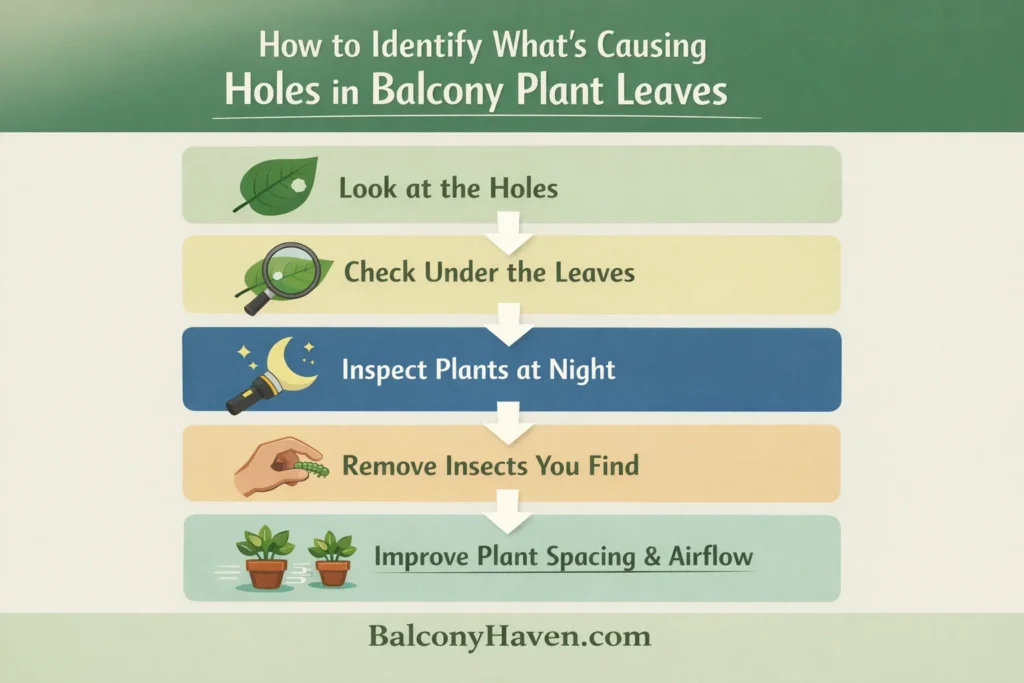
Step 1: Identify the Shape of the Holes
The shape of the holes often reveals what is eating the plant.
Instead of trying to find the insect immediately, first look carefully at the leaves. The size, edges, and pattern of the holes often provide the first clue. Some pests chew clean circles, while others tear leaves in uneven pieces. Taking a moment to observe the pattern can save time later when trying to find the culprit.
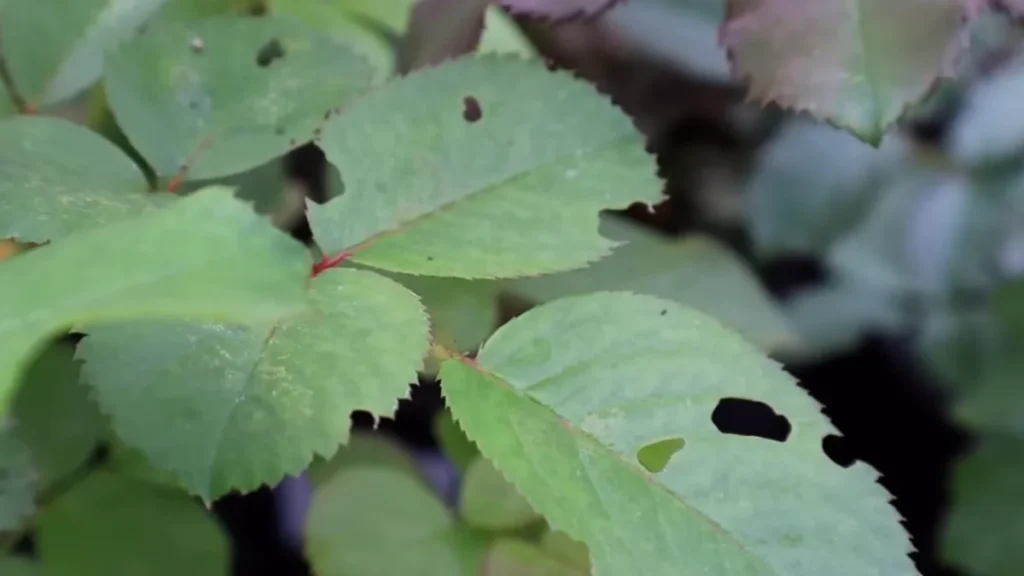
SMALL ROUND HOLES
These are commonly caused by:
- Flea beetles
- Small leaf beetles
- Occasionally young caterpillars
These insects chew tiny circular bites that look like a miniature hole punch. The holes often appear scattered across the leaf surface rather than clustered in one area. On small balcony plants, this damage can appear quickly because even a few insects feeding repeatedly can create many tiny holes.
LARGE IRREGULAR HOLES
Usually caused by:
- Caterpillars
- Grasshoppers
- Slugs or snails
These feeders remove larger pieces of leaf tissue and may leave jagged edges. The holes may appear near the edges of leaves or in the centre depending on how the insect feeds. If the damage looks fresh and uneven, it often means the feeding happened recently.
LACE-LIKE LEAVES
If leaves look almost skeletal, the cause is often:
- Beetle larvae
- Caterpillars feeding heavily
- Sometimes leaf miners expanding damage areas
This kind of damage looks dramatic but often happens very quickly overnight. A few hungry insects can strip soft leaves in a short period of time, especially on tender herbs or leafy vegetables.
Step 2: Check the Underside of Leaves
Balcony pests prefer hiding in places where wind and sunlight are weaker. That usually means the underside of leaves.
Gently flip leaves and check for:
- Tiny caterpillars
- Small green worms
- Clusters of eggs
- Beetles resting along the leaf veins
The underside of leaves also protects insects from drying winds and direct sunlight, which makes it a safe feeding and resting spot. Eggs are often attached along leaf veins or tucked close to the stem where they are harder to see.
Many balcony gardeners miss this step and assume something invisible is attacking their plants. In most cases, the culprit is simply hiding well.
Step 3: Inspect Your Balcony at Night
This is one of the most overlooked steps in balcony gardening.
Many leaf-eating insects only feed at night to avoid birds and heat. During the day they often hide in soil, under pots, or beneath leaves where they remain almost invisible.
If you notice new holes appearing each morning, try this simple check:
- Turn on a small flashlight after sunset
- Look at the leaves carefully
- Check the soil surface and pot edges
You may discover:
- Small caterpillars feeding
- Slugs crawling along pots
- Beetles resting on leaves
Balcony gardeners are often surprised how quickly this reveals the cause. A quick night inspection can often identify the pest in minutes.
Step 4: Remove the Culprit (The Simplest Fix)
On balconies, pest populations are usually very small, which makes control easier than in large gardens.
In many cases, the best solution is simply:
- Removing caterpillars by hand
- Rinsing leaves with water
- Shaking insects off plants
Because balconies contain fewer plants, manual control often works better than sprays. Removing even one or two insects can immediately stop further damage.
After removing pests, it can also help to rinse the leaves lightly with water to remove eggs or small insects that may be hiding.
Step 5: Improve Airflow Between Pots
Dense plant arrangements make it easier for pests to move between leaves.
Spacing plants slightly apart can reduce pest activity and make plants healthier overall. When leaves constantly touch each other, insects can travel easily from one plant to the next.
If your pots are touching or overlapping, consider adjusting them.
You can learn more about how spacing affects plant health in Balcony pot spacing for airflow.
Good airflow also helps reduce other plant problems like fungal growth, trapped humidity, and heat stress around pots.
Options for Different Balcony Conditions
Different balconies attract different pests depending on light, heat, and surrounding environment.
| Balcony Condition | What Happens to Plants | Helpful Reference |
|---|---|---|
| Windy balconies | Wind often reduces insect activity, but it can also carry flying beetles from nearby trees. Hardy plants that tolerate wind tend to experience fewer pest problems. | See What are the best plants for a windy balcony? |
| Shaded balconies | Cooler and more humid conditions can attract slugs and snails, which sometimes hide around pot edges and soil surfaces. | See Best plants for shaded apartment balconies |
| Hot balconies | High heat weakens plants and softens leaf tissue, making leaves easier for insects to chew. Overheating pots can also stress plants and attract opportunistic pests. | See Overheating balcony pots in summer |
The table above shows how common balcony conditions influence pest activity and plant stress. Wind, shade, and heat each create slightly different environments around your pots, which can affect how insects behave and how plants respond to damage.
For example, windy balconies may discourage some insects but can also carry flying beetles from nearby trees or gardens. Shaded balconies tend to stay cooler and more humid, which sometimes allows slugs or snails to hide around pot edges. Hot balconies can weaken plants and soften leaf tissue, making leaves easier for insects to chew.
Because of these differences, choosing plants suited to your balcony conditions often reduces pest problems naturally. Guides such as What are the best plants for a windy balcony?, Best plants for shaded apartment balconies, and Overheating balcony pots in summer explain how these environments affect plant health and pest activity.
Practical Tips to Reduce Leaf Damage
Once you know what causes holes, prevention becomes much easier.
A few small habits can significantly reduce the problem.
- Check leaves once or twice per week
- Remove damaged leaves early
- Avoid overcrowding pots
- Water plants in the morning instead of late evening
- Rinse plants occasionally to remove insects
- Inspect new plants before bringing them onto the balcony
These simple habits often prevent pests from establishing larger populations.
Common Mistakes Balcony Gardeners Make
Leaf holes look alarming, but reacting too aggressively can make things worse.
Some common mistakes include:
- Spraying chemicals immediately without identifying the pest
- Removing too many leaves, which stresses the plant
- Ignoring plant stress factors such as heat or drought
- Assuming every hole means infestation
Sometimes the damage stops on its own once insects move on.
Seasonal Context That Matters
Leaf-eating insects tend to appear during warmer months when plants are actively growing.
Balconies that face strong afternoon sun may experience insect activity earlier in the season because warm walls create stable feeding conditions.
Interestingly, many balcony pests appear during the same periods when plants are already under stress from heat or drying soil. If leaves are already struggling due to temperature or watering issues, insects can take advantage of that weakness.
If your plants also look pale or stressed, it may help to read Why are my plants losing their colour?, since multiple stress signals often appear together.
Balcony Haven Note
One thing I’ve noticed with balcony plants is how quickly a few holes can look dramatic. Because balcony gardens are small, every leaf matters — and damage becomes more visible than it would in a large garden bed.
Sometimes the holes themselves aren’t the real problem. They’re simply the first sign that the plant’s environment needs a small adjustment. If you’ve noticed other signals like drooping leaves or uneven watering patterns, you might recognise a similar pattern in Balcony plants drooping after watering — different symptom, but often part of the same balcony stress cycle.
FAQ
Do holes in leaves mean my plant will die?
Usually not. Most plants tolerate small amounts of leaf damage without serious problems. As long as new leaves continue to grow normally, the plant can usually recover without any lasting harm.
Should I remove leaves with holes?
If the leaf is mostly healthy, it’s best to leave it. Plants still use partially damaged leaves for photosynthesis. Removing too many leaves can sometimes stress the plant more than the holes themselves.
Are holes always caused by insects?
Most of the time, yes. However, strong wind can occasionally tear soft leaves, especially on exposed balconies. Very thin leaves can also split naturally if they dry out and then expand quickly after watering.
Can balcony pests spread between plants?
Yes. Insects often move between nearby pots, which is why plant spacing and airflow are important. When leaves from different plants touch, pests can travel easily without needing to fly.
Is pesticide necessary for balcony pests?
In most cases, no. Small pest populations on balconies are often controlled through manual removal and simple observation. Using strong pesticides too early can also harm helpful insects that naturally keep pests under control.
Final Thoughts
Leaf holes can look worrying, especially when you’re carefully caring for plants on a balcony. But in most cases, they’re simply part of the natural interaction between plants and the small insects that share our environment.
The key is observation rather than panic. When you learn to recognise feeding patterns and watch your plants regularly, problems become easier to solve before they grow larger.
Balcony gardening is less about eliminating every imperfection and more about understanding how your small space behaves. Once you learn those patterns, even unexpected leaf holes start to feel less like a problem — and more like information.
Happy Balcony Gardening!
Leave a Reply