Overview
Choosing pots for balcony vegetables sounds simple until plants stop growing the way you expect. Leaves stay small, roots dry out quickly, or vegetables never seem to reach their full size. Many balcony gardeners wonder if the problem is what they planted, or the pot itself.
When comparing deep vs shallow pots for balcony veggies, depth usually matters more than width for long-term plant health. Deeper pots hold moisture longer, give roots room to grow downward, and cope better with heat and wind. Shallow pots can still work, but only for certain vegetables and specific balcony conditions.
When pot depth is mismatched, vegetables often show stress even when watered regularly. Roots hit the bottom too quickly, soil overheats, and growth slows or stalls. This can make balcony gardening feel frustrating, especially when plants look healthy at first.
The good news is that this is rarely a skill problem. It is usually about matching pot depth to how balcony conditions behave. This article explains how deep and shallow pots affect balcony vegetables, when each option works, and how to choose the right setup for your space.
Table of Contents
Understanding the Balcony Reality
Balconies create very different growing conditions compared to gardens. Pots heat up faster because they are exposed on all sides, and wind dries soil quicker than most people expect. Sunlight often comes in short bursts rather than steady all-day exposure.
Weight limits, narrow floor space, and railings also affect what containers you can realistically use. Because of this, root space becomes more important than plant variety. A vegetable that thrives in shallow soil in a garden bed may struggle in a shallow balcony pot due to heat and moisture loss.
Depth helps buffer these conditions. More soil means slower drying, more stable temperatures, and room for roots to adapt. Shallow containers remove that buffer, which is why depth plays such a big role on balconies.
How Pot Depth Affects Balcony Vegetables
Shallow Pots (Under 20 cm Deep)
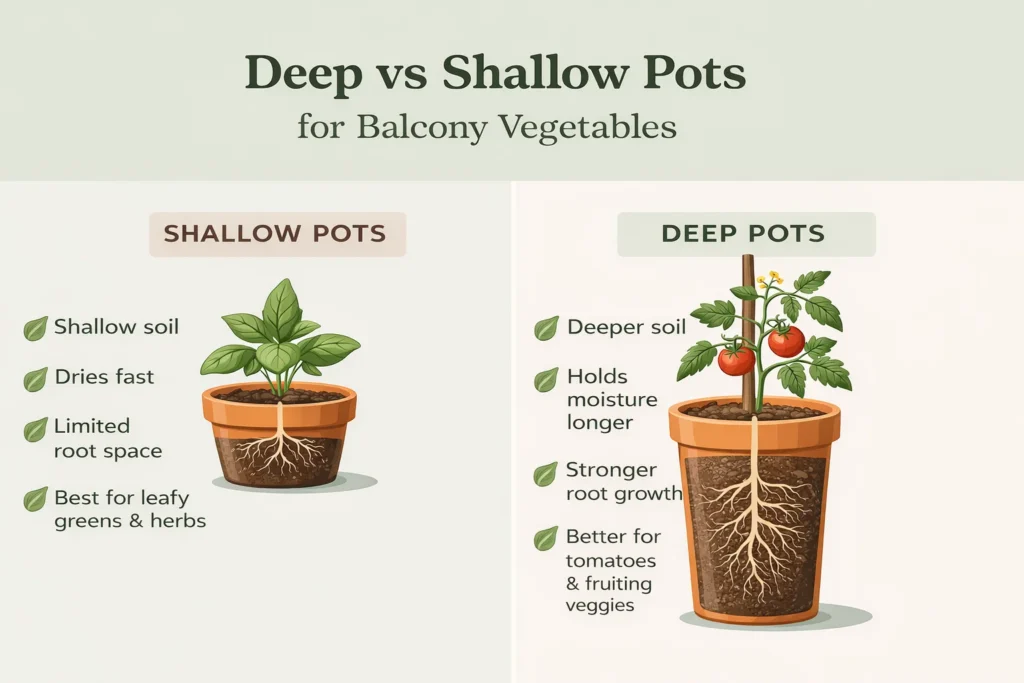
Shallow pots warm up quickly and dry out fast. This makes them more sensitive to hot afternoons, wind, and missed watering. Roots reach the bottom early, which limits nutrient uptake over time.
These containers can still work for vegetables with small root systems or short growing cycles. They are best suited to leafy greens and herbs that are harvested early rather than grown for months.
Shallow pots are often used because they fit narrow balconies, but they require closer attention to watering and seasonal timing.
Medium-Depth Pots (20–30 cm Deep)
Medium-depth pots offer a balance between space and performance. They hold enough soil to slow drying while still fitting most balconies comfortably.
Many common balcony vegetables grow well at this depth, especially when sunlight is moderate and wind is controlled. This is often the safest choice for gardeners who want flexibility without committing to very large containers.
Deep Pots (30 cm+ Deep)
Deep pots provide the most stable growing environment on balconies. They protect roots from temperature swings, hold moisture longer, and support vegetables with deeper or spreading root systems.
These containers reduce stress during hot days and allow plants to grow steadily over longer periods. The trade-off is weight and space, which must be considered for apartment balconies.
Deep vs Shallow Pots at a Glance
A table helps here because it allows quick comparison without repeating explanations.
| Feature | Shallow Pots | Deep Pots |
|---|---|---|
| Soil moisture | Dries very quickly | Holds moisture longer |
| Root growth | Limited | Strong and stable |
| Heat resistance | Low | Higher |
| Best for | Lettuce, herbs, spinach | Tomatoes, peppers, eggplant |
| Balcony effort | High maintenance | More forgiving |
Which Vegetables Prefer Deep Pots?
Vegetables that grow fruit or stay in pots for long periods usually perform better in deeper containers. Their roots need room to support flowering, fruiting, and steady water uptake.
Examples include tomatoes, capsicum, chillies, cucumbers, eggplant, and beans. These plants may survive in shallow pots early on, but growth often stalls once roots become crowded.
When Shallow Pots Can Still Work
Shallow pots are not useless. They suit vegetables that grow quickly and are harvested young. Leafy greens like lettuce, rocket, spinach, and Asian greens can grow well if watered consistently.
Herbs such as basil, parsley, coriander, and chives also tolerate shallower soil when conditions are mild. The key limitation is timing. These plants do best in cooler seasons or shaded balconies where soil does not overheat.
Are Deeper or Wider Pots Better?
Depth generally matters more than width on balconies. Roots tend to grow downward to escape heat and access moisture. A wide but shallow pot often dries out faster than a narrower but deeper one.
That said, width helps support larger plants by spreading roots horizontally. The best balance is a pot that offers both reasonable depth and enough width for stability.
Practical Pot-Choosing Tips for Balcony Veggies
Choosing pots becomes easier when focusing on how the balcony behaves rather than ideal gardening rules.
- Aim for at least 25–30 cm depth for fruiting vegetables
- Use shallow pots only for short-cycle greens
- Heavier pots dry out more slowly than lightweight ones
- Deeper pots reduce watering stress in hot weather
- Match pot depth to how long the plant will stay growing
Common Mistakes Balcony Gardeners Make
Many balcony problems come from assumptions rather than care mistakes.
- Using shallow decorative pots for long-term vegetables
- Choosing pots based on looks instead of depth
- Assuming frequent watering fixes shallow root space
- Growing fruiting plants in herb-sized containers
- Ignoring how heat builds up around pots
Balcony Haven Note
When comparing deep vs shallow pots for balcony vegetables, I’ve noticed that container depth and soil volume often influence growth more than the vegetable itself. On a typical apartment balcony, shallow pots tend to dry out faster and limit root space, while deeper containers provide more stability in heat and wind. Small changes in pot depth can make a noticeable difference, though this can vary from one balcony to another depending on exposure and conditions.
If you are specifically growing tomatoes, pot size becomes even more important. The article Best pot size for balcony tomatoes explains how choosing the right depth, width, and overall soil volume supports stronger roots, steadier growth, and better fruit production in balcony spaces.
Frequently Asked Questions
How deep should pots be for vegetables on a balcony?
Most balcony vegetables grow best in pots at least 25–30 cm deep. This depth helps roots stay cool, access moisture, and grow steadily, especially during warm weather.
Are shallow pots bad for balcony gardening?
Shallow pots are not bad, but they are limited. They work best for leafy greens and herbs grown for short periods. Long-term vegetables usually struggle in shallow containers.
Do deeper pots reduce watering needs?
Yes. Deeper pots hold more soil, which slows evaporation and keeps moisture available longer. This makes watering more forgiving on hot or windy balconies.
Can wide pots replace deep pots?
Width helps, but it does not fully replace depth. Roots naturally grow downward, and shallow wide pots still dry out quickly compared to deeper containers.
Final Thoughts
When choosing between deep vs shallow pots for balcony veggies, depth usually makes the bigger difference. Deeper pots create a more stable environment that helps vegetables handle heat, wind, and inconsistent watering.
Shallow pots still have a place, especially for quick-growing greens and herbs. The key is matching the pot to how long the plant needs to grow and how your balcony behaves throughout the day.
Balcony gardening becomes much easier when containers work with your conditions rather than against them. Start with realistic pot choices, observe how your space responds, and adjust gradually over time.
Happy Balcony Gardening!
Leave a Reply