Overview
A north-facing balcony often feels like a tricky space for growing flowers. It looks bright during the day, but many apartment gardeners quickly notice that plants don’t behave the way they expect. Flowers stay leafy, buds drop, or nothing seems to bloom at all.
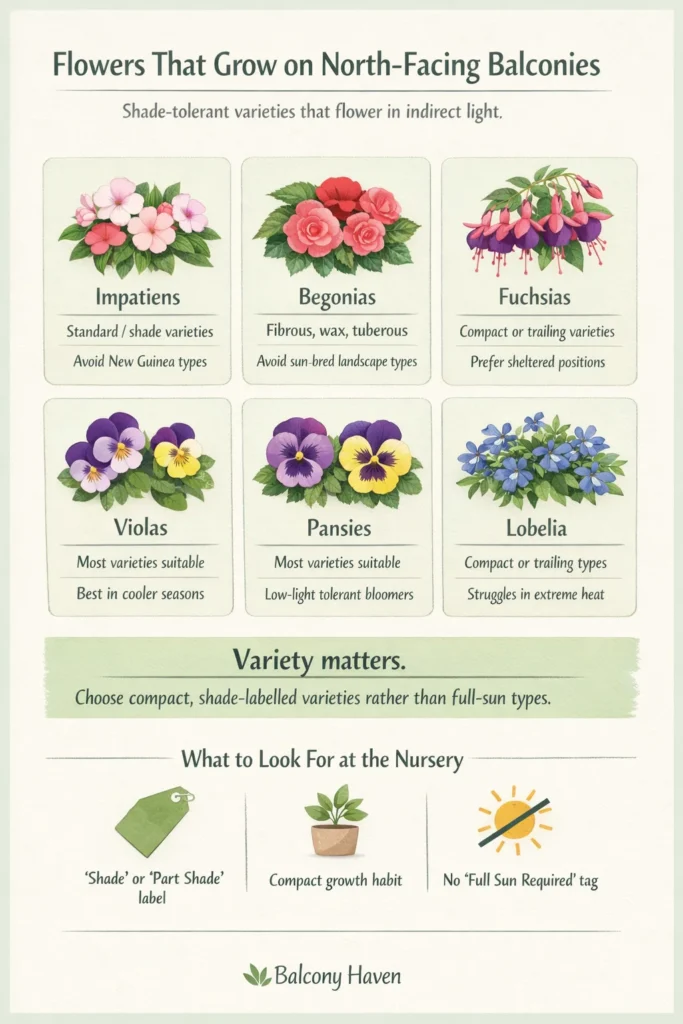
Flowers that grow on north-facing balconies include impatiens, begonias, fuchsias, violas, pansies, and lobelia.These flowers prefer bright shade or filtered light rather than long hours of direct sun. They can still bloom reliably in indirect light, especially when temperatures stay stable and soil drains well.
When the wrong plants are chosen, it’s easy to assume the balcony itself is the problem. In reality, most frustration comes from using sun-loving flowers in a space that simply behaves differently.
The good news is that north-facing balconies are not flower-unfriendly. They just support a specific group of plants. Once those limits are understood, flowering becomes far more predictable and far less frustrating.
Table of Contents
Understanding the Reality of a North-Facing Balcony
North-facing balconies usually receive light that is bright but indirect. In apartments, this light is often reflected off nearby walls, windows, or railings rather than arriving as direct sun. While this can feel comfortable for people, it changes how plants grow and flower.
These balconies also tend to stay cooler than west- or north-west-facing spaces. Soil dries more slowly, and temperature swings are usually gentler. This reduces heat stress but increases the risk of overwatering if containers are too deep or poorly drained.
Because of this, north-facing balconies naturally favour flowers that evolved in shaded or partially protected environments. These plants are less demanding about sun and often focus on steady, modest flowering rather than rapid bursts of blooms.
Flowers That Grow Well on North-Facing Balconies
Impatiens and Begonias (Most Reliable Options)
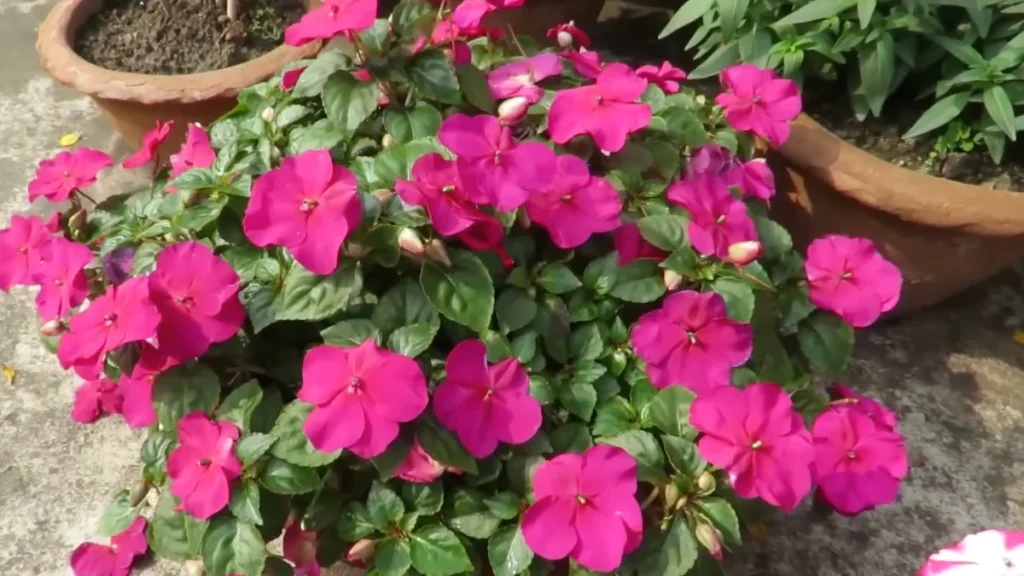
Impatiens are one of the most dependable flowering plants for north-facing balconies. They flower consistently in bright shade and do not require direct sun to perform well. As long as the soil drains properly, they tend to keep blooming through mild seasons.
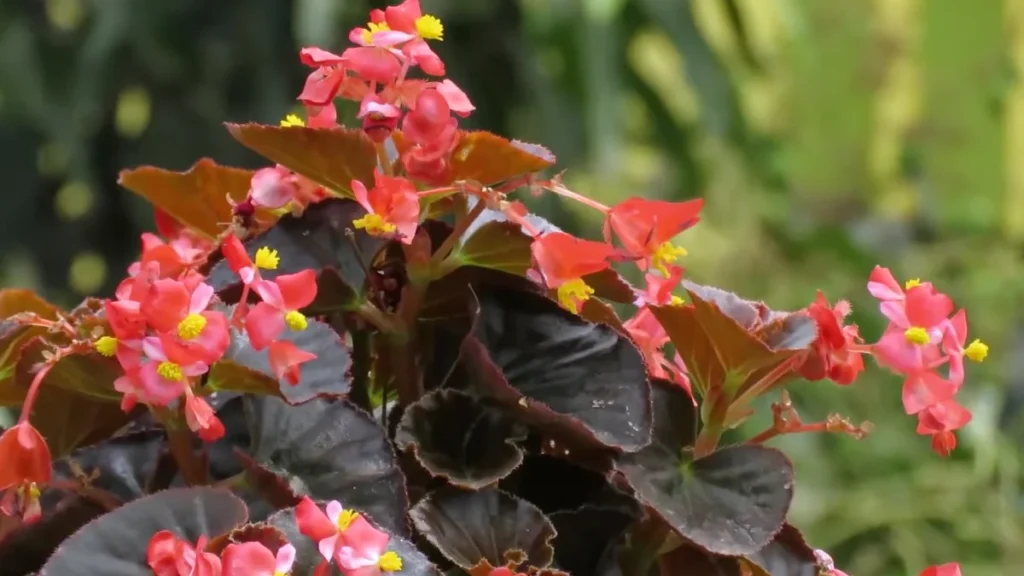
Begonias also perform very well in indirect light. Both fibrous and tuberous types adapt easily to balcony containers and tolerate cooler conditions. Their thicker leaves help them manage moisture, which suits balconies where soil stays damp longer.
These two plants are often the easiest starting point for beginners working with limited sun.
Fuchsias for Cooler, Sheltered Balconies
Fuchsias thrive in shaded balconies that have good airflow and protection from harsh wind. They naturally prefer cooler temperatures and filtered light, making north-facing balconies a comfortable environment for them.
On apartments with some overhead shelter, fuchsias can flower heavily during spring and autumn. They may slow down during extreme heat, but they usually recover well once temperatures stabilise.
Violas, Pansies, and Lobelia for Compact Spaces
For smaller balconies or narrow planters, violas and pansies are strong performers. They tolerate low light well and continue flowering during cooler months when many plants slow down.
Lobelia works particularly well in hanging baskets or shallow containers. It produces cascading flowers in bright shade and does not demand long sun exposure, making it well suited to apartment railings and corners.
These compact flowers are useful when space is limited and visual impact matters.
Do Flowers Need Direct Sun to Bloom?
Most flowers do not need full sun, but they do need enough light to form buds. On north-facing balconies, flowering is usually slower and more seasonal rather than constant.
This does not mean the plants are unhealthy. Shade-tolerant flowers are designed to bloom under gentler conditions, often producing fewer but longer-lasting flowers. Expecting nonstop blooms year-round usually leads to disappointment in low-sun spaces.
Understanding this difference helps set realistic expectations and reduces unnecessary plant replacement.
Practical Tips for Flowering on North-Facing Balconies
Success on shaded balconies comes from consistency rather than optimisation.
- Choose compact flowering plants rather than large shrubs
- Use containers with good drainage to prevent soggy soil
- Avoid overcrowding, which reduces airflow and light
- Place pots where reflected light is strongest
- Rotate containers occasionally to balance light exposure
These small adjustments often make a noticeable difference without changing the balcony layout.
Common Mistakes With Flowers on Shaded Balconies
Many problems on north-facing balconies come from mismatched expectations rather than poor care.
- Planting full-sun flowers like petunias or geraniums
- Using oversized pots that stay wet for long periods
- Watering too frequently because soil dries slowly
- Expecting continuous blooms in winter
- Ignoring wind exposure in higher apartments
These mistakes are common and easily corrected once the balcony’s natural behaviour is understood.
Seasonal Considerations for Australian Apartments
In Australian apartments, north-facing balconies often perform best during spring and autumn. Mild temperatures and stable light make flowering more reliable during these periods.
Winter usually slows growth due to reduced daylight, while summer can still cause stress if airflow is limited. However, north-facing balconies generally avoid the extreme heat that causes flower drop on west-facing spaces.
Understanding these seasonal shifts helps explain why flowering may come and go throughout the year.
Balcony Haven Note
With a fairly typical apartment balcony, flowers that grow on north-facing balconies tend to respond more to light direction and airflow than to plant variety alone. On shaded balconies, reflected light and shelter often matter more than trying to recreate ideal garden conditions. Small changes in placement can noticeably improve flowering, though results will always vary depending on layout and exposure.
If you’re unsure whether your balcony is fully shaded or only limited at certain times of day, Best plants for a north facing balcony explains how to assess light properly and choose plants that match your space. Understanding your light conditions makes it easier to select flowers that are more likely to bloom on a north-facing balcony.
FAQ
What flowers grow best on a north-facing balcony?
Flowers that grow best include impatiens, begonias, fuchsias, violas, pansies, and lobelia. These plants tolerate bright shade and can bloom without long hours of direct sun.
Can flowers bloom without direct sunlight?
Yes, many flowers bloom in indirect light. Shade-tolerant plants are adapted to gentler conditions and often flower more steadily, though not always continuously.
Is a north-facing balcony good for plants?
A north-facing balcony is well suited to shade-loving flowers and leafy plants. While it limits sun-hungry species, it provides stable conditions for many reliable bloomers.
Why do my balcony flowers grow leaves but not flowers?
This usually happens when plants need more light than the balcony provides. Leaf growth can continue in shade, but flowering requires matching the plant to the available light.
Final Thoughts
Flowers that grow on north-facing balconies succeed because they are matched to the space, not because the space is perfect. Once shade-tolerant plants are chosen, flowering becomes more predictable and far less frustrating.
Rather than fighting the balcony’s limitations, working with its light, temperature, and airflow leads to better long-term results. Over time, observing how the space responds will guide better choices and build confidence with each planting season.
Happy Balcony Gardening!
Leave a Reply