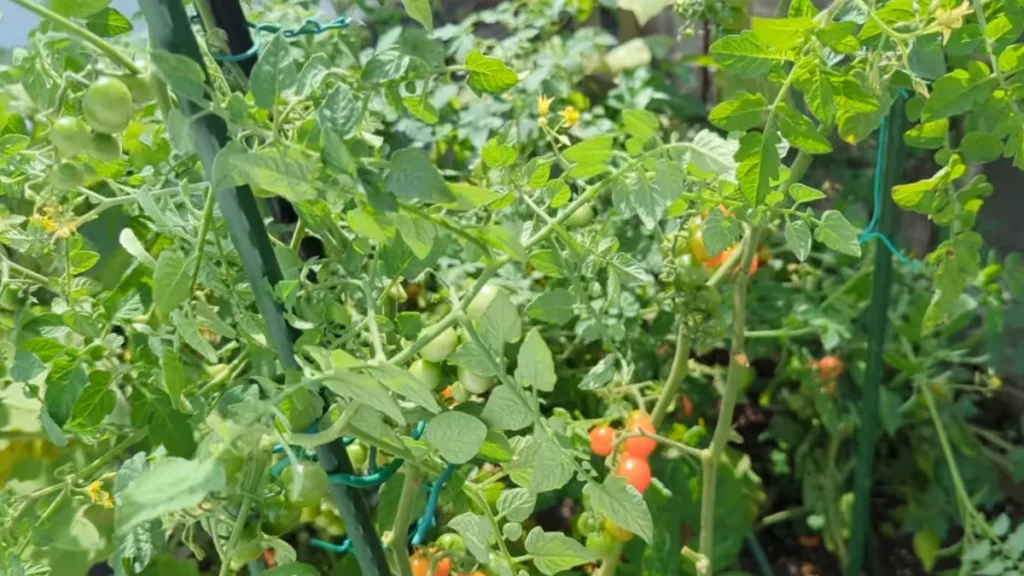
A north facing balcony often sounds like the perfect place to grow plants, especially in apartments where harsh afternoon sun can quickly dry pots and burn leaves. The light may feel bright, calm, and comfortable, but many balcony gardeners still find that some plants grow slowly, stretch toward the edge, or never become as full as expected.
The best plants for a north facing balcony include lettuce, spinach, parsley, mint, coriander, chives, ferns, pothos, peace lilies, strawberries, cherry tomatoes, and chilli plants. These plants usually grow well because north facing balconies often provide bright, steady light without the same harsh heat stress found on west facing or full-sun balconies. The key is matching each plant to the actual light level, warmth, and layout of the balcony.
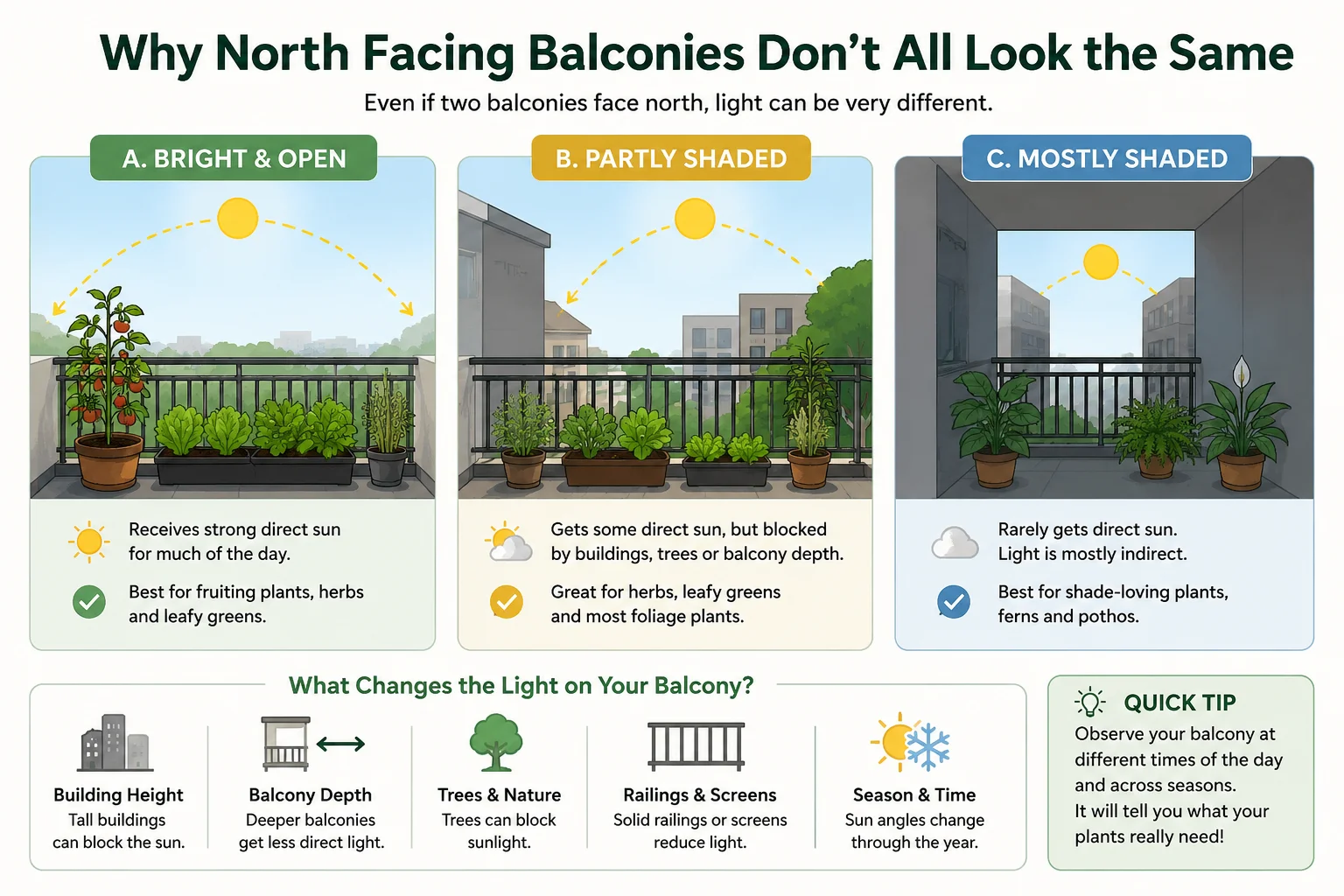
The mistake many people make is treating every north facing balcony the same. One balcony may receive long, useful daylight, while another may be shaded by a nearby building, deep roof overhang, privacy screen, or tall railing. Both may technically face north, but they can behave like very different growing spaces.
This article explains what actually grows well on a north facing balcony, why some plants succeed while others struggle, and how to place leafy greens, herbs, fruiting plants, and foliage plants in the parts of the balcony where they are most likely to thrive.
Understanding the North Facing Balcony Reality
A north facing balcony in Australia usually receives some of the most useful daylight for growing plants, but that does not always mean full direct sun from morning to afternoon. The sun’s path, building height, balcony depth, glass doors, railings, nearby trees, and surrounding apartments all change how much light actually reaches the pots.
This is why a north facing balcony can feel bright to people while still being only moderately bright for plants. Human eyes adjust quickly to softer light, but plants respond to the actual strength and duration of light they receive. A balcony can look open and pleasant while a tomato, chilli, or strawberry plant quietly asks for a brighter position.
North facing balconies often suit plants that enjoy steady light rather than extreme heat. Leafy greens, soft herbs, and many foliage plants can perform well because they do not need intense all-day sun to produce useful growth. Fruiting plants can also grow, but they usually need the brightest part of the balcony and more careful placement.
The goal is not to force every plant into the same position. A good north facing balcony setup uses the balcony like a small map. The brightest edge, the middle area, the sheltered wall, and the warmer reflected-light spots can each support different plants.
Why North Facing Balconies Do Not All Grow the Same
Two north facing balconies can grow plants very differently because the direction is only one part of the growing environment. A shallow balcony with open railings may receive plenty of direct and reflected light. A deep balcony with a roof above it may stay bright but indirect for most of the day.
Apartment height matters too. A higher balcony may receive more open daylight and stronger wind, while a lower balcony may be shaded by nearby buildings, fences, trees, or neighbouring balconies. Even the colour of the walls and floor can change how the balcony behaves. Light-coloured surfaces may bounce light toward plants, while dark tiles may absorb heat and warm the pots.
This is one reason plant lists can be misleading. Saying that cherry tomatoes, strawberries, or chillies can grow on a north facing balcony is true only when the balcony receives enough useful brightness. On a darker north facing balcony, the same plants may stay alive but produce fewer flowers and fruit.
One thing many apartment gardeners discover is that not all north facing balconies receive the same amount of light. A balcony hidden behind neighbouring buildings may behave more like a shaded balcony than a bright one. If your balcony spends much of the day in shadow, our guide to Best Plants for Shaded Apartment Balconies explores plant options that often perform better in lower-light conditions.
Best Plants for a North Facing Balcony
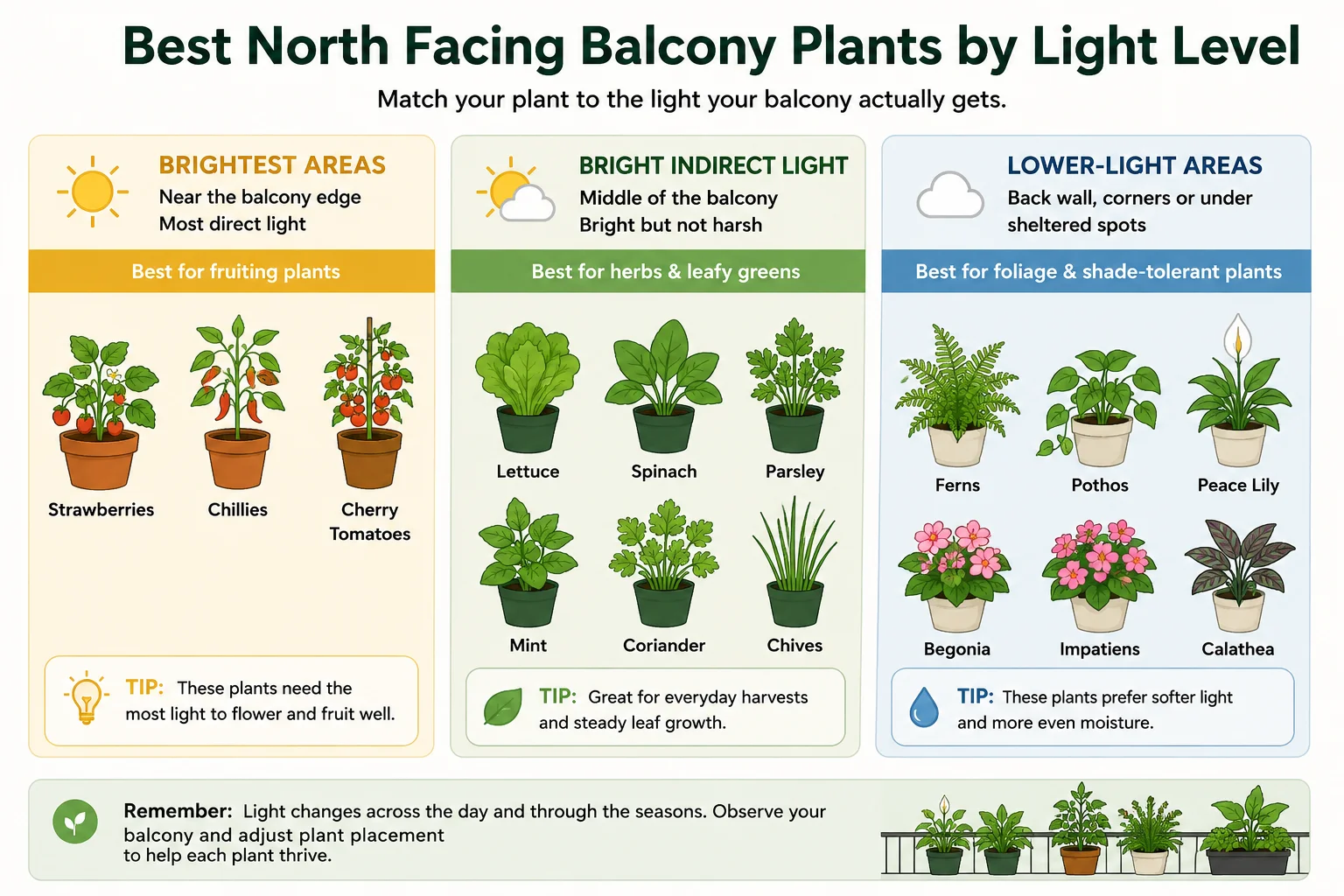
The best plants for a north facing balcony are usually plants that can handle bright indirect light, gentle sun, or partial shade. These include leafy greens, soft herbs, foliage plants, and selected compact fruiting plants when the balcony has a brighter edge.
Instead of thinking only about plant names, it helps to think about plant purpose. Plants grown mainly for leaves are usually easier than plants grown mainly for fruit. Lettuce can give useful leaves in softer light, but tomatoes need enough brightness to support flowers and fruit. Mint can grow strongly in a pot with indirect light, but strawberries may need the sunniest position available.
| Plant | Best Use | Light Preference | North Facing Balcony Tip |
|---|---|---|---|
| Lettuce | Leafy green | Bright indirect light | Keep soil evenly moist and harvest outer leaves often. |
| Spinach | Leafy green | Bright shade to gentle sun | Works well in cooler periods and lower-light corners. |
| Rocket | Leafy green | Bright indirect light | Harvest young leaves before they become too strong. |
| Parsley | Herb | Partial shade to bright light | Place where it gets steady light but not harsh reflected heat. |
| Mint | Herb | Bright indirect light | Grow in its own pot because it spreads quickly. |
| Coriander | Herb | Gentle sun to partial shade | Often lasts longer away from hot afternoon conditions. |
| Strawberries | Compact fruiting | Bright light with some direct sun | Place near the balcony edge for stronger flowering. |
| Cherry tomatoes | Compact fruiting | Brightest available position | Choose compact varieties and avoid dark shaded corners. |
| Chillies | Compact fruiting | Bright light and warmth | Best near warm, bright areas with good airflow. |
| Ferns | Foliage | Shade to bright indirect light | Keep away from dry, hot reflected surfaces. |
| Pothos | Foliage | Low to bright indirect light | Useful for shelves, hanging pots, or shaded wall areas. |
| Peace lily | Foliage and flowers | Bright indirect light | Protect from direct hot sun and keep watering steady. |
Leafy Greens That Grow Well
Leafy greens are often the most reliable edible plants for a north facing balcony because they do not need to produce large fruit. Lettuce, spinach, rocket, kale, and silverbeet can all grow well when the balcony has bright indirect light and steady moisture.
These plants are useful because they reward small spaces quickly. You do not need to wait months for fruit. A few pots of leafy greens can provide small harvests for sandwiches, wraps, salads, and simple family meals. This makes them especially beginner-friendly for apartment gardeners.
On warmer north facing balconies, leafy greens usually do better when they are not placed against hot walls or dark flooring. If the balcony becomes warm in summer, use slightly larger pots, mulch lightly, and harvest leaves regularly so the plants keep producing fresh growth.
Herbs That Tolerate Bright Indirect Light
Many herbs grow well on north facing balconies because they appreciate light without constant harsh heat. Parsley, mint, coriander, chives, lemon balm, and Vietnamese mint are good options for balcony gardeners who want useful plants without needing large containers.
Mint is one of the easiest choices, but it should be grown in its own pot because it can spread strongly. Parsley is slower but steady. Coriander often prefers gentler conditions because strong heat can make it bolt quickly. Chives are compact and can fit into narrow balcony spaces.
The trick with herbs is to avoid treating them all the same. Rosemary and thyme usually prefer stronger sun and drier conditions, while parsley, mint, and coriander are more forgiving in softer light. On a north facing balcony, place softer herbs in the middle zone and stronger, sun-loving herbs closer to the brighter edge.
Compact Fruiting Plants for Brighter Spots
Fruiting plants can grow on a north facing balcony, but they need more careful expectations. Cherry tomatoes, strawberries, chillies, and dwarf citrus plants usually need the brightest available position because flowers and fruit require more energy than leaves.
If the balcony receives only gentle indirect light, these plants may grow leaves but produce fewer flowers. This can confuse beginners because the plant may look alive and healthy without being productive. In that situation, the issue may not be fertiliser or watering. It may simply be that the plant is not receiving enough usable light.
The best approach is to place compact fruiting plants near the front edge of the balcony where they receive the longest light window. Use deep enough pots, avoid overcrowding, and rotate containers occasionally if one side grows stronger than the other.
Foliage Plants and Flowers for Softer Light
North facing balconies are also excellent for many foliage plants and shade-tolerant flowers. Ferns, pothos, peace lilies, begonias, impatiens, caladiums, and some philodendrons can look more comfortable in bright indirect light than in harsh full sun.
These plants are useful when the balcony is more about beauty, calmness, and greenery than food production. They can soften walls, fill shelves, hang from baskets, or sit in shaded corners where vegetables may struggle.
Flowers that prefer partial shade can also help a north facing balcony feel more cheerful. Begonias and impatiens are good examples because they can produce colour without needing the same full sun conditions as many flowering plants.
Do North Facing Balconies Get Enough Sun?
Yes, many north facing balconies get enough sun or useful daylight for a wide range of plants. However, “enough sun” depends on what you want to grow. Leafy greens and herbs may only need bright indirect light, while tomatoes, strawberries, and chillies usually need a stronger light position.
Some north facing balconies receive direct sun during certain parts of the day or certain seasons. Others receive mostly reflected light from nearby walls, windows, and open sky. This reflected light can still be useful, especially for herbs and foliage plants, but it may not always be enough for heavy fruiting plants.
Some north facing balconies receive bright daylight all day, while others only receive a few hours of direct sunlight because of nearby buildings or deep balcony designs. If you have ever wondered whether your balcony behaves more like a limited-sun space than a bright balcony, you may also find our guide to Plants for Balconies With 2–4 Hours Sun helpful. It explains which plants continue growing well when direct sunlight is available for only part of the day.
Where to Place Plants on a North Facing Balcony
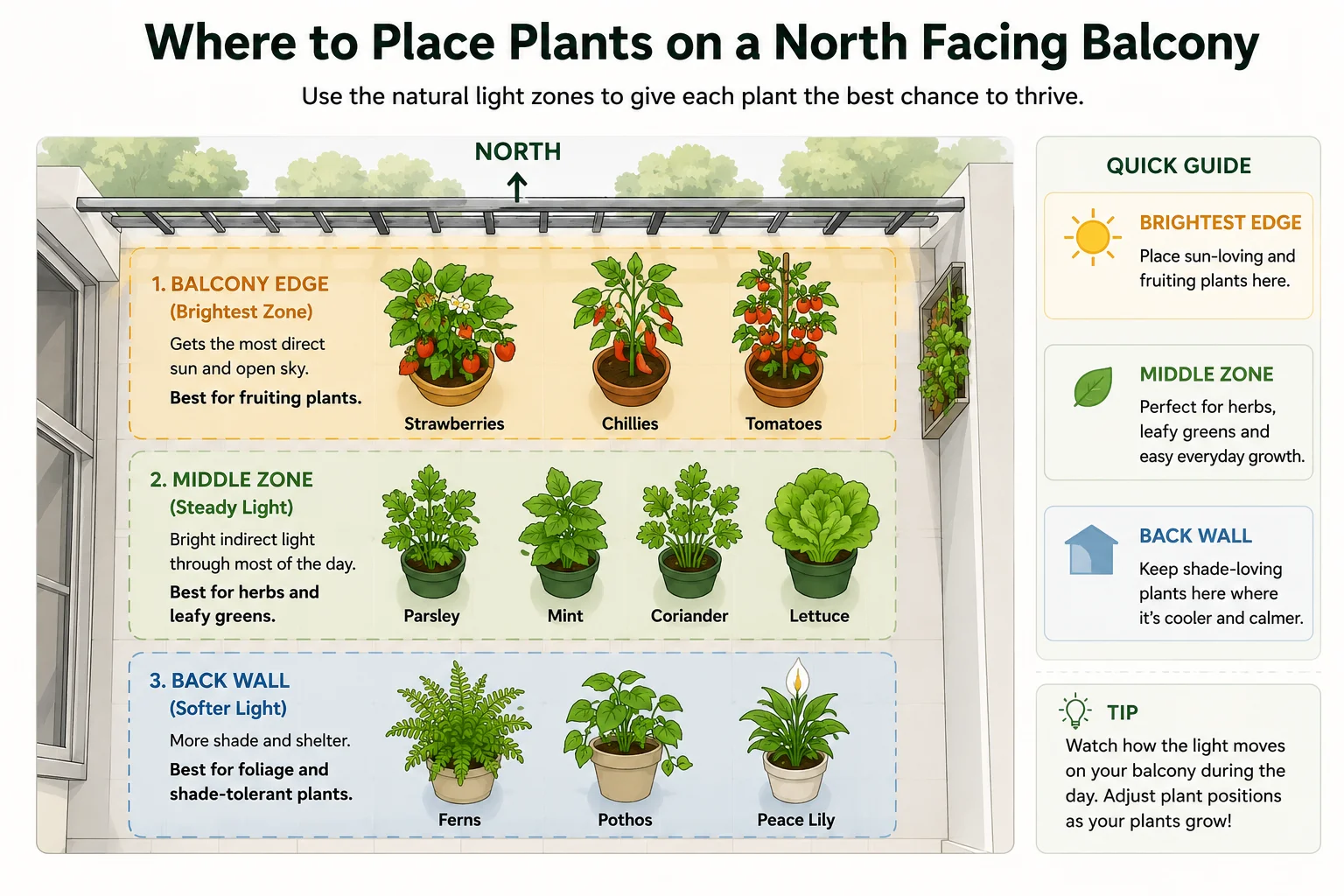
Plant placement can matter as much as plant choice. The brightest area is often near the balcony edge, especially if the railing is open or glass. This is where compact fruiting plants usually have the best chance.
The middle of the balcony often suits herbs and leafy greens because it may receive useful light without as much direct heat. The back wall or shaded corner can be better for foliage plants, especially if the wall does not become too hot during the day.
A simple way to arrange a north facing balcony is to place fruiting plants closest to the light, leafy greens and herbs in the steady middle area, and shade-tolerant foliage plants near the wall or sheltered corners. This creates a more natural match between plant needs and balcony conditions.
North Facing vs Other Balcony Directions
Understanding other balcony directions helps explain why north facing balconies are often useful. They are usually brighter and more balanced than south facing balconies, less intense than west facing balconies, and often more consistent than east facing balconies.
| Balcony Direction | Typical Growing Experience | Plants That Often Suit It |
|---|---|---|
| North facing | Bright, steady light with softer heat | Leafy greens, herbs, foliage plants, some compact fruiting plants |
| East facing | Gentle morning sun and cooler afternoons | Herbs, leafy greens, flowers, some vegetables |
| West facing | Hot afternoon sun and stronger heat stress | Heat-tolerant herbs, succulents, chillies, drought-tolerant plants |
| South facing | Cooler, shadier, and often slower growing | Shade-tolerant foliage plants, selected herbs, low-light greens |
This does not mean north facing balconies are always easy. It means they often provide a flexible middle ground. They can support more plants than very shaded balconies while avoiding some of the harshness that makes west facing balconies difficult in summer.
Why Some North Facing Balconies Still Feel Hot
North facing balconies are often described as bright and balanced, but some still become surprisingly hot. This usually happens because of reflected heat rather than direct sun alone.
Concrete floors, glass doors, metal railings, light-coloured walls, dark tiles, and nearby building surfaces can all change the temperature around pots. A plant may not be sitting in harsh direct sunlight, but the container can still warm up from reflected heat around it.
This matters because roots are trapped inside the pot. Leaves may look fine for part of the day while the potting mix becomes warm and dry. Small black plastic pots, shallow containers, and pots placed against hot walls can make this worse.
Even on a north facing balcony, reflected heat from walls, windows, concrete flooring, and metal railings can sometimes warm pots more than expected. In some apartments, the soil temperature becomes a bigger challenge than sunlight itself. If your containers become surprisingly warm during hotter months, our article on Overheating Balcony Pots in Summer explains why this happens and what balcony gardeners can do about it.
Seasonal Changes on North Facing Balconies
A north facing balcony does not behave exactly the same all year. Seasonal sun angles can change how far light reaches into the balcony, how quickly pots dry, and which plants perform best.
In summer, the balcony may feel bright and warm, but deep balconies can still keep some plants in indirect light for much of the day. During this time, leafy greens may need protection from heat, while chillies and tomatoes may enjoy the warmth if they receive enough brightness.
In autumn, many north facing balconies become easier to manage because temperatures soften and moisture stays steadier. Herbs, lettuce, spinach, and flowers often respond well during this period.
In winter, the lower sun angle may allow direct light to reach deeper into some balconies. This can help herbs and greens continue growing, although cooler temperatures may slow growth. In spring, growth often becomes more active again as light and warmth improve.
| Season | What Often Changes | Best Plant Focus |
|---|---|---|
| Summer | More heat, faster drying, stronger reflected warmth | Chillies, mint, heat-tolerant herbs, well-watered greens |
| Autumn | Softer temperatures and steadier moisture | Lettuce, spinach, parsley, coriander, flowers |
| Winter | Lower sun angle and slower growth | Parsley, spinach, chives, hardy foliage plants |
| Spring | Fresh growth and improving light | Herbs, leafy greens, strawberries, compact tomatoes |
Practical Tips for Better Growth
North facing balcony gardening becomes easier when you treat the space as a set of small microclimates rather than one flat growing area.
- Place fruiting plants in the brightest position near the balcony edge.
- Use the middle area for leafy greens and soft herbs.
- Keep foliage plants in sheltered corners with bright indirect light.
- Use light-coloured pots if the balcony becomes warm.
- Rotate pots occasionally so plants do not lean strongly in one direction.
- Group moisture-loving plants together to create a softer mini-climate.
- Use slightly larger pots for plants that dry out too quickly.
Common Mistakes to Avoid
Many north facing balcony problems come from choosing plants based only on the direction instead of observing the actual light and heat patterns.
| Mistake | What Usually Happens | Better Approach |
|---|---|---|
| Putting fruiting plants in shaded corners | Leaves grow but flowers and fruit stay weak | Move them to the brightest balcony edge. |
| Assuming all north facing balconies are bright | Plants may stretch or grow slowly | Observe light across the day before planting. |
| Using tiny pots for long-term plants | Soil dries quickly and roots become restricted | Use deeper pots for herbs, tomatoes, chillies, and strawberries. |
| Ignoring reflected heat | Leaves wilt and soil dries faster than expected | Move pots away from hot walls and dark flooring. |
| Growing only full-sun plants | The balcony feels disappointing when harvests are small | Mix fruiting plants with greens, herbs, and foliage plants. |
Balcony Haven Note: From what I have seen on north facing balconies, plant success often comes from small placement choices rather than perfect gardening techniques. One pot near the balcony edge may receive enough useful brightness for strawberries or chillies, while another pot only a short distance away may behave more like a shaded indoor-outdoor spot.
Frequently Asked Questions
What are the best plants for a north facing balcony?
The best plants for a north facing balcony include lettuce, spinach, parsley, mint, coriander, chives, ferns, pothos, peace lilies, strawberries, cherry tomatoes, and chillies. Leafy greens, herbs, and foliage plants are usually the most reliable choices, while fruiting plants need the brightest position.
Do north facing balconies get enough sun for vegetables?
North facing balconies can get enough light for many vegetables, especially leafy vegetables such as lettuce, spinach, rocket, and silverbeet. Fruiting vegetables like tomatoes and chillies usually need the brightest part of the balcony and may produce less if the space is too shaded.
Can tomatoes grow on a north facing balcony?
Yes, tomatoes can grow on a north facing balcony if the balcony receives strong bright light or some direct sun. Compact cherry tomatoes usually work better than large tomato varieties because they need less space and are easier to manage in pots.
What herbs grow well on a north facing balcony?
Parsley, mint, coriander, chives, lemon balm, and Vietnamese mint often grow well on north facing balconies. These herbs can tolerate bright indirect light better than herbs that prefer stronger sun, such as rosemary and thyme.
Are north facing balconies good for flowers?
North facing balconies can be good for flowers that tolerate partial shade or bright indirect light. Begonias, impatiens, peace lilies, and some shade-friendly ornamentals can work well, especially when protected from harsh reflected heat.
Why are my plants growing slowly on a north facing balcony?
Plants may grow slowly if the balcony receives less usable light than expected, if nearby buildings block the sun, or if pots are placed too far back from the brighter edge. Slow growth does not always mean failure, but it may mean the plant needs a brighter position or a better-matched species.
Final Thoughts
A north facing balcony can be a very good growing space, but it works best when plant choices match the real balcony conditions. Bright indirect light, gentle sun, reflected heat, balcony depth, and seasonal changes all shape what grows well.
Leafy greens, soft herbs, and foliage plants are usually the most dependable choices. Compact fruiting plants can also succeed when they are placed in the brightest part of the balcony and given enough pot space, warmth, and steady care.
Instead of asking only which plants grow on a north facing balcony, it is more helpful to ask where each plant belongs. Once the brightest edge, softer middle area, and shaded corners are used properly, a north facing balcony can become a productive and peaceful growing space for food, flowers, and greenery.
Leave a Reply