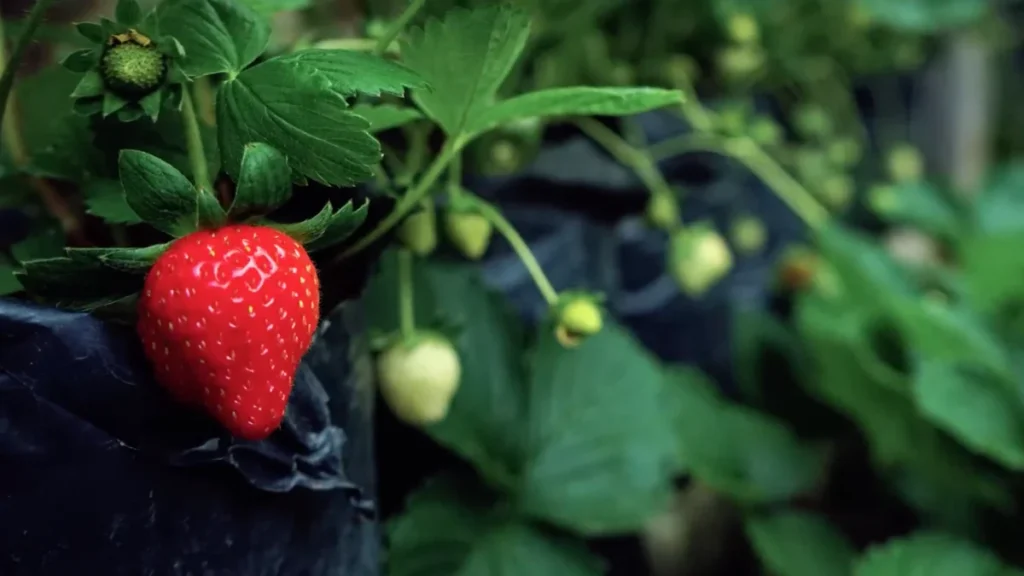
Slow-growing balcony strawberries can feel frustrating because strawberry plants are often described as easy, compact, and perfect for small spaces. They may look healthy at first, then suddenly seem stuck with small leaves, few flowers, or almost no visible progress.
Slow-growing balcony strawberries are usually caused by limited sunlight, restricted root space, uneven watering, poor drainage, temperature swings, or seasonal timing. On balconies, strawberries often grow more slowly than garden strawberries because pots dry out faster, roots have less room, and nearby walls, railings, wind, and buildings can change the growing conditions throughout the day.
This does not always mean the plant is failing. A strawberry plant may still be alive and slowly building roots, even when the top growth looks quiet. The confusing part is that balcony conditions can make normal slow growth look like a plant problem.
This article explains what usually holds balcony strawberries back, how to tell the difference between slow growth and real trouble, and what balcony-specific conditions matter most when strawberries seem stuck.
Why Strawberries Grow Differently on Balconies
Balcony strawberries grow in a much smaller and more changeable space than strawberries planted in the ground. A garden bed has deeper soil, steadier moisture, and more space for roots to spread. A balcony pot has a limited amount of soil that heats up, cools down, dries out, and becomes wet much faster.
Light is also different on balconies. A balcony may look bright, but nearby buildings, roof covers, glass panels, railings, and walls can shorten the number of useful sun hours. Strawberries can survive in softer light, but fruiting and strong leaf growth usually slow down when they do not receive enough direct sun.
Wind can also change the way strawberry plants behave. A windy balcony can dry leaves and soil quickly, while a covered or enclosed balcony may hold moisture for too long. Both situations can slow growth, even though they look like opposite problems.
What Most Strawberry Advice Misses About Balconies
Many strawberry guides are written for garden beds, raised beds, or open outdoor spaces. That advice may still be useful, but it often assumes the plant has steady sun, deeper soil, and more room than a balcony can provide.
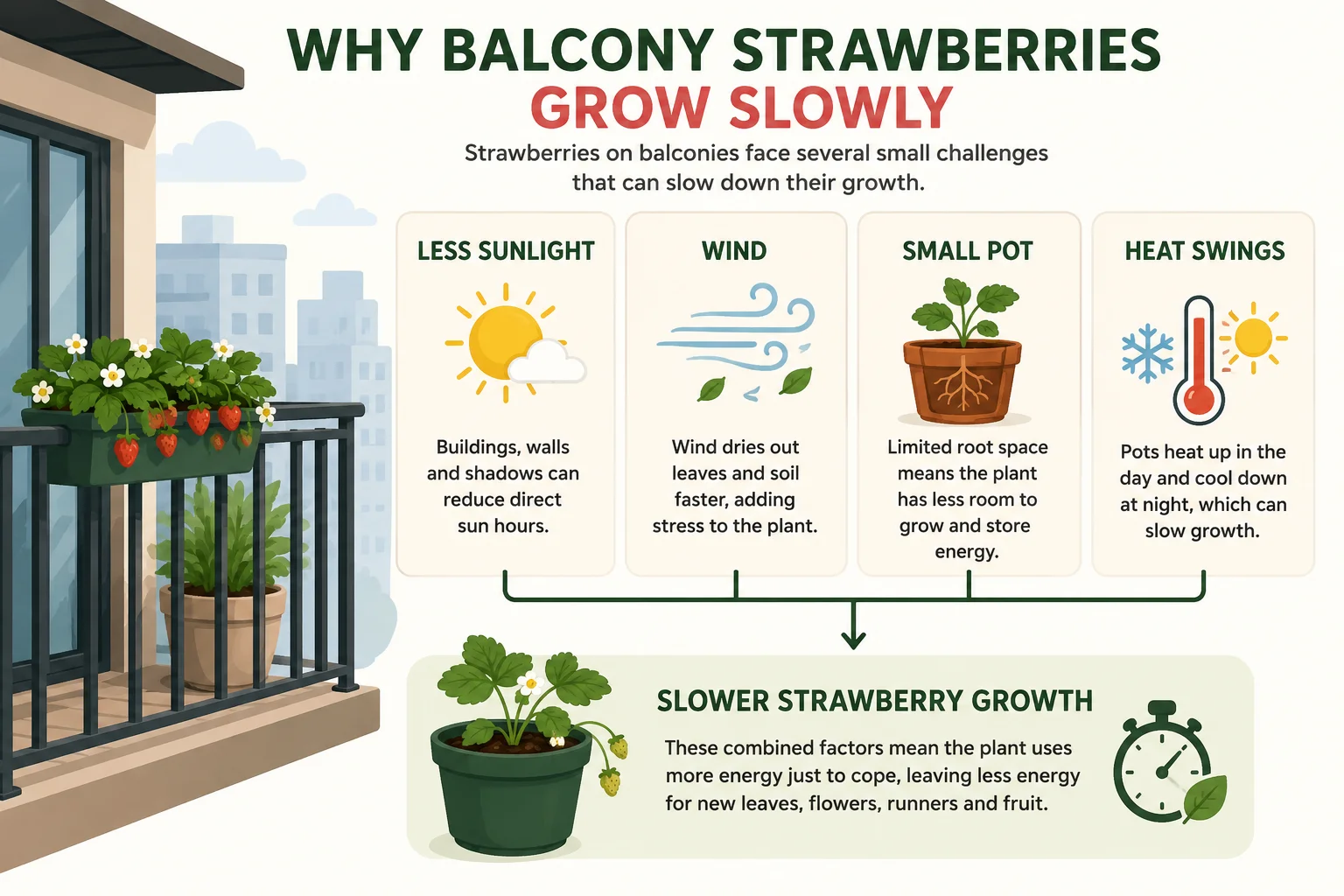
On a balcony, the same strawberry plant may grow more slowly because its roots are dealing with a smaller soil area. The plant may also receive only a few hours of direct sun instead of a full day of garden light. This changes how quickly it produces leaves, flowers, runners, and fruit.
The biggest missed point is that slow growth is not always a single problem. It is often a mix of small balcony pressures. A pot may be slightly too narrow, the sun may be slightly too short, and the watering may be slightly uneven. Together, these small things can make strawberry growth feel stuck.
What Holds Balcony Strawberries Back?
Most slow-growing balcony strawberries are held back by a few common conditions. These conditions do not always kill the plant. They simply reduce how much energy the plant has for new leaves, flowers, runners, and fruit.
The main causes are usually light, root space, watering, drainage, temperature, and season. Looking at these together is more useful than assuming the plant is weak or that the variety is wrong.
Limited Sunlight and Short Balcony Light Hours
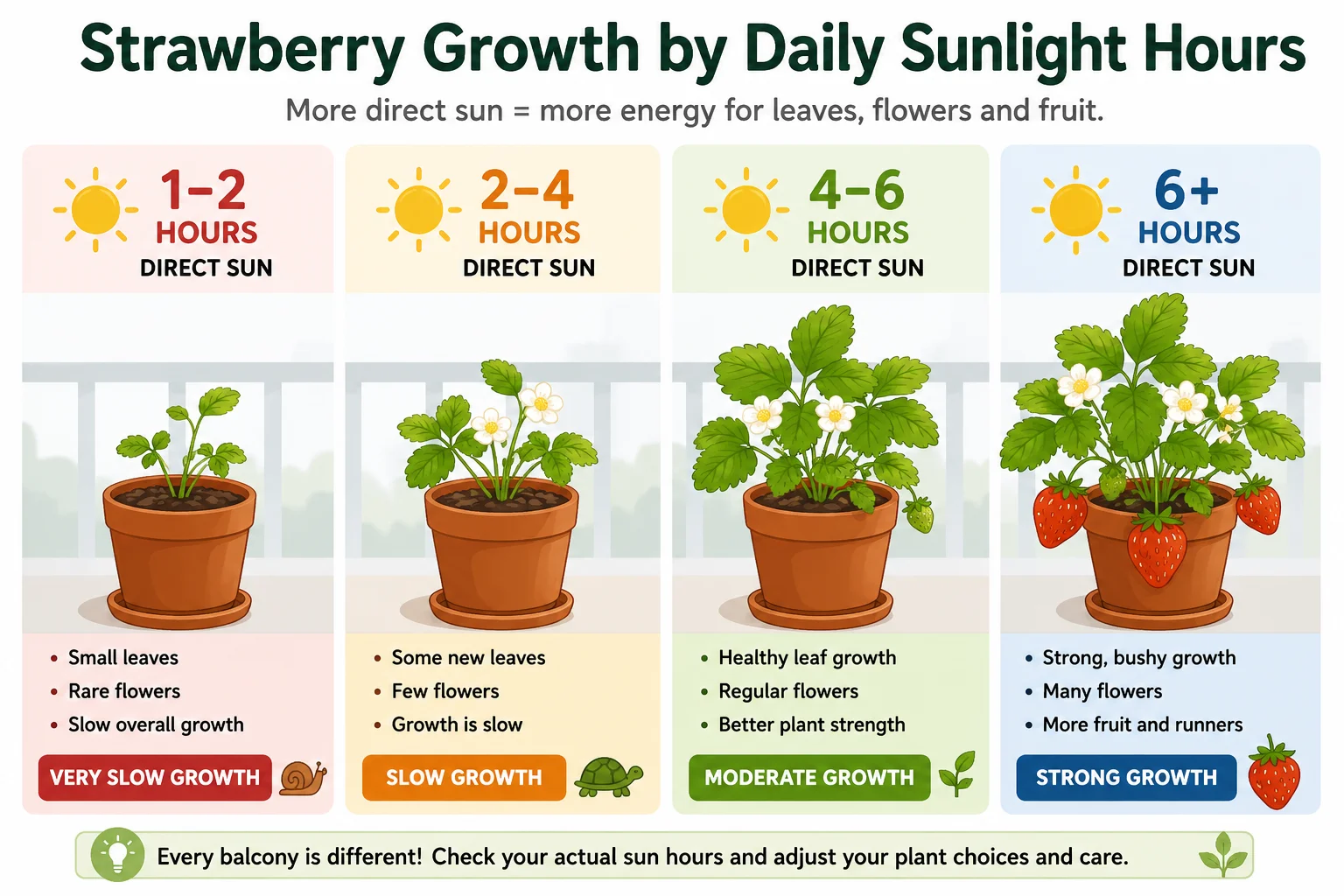
Strawberries usually grow best with strong, steady light. On balconies, the problem is often not complete darkness but short light. A plant may receive direct sun for only two or three hours before the sun moves behind a wall, roof, or nearby building.
When the light is too limited, strawberries often stay compact. Leaves may remain small, flowers may be fewer, and fruit may take longer to form. The plant may still look green, but it may not have enough energy to grow quickly.
This is why measuring actual sun hours matters more than guessing from balcony direction. A balcony may face a bright direction but still receive less usable sunlight because of shadows. If you are unsure how much sun your space really gets, this guide on how to measure sunlight on a balcony can help you understand the difference between bright shade, partial sun, and stronger direct sun.
If your balcony receives little or no direct sun, slow strawberry growth may be more about light limits than poor care. This article on gardening on balconies with no direct sun may help explain what plants can realistically do when the balcony is bright but shaded.
| Daily Direct Sun | Likely Strawberry Growth | What This Usually Means on a Balcony |
|---|---|---|
| Less than 2 hours | Very slow | The plant may survive but produce few flowers or fruit. |
| 2–4 hours | Slow to moderate | Leaf growth may continue, but fruiting can be limited. |
| 4–6 hours | Moderate | A realistic range for many balcony strawberries. |
| 6+ hours | Strongest growth | The plant has better energy for flowers, runners, and fruit. |
Small Pots and Restricted Root Space
Strawberries do not need very deep pots, but they do need enough space for their shallow roots to spread. A very narrow pot can keep the plant alive while still limiting how much it grows.
When roots have little room, the plant may stay small even if it receives enough light. It may also dry out faster because there is less soil to hold moisture. This is common in narrow railing planters, small hanging pots, and decorative containers that look suitable but do not hold much growing mix.
Container width often matters more than many beginners expect. A wider container can support steadier moisture and better root spread, while a tiny pot can make the plant depend on constant watering. If your strawberries are growing in a long, narrow setup, this article on strawberries in narrow balcony planters explains how planter shape can affect growth and fruiting.
| Container Size | Typical Balcony Result | Growth Expectation |
|---|---|---|
| Very small pot | Roots dry quickly and space is limited. | Slow growth and fewer flowers are common. |
| Narrow railing planter | Can work, but moisture changes quickly. | Growth depends heavily on watering and light. |
| Wider container | Roots have more room and moisture is steadier. | Usually better for stronger growth. |
| Hanging basket | Good airflow but dries faster in wind. | Can grow well if moisture is not too uneven. |
Uneven Watering in Balcony Containers
Watering problems are one of the easiest reasons to miss because they do not always look dramatic. A strawberry plant can slow down long before it collapses or turns yellow.
On balconies, pots can dry from the outside edges first. The surface may look dry while deeper soil still holds moisture, or the top may look damp while the root zone is actually drying out unevenly. Wind, heat from walls, and small pot size can all make this more unpredictable.
When watering swings between too dry and too wet, strawberry plants often pause growth. They may droop in warm afternoons, produce smaller leaves, or stop flowering for a while. This does not always mean the plant needs more water. Sometimes it means the soil is not staying evenly moist long enough for steady growth.
If your balcony pots dry much faster than expected, the article on why balcony plants dry out overnight may help explain how wind, heat, and container size affect moisture loss.
Drainage, Soil, and Root Health
Slow strawberry growth can also happen when roots are not healthy. This is common when soil stays wet for too long, drains poorly, or becomes compacted inside a small container.
Strawberry roots need air as well as moisture. When a pot has poor drainage, roots can struggle to breathe. The plant may stay green for a while but stop growing strongly. Leaves may become pale, stems may feel softer, and new growth may slow down even during warm weather.
The soil mix also matters because balcony containers have less room for mistakes. A heavy mix can hold too much water in a shaded or covered balcony. A very light mix can dry too quickly on a hot or windy balcony. This article on the best soil for potted strawberries is useful if the plant seems stuck and the soil feels either too wet, too dry, or too dense.
Drainage is especially important in small pots and railing planters. A pot may have drainage holes but still drain slowly if the mix is compacted or the pot sits flat against a surface. For more container-specific help, this guide on drainage tips for small balcony containers explains how water behaves in tight balcony setups.
Temperature Swings, Wind, and Balcony Microclimates
Balcony temperatures can change quickly. A pot near a hot wall may heat up during the day, then cool quickly at night. A strawberry plant near a railing may get better light but also stronger wind. A plant near a back wall may be warmer and more sheltered but receive less sun.
These small differences can affect growth. Strawberries usually prefer stable conditions. When roots heat up, dry out, then cool down quickly, the plant may grow more slowly because it is responding to stress instead of producing new leaves and flowers.
Wind can make this worse by increasing moisture loss. Even a healthy strawberry plant can look tired if it sits in a windy corner where the soil dries faster than expected. In this situation, slow growth may be linked to the balcony position rather than the plant itself.
Seasonal Growth and Strawberry Timing
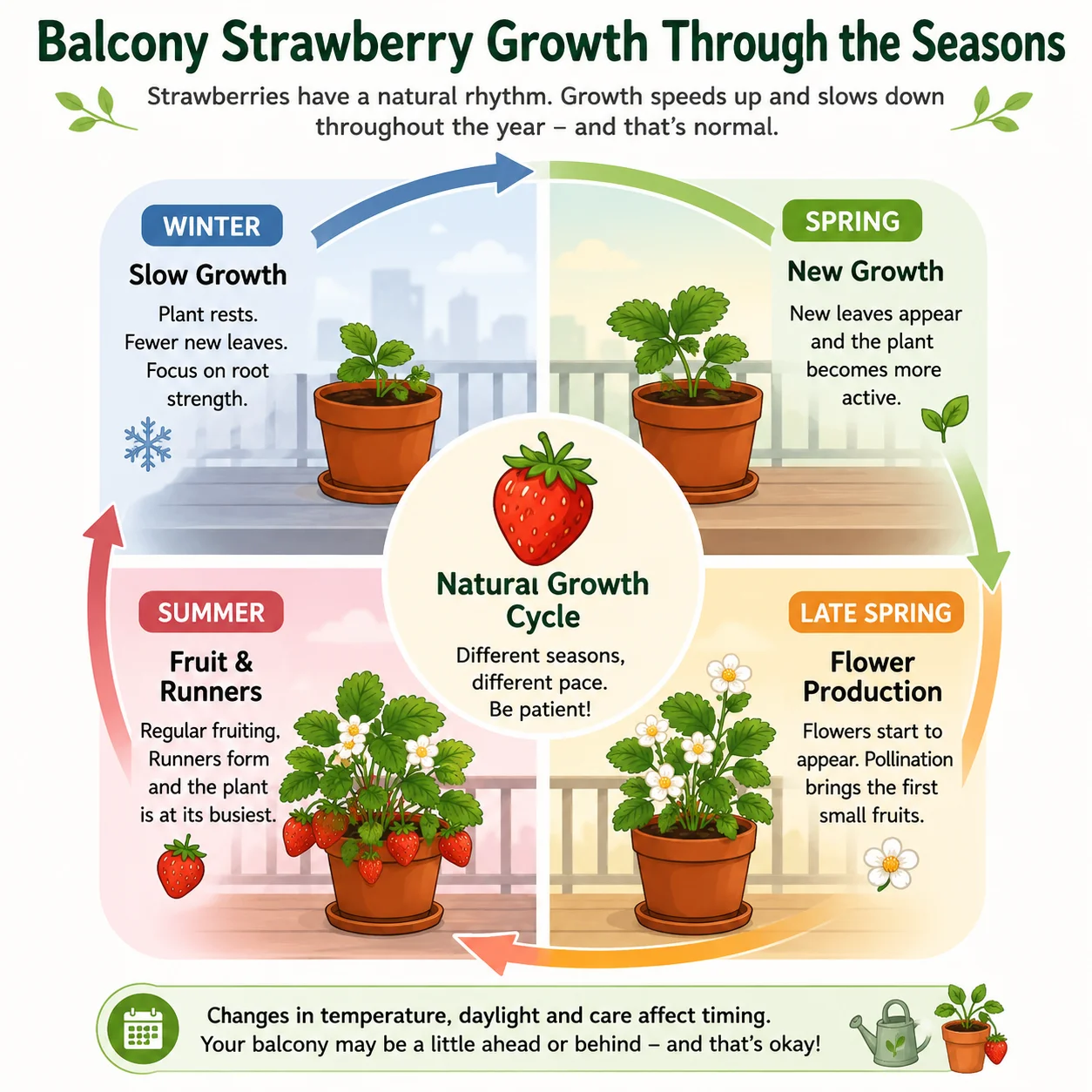
Strawberries do not grow at the same speed all year. This is important because many balcony gardeners worry when growth slows during cooler months, very hot periods, or seasonal changes.
In cooler weather, strawberry plants often focus less on visible leaf growth. In warmer seasons, they may begin producing new leaves, flowers, runners, and fruit more actively. But on balconies, this change can feel uneven because pots warm up and cool down faster than garden soil.
In Australian conditions, early spring can be a transition period. A strawberry plant may start waking up, but cool nights, short sun hours, or unstable watering can still slow visible growth. During very hot periods, growth may also slow because the plant is protecting itself from heat stress.
Slow Growth Symptoms and Likely Causes
Slow growth is easier to understand when the plant’s symptoms are read together. One sign alone may not explain much, but a pattern can point toward the most likely balcony issue.
| What You Notice | Likely Cause | What It Usually Means |
|---|---|---|
| Small leaves and few flowers | Limited sunlight | The plant may be getting enough light to survive but not enough to grow strongly. |
| Healthy leaves but no fruit | Not enough energy for flowering and fruiting | The plant may need stronger light or more stable conditions. |
| Drooping during warm afternoons | Water stress or hot pot conditions | The container may be drying faster than expected. |
| Pale leaves and soft growth | Wet soil or weak root health | Roots may be struggling with poor drainage or heavy soil. |
| No new leaves for weeks | Seasonal slowdown, root stress, or low light | The plant may be paused rather than dead, but the full pattern matters. |
| Leaves grow but plant stays small | Restricted root space | The container may be limiting how much the plant can develop. |
If your strawberry plant is not the only plant struggling to grow new leaves, this article on balcony plants not growing new leaves may help you compare wider balcony conditions beyond strawberries.
When Slow Growth Is Actually a Problem
Slow growth is common with balcony strawberries, but some signs point to a plant that is struggling more seriously. The difference is usually in the combination of symptoms. A strawberry plant that grows slowly but still has firm stems, green leaves, and small new growth may simply be moving at a balcony pace.
More concern is needed when slow growth comes with collapsing leaves, black or mushy crown tissue, a sour smell from the pot, very soft stems, or soil that stays wet for many days. These signs can suggest root stress, crown rot, or poor drainage rather than normal slow growth.
Persistent yellowing can also be a warning sign when it keeps spreading across the plant. A few old leaves turning yellow is normal, but yellow leaves combined with soggy soil, no new growth, and soft stems usually points to a root-zone problem.
The main thing is to read the whole plant, not one leaf. Slow growth by itself is often normal. Slow growth with rot, collapse, smell, or worsening yellowing is more likely to be a real problem.
Practical Insights for Steadier Growth
Strawberries usually respond better to steadier balcony conditions than sudden major changes. Small observations often explain more than guessing from one symptom.
- Track how many hours of direct sun actually reach the plant.
- Check whether the pot dries quickly at the edges or stays wet for days.
- Notice whether the plant grows better near the railing or closer to the wall.
- Compare root space, pot width, and soil moisture before assuming the plant is weak.
- Expect slower growth during cool weather, extreme heat, or seasonal transitions.
- Look for patterns across several weeks rather than judging growth from one day.
For balcony strawberries, steady progress is often more realistic than fast growth. A plant that slowly produces healthy leaves can still become productive when light, moisture, and season become more favourable.
Common Misunderstandings About Slow Strawberry Growth
Many slow-growth worries come from comparing balcony strawberries with garden strawberries. The plant may be growing normally for its space, but the balcony makes the progress look slower.
- Assuming a green plant should also be flowering quickly.
- Thinking every strawberry plant needs a deep pot instead of enough root spread.
- Watering more often because growth looks slow.
- Expecting shaded balcony strawberries to fruit like full-sun garden plants.
- Ignoring wind because strawberries are small plants.
- Assuming slow seasonal growth means the plant is dying.
These misunderstandings are common because strawberries are often sold as easy container plants. They can be easy, but balcony conditions still shape how fast they grow.
Balcony Haven Note: I have noticed that balcony strawberries can look stuck even when they are not really failing. In small pots, they seem to react strongly to small changes in sun, wind, and moisture. One balcony corner can grow them slowly, while another spot on the same balcony may give better growth because the light and drying pattern are different.
Frequently Asked Questions
Why are my balcony strawberries growing so slowly?
Balcony strawberries usually grow slowly because of limited sun, small containers, uneven watering, poor drainage, or seasonal timing. The plant may still be healthy, but balcony conditions can slow leaf growth, flowers, runners, and fruit.
Can strawberries grow on a shaded balcony?
Strawberries can survive in partial shade, but growth and fruiting are usually slower. A shaded balcony may support healthy leaves, but strong flowering and fruit production are more likely when the plant receives several hours of direct sun.
Do strawberries need deep pots on a balcony?
Strawberries do not usually need very deep pots, but they do need enough room for shallow roots to spread. A wider container is often more useful than a very deep narrow pot.
What does an overwatered balcony strawberry look like?
An overwatered strawberry may grow slowly, show pale leaves, feel soft at the stems, or stop producing new growth. The soil may also stay wet for days, especially in shaded or covered balcony areas.
Why does my strawberry plant have leaves but no fruit?
A strawberry plant may grow leaves but no fruit when it does not have enough energy for flowering and fruiting. On balconies, this is often linked to short sun hours, stress from uneven watering, small pots, or seasonal timing.
Is slow strawberry growth normal in winter or early spring?
Yes, slower growth can be normal in cooler weather or during seasonal transitions. On balconies, this slowdown can feel stronger because pots warm up and cool down faster than garden soil.
Final Thoughts
Slow-growing balcony strawberries are not always a sign of failure. In many cases, the plant is responding to the small-space conditions around it: shorter sun hours, limited root space, fast-drying pots, wet soil, wind, or changing seasons.
The most useful way to understand the problem is to look at patterns rather than one symptom. A strawberry plant with small leaves may need more light. A plant that droops often may be dealing with moisture swings. A plant that stays green but still grows slowly may simply be working within the limits of its container or season.
Balcony strawberries can still grow well, but they often need realistic expectations. Once the plant’s light, pot size, watering pattern, and seasonal timing make sense, slow growth becomes easier to understand and less discouraging.
Leave a Reply