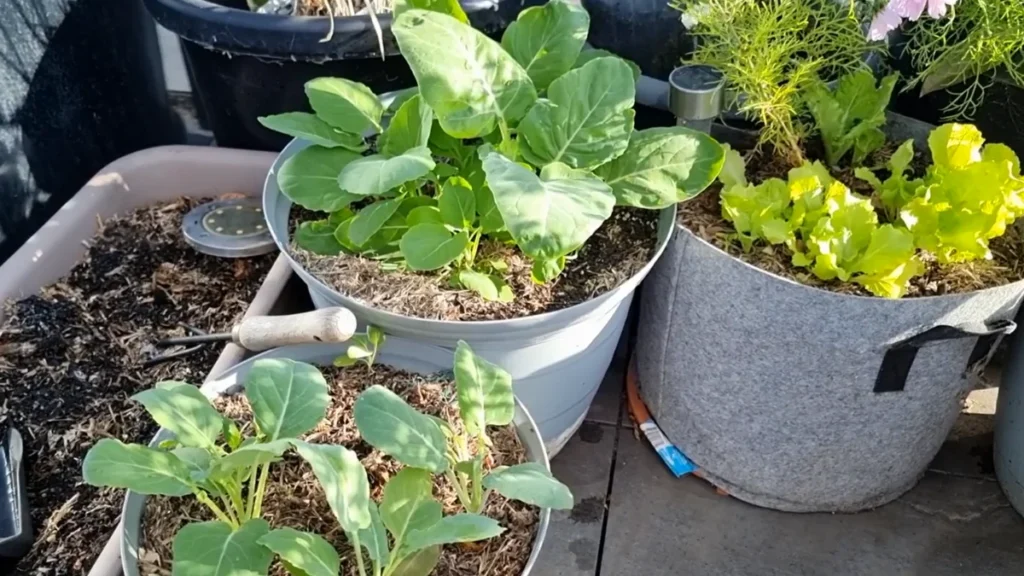
Many balcony gardeners reach a point where plants are alive but not thriving. Leaves look fine, but growth feels slow, flowering is inconsistent, and some pots seem to do better than others for no clear reason. This often leads to the question of whether sunlight is being used properly, especially when space is limited and buildings block light in unpredictable ways. So, how to organise pots for maximum sunlight?
Organising pots for maximum sunlight on a balcony works best when pots are arranged by height, spacing, and position so light can move through the space instead of being blocked. Rather than placing all plants in the brightest spot, a layered layout allows both direct and reflected light to reach more plants throughout the day.
This confusion happens because sunlight on balconies does not behave the same way it does in open gardens. Light is filtered by walls, reflected by surfaces, and constantly shifting depending on time of day, which means a bright-looking area does not always provide consistent exposure.
This article will clarify how pot arrangement affects sunlight distribution, why common layouts often fail on balconies, and what actually determines how much usable light your plants receive.
Table of Contents
Balcony Reality Check
On a balcony, sunlight is rarely direct and uninterrupted. Buildings nearby can block the sun at certain hours, while walls and railings can reflect or redirect light in unexpected ways. This creates uneven lighting zones even within a very small space.
Containers also change how light is used. Unlike garden beds where plants grow at similar ground level, balcony pots vary in height. Taller plants can cast shadows over shorter ones, and tightly grouped pots can prevent light from reaching lower leaves.
Wind and heat also play a role. Strong airflow can shift leaves and alter light exposure moment by moment, while heat from walls or floors can make certain spots feel brighter than they actually are in terms of usable light.
What Most Advice Misses
Most gardening advice assumes open space where sunlight falls evenly across a wide area. In those settings, simply placing plants in a sunny spot is often enough.
On balconies, this assumption breaks down. Light does not just come from above—it bounces off walls, passes through railings, and moves in narrow angles. When pots are placed without considering this movement, some plants receive far less light than expected, even if the area appears bright.
Another common misunderstanding is treating all pots equally. In reality, pot height, spacing, and positioning create layers of light exposure. Without thinking about these layers, some plants end up shading others, reducing overall efficiency of the available sunlight.
How Pot Arrangement Changes Light Exposure
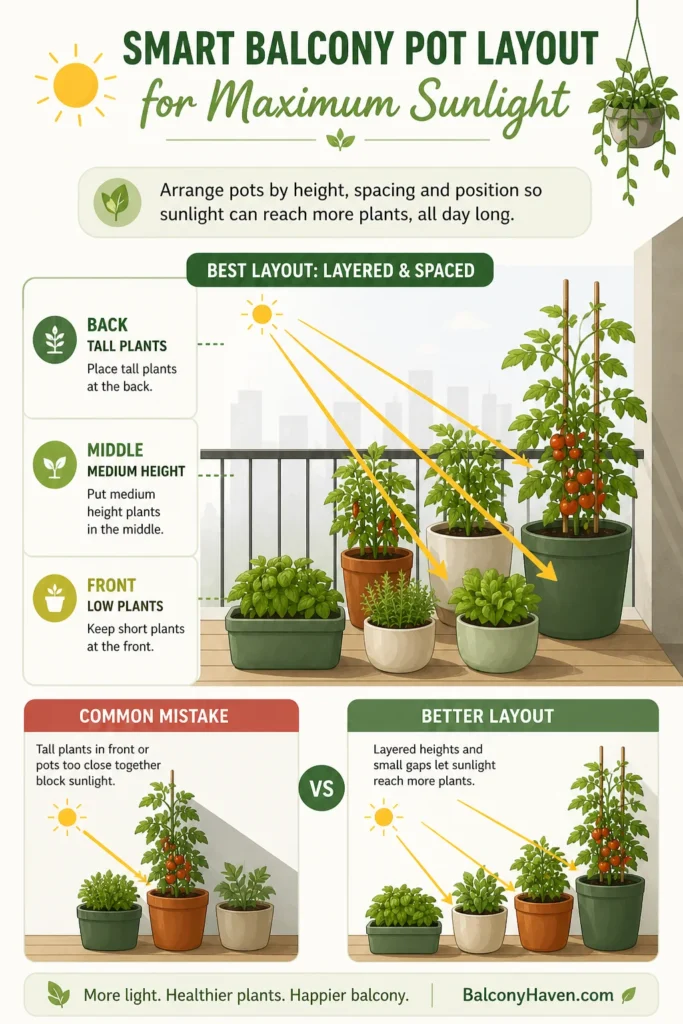
Front vs Back Placement on a Balcony
Pots placed closer to the railing often receive more direct light, especially on open balconies. However, placing all plants at the front can create a dense barrier that blocks light from reaching anything behind.
A more balanced arrangement allows light to pass through rather than stop at the first row. This is why spacing and layering matter more than simply pushing everything forward.
Tall Plants vs Short Plants
Height differences create natural shadows. Taller plants can block sunlight from reaching shorter plants behind or below them.
This becomes more noticeable during early morning or late afternoon when sunlight enters at a lower angle. Even a small height difference can create a long shadow across nearby pots.
Grouped Pots vs Spaced Pots
When pots are tightly grouped, they often compete for the same light source. Leaves overlap, and inner areas become shaded.
Spacing pots slightly apart allows light to filter between them. This does not require large gaps—just enough for light to move through rather than be completely blocked.
For airflow-related spacing considerations, see Balcony Pot Spacing for Airflow , which also indirectly affects how light reaches plants.
Vertical vs Flat Arrangement
Flat layouts (all pots on the floor) can limit how much sunlight reaches each plant, especially when space is tight.
Vertical arrangements introduce layers, allowing plants at different heights to access light from different angles. This is especially useful on smaller balconies where floor space is limited.
| Arrangement Type | What Happens to Light | What It Means for Plants |
|---|---|---|
| Pots tightly grouped | Light gets blocked in the centre | Inner plants grow slower |
| Tall plants in front | Shadows cover smaller pots | Uneven growth |
| Spaced pots | Light moves between gaps | More balanced exposure |
| Layered heights | Light reaches multiple levels | Better overall use of sunlight |
| Flat layout (all same level) | Light hits only top leaves | Lower leaves get less light |
Practical Insights
Understanding how sunlight moves is more useful than trying to control it. A few small observations can make a noticeable difference:
- Light shifts across the balcony during the day, not just in one spot
- Shadows from railings and walls move more than expected
- Leaves can block light just as much as solid objects
- Reflected light from walls can support plants in less direct areas
- Small gaps between pots allow light to travel further
Common Misunderstandings
Many balcony gardeners assume the issue is the amount of sunlight, when it is often about how that sunlight is distributed.
- A bright balcony does not mean all plants receive equal light
- Putting all pots together does not maximise sunlight—it often reduces it
- Taller plants are not always better placed at the back
- Light reflected from walls is often underestimated
- Morning and afternoon light behave very differently
Local & Seasonal Context
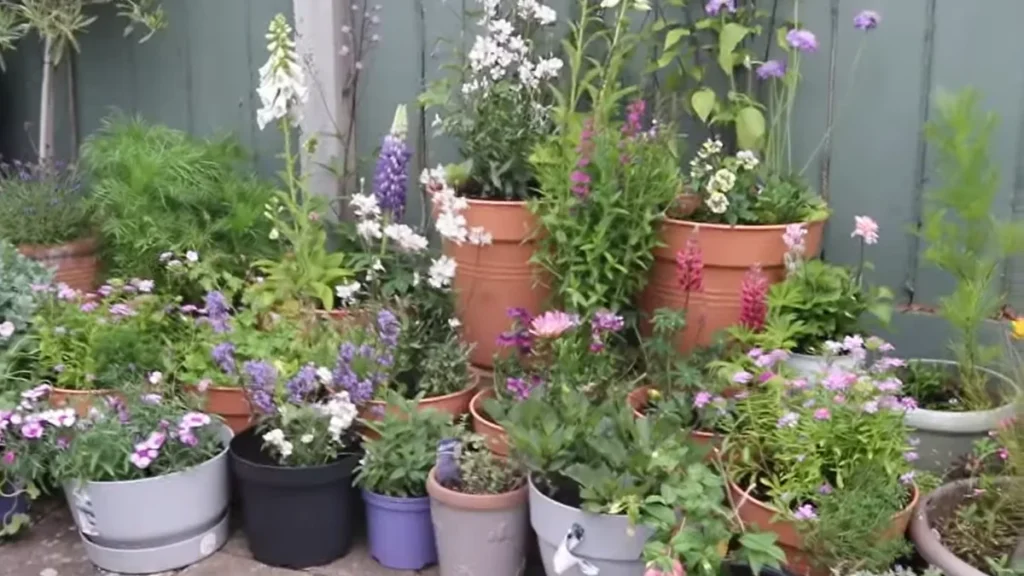
In Australian conditions, especially in places like Brisbane, sunlight intensity changes throughout the year. Summer sun can be strong and direct, while winter light tends to be softer and shorter in duration.
Balconies facing west may receive intense afternoon sun that creates strong shadows, while east-facing balconies experience gentler morning light that moves quickly across the space. Understanding these seasonal patterns helps explain why a layout that works in one season may feel less effective in another.
For a deeper understanding of how sunlight behaves on your specific balcony, see How to Measure Sunlight on a Balcony .
Balcony Haven Note
I have noticed that even on the same balcony, moving a pot just a small distance can change how much light it actually receives. Some spots that look bright end up being less useful because light passes over them too quickly or gets blocked at certain times of the day.
If you are unsure whether your balcony gets enough sunlight overall, Plants for Balconies With 2–4 Hours Sun can help you understand what still grows well in limited light conditions.
Frequently Asked Questions
Do all pots need direct sunlight to grow well?
Not necessarily. Some plants use indirect or reflected light effectively, especially on balconies where surfaces bounce light around.
Is it better to group plants together or spread them out?
It depends on how light moves across your balcony. Grouping can sometimes block light, while spacing allows better distribution.
Can shadows really affect plant growth that much?
Yes. Even partial shading for a few hours each day can reduce how much usable light a plant receives.
Does pot height matter for sunlight?
Height changes how plants interact with light. Taller pots can block light, while raised pots can sometimes access better exposure.
Final Thoughts
Organising pots for maximum sunlight on a balcony is not about finding one perfect spot. It is about understanding how light moves, how shadows form, and how small changes in position can affect exposure.
What often makes the biggest difference is not more sunlight, but better use of the sunlight already available. When pots are arranged in a way that allows light to flow rather than be blocked, even a limited balcony can support healthy, steady plant growth.
Over time, observing how light shifts across your space will naturally guide better placement. No two balconies behave the same, and that is exactly why small adjustments matter more than fixed rules.
Happy Balcony Gardening!


Leave a Reply