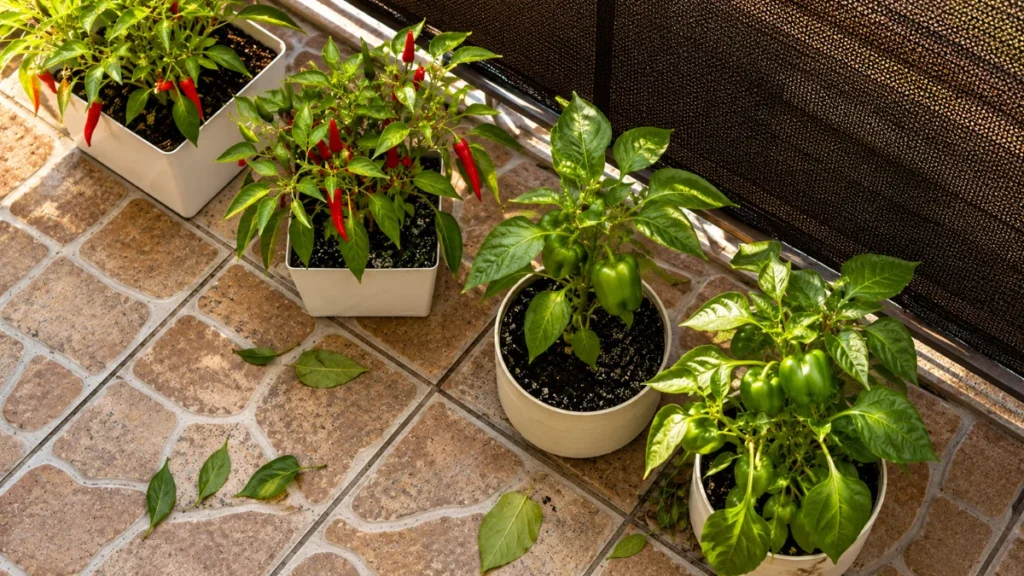
Leaves falling off balcony plants suddenly can feel worrying because it often looks like something has gone wrong overnight. One day the plant looks normal, and the next day there are leaves on the soil, balcony floor, or around the pot.
Sudden leaf drop on balcony plants usually happens when the plant reacts to a quick change in its growing conditions. Heat, wind, dry soil, wet roots, moving the pot, pest pressure, or seasonal changes can all make leaves fall, especially in small containers where conditions change faster than they do in garden beds.
The confusing part is that balcony plants can drop leaves even when your care has not changed. The balcony itself may have changed. A hotter week, stronger wind, new shade from a nearby building, or a pot drying faster than usual can all create stress before you notice anything obvious.
This article explains why leaves falling off balcony plants suddenly happens, what the fallen leaves may be telling you, and how to think about the problem in a realistic balcony setting.
Why Balcony Plants Drop Leaves Faster Than Garden Plants
Balcony plants live in a more changeable space than many people realise. A plant in the ground has more soil around its roots, steadier moisture, and more protection from sudden temperature changes. A balcony plant has a limited pot, exposed leaves, and a small growing area that can change quickly.
This is why leaf drop often appears suddenly in containers. The plant may have been coping for a while, then one extra change pushes it into stress. A windy day, a hot afternoon, or a missed watering can affect a small pot much faster than a garden bed.
Balconies also have hard surfaces nearby. Concrete floors, glass railings, brick walls, and metal frames can reflect heat and light back onto plants. This can make the plant feel hotter and drier than the weather forecast suggests.
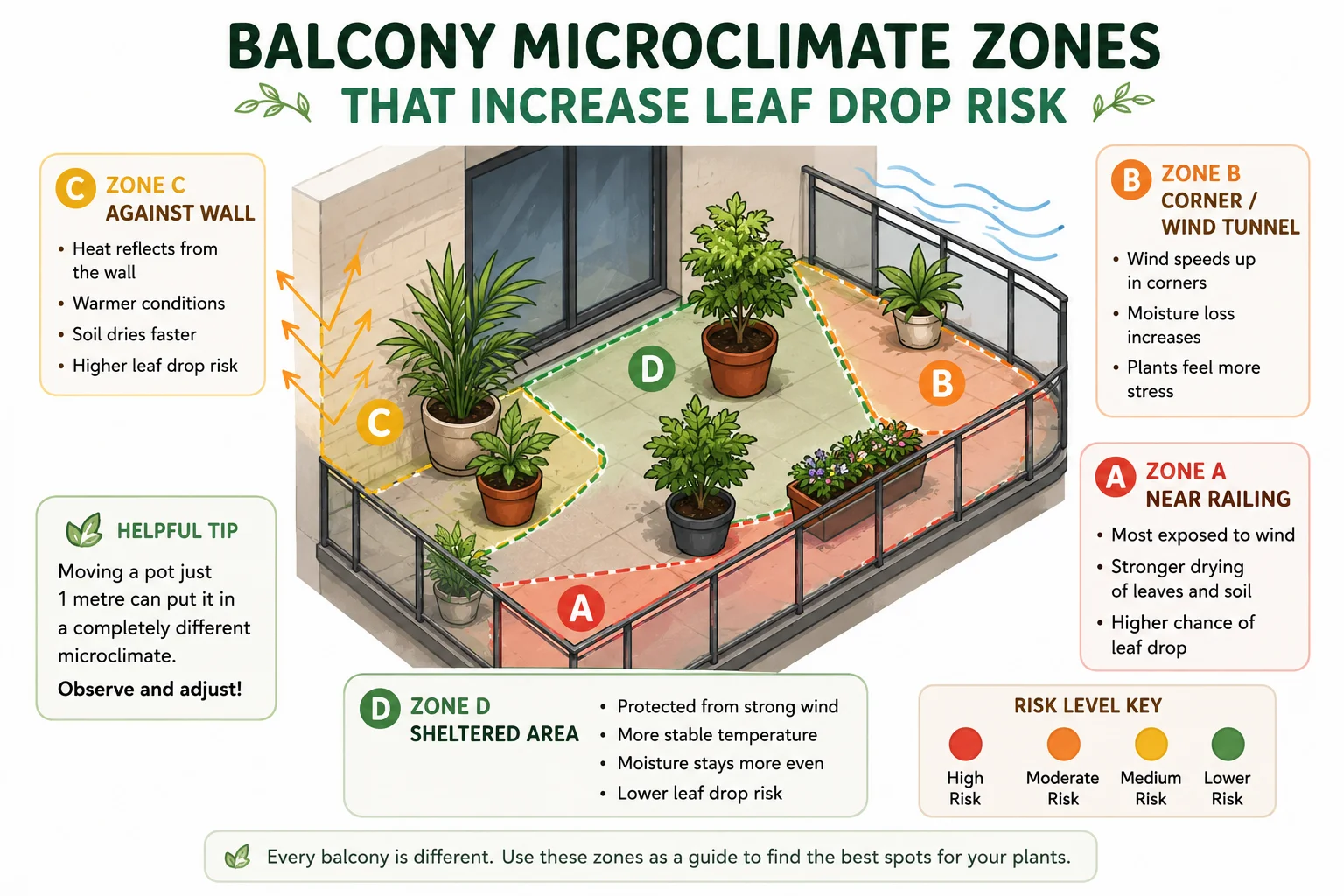
In small spaces, plant placement matters too. A pot near the railing may deal with more wind and heat. A pot against the wall may stay warmer but receive less airflow. A corner may trap heat or create a dry wind tunnel depending on the building layout.
What Most Leaf Drop Advice Misses
General gardening advice often says falling leaves are caused by too much water, not enough water, pests, or shock. Those reasons can be true, but they do not fully explain balcony conditions.
On balconies, several small stresses often work together. A plant may be slightly dry, slightly root-crowded, and exposed to stronger wind than usual. None of those things alone may seem serious, but together they can cause sudden leaf loss.
Another thing many guides miss is that balcony conditions can change without the gardener doing anything wrong. Sun angles shift, weather patterns change, and nearby buildings can affect light and wind. This makes observation more useful than blame.
Why Leaves Fall Suddenly Even When Care Hasn’t Changed
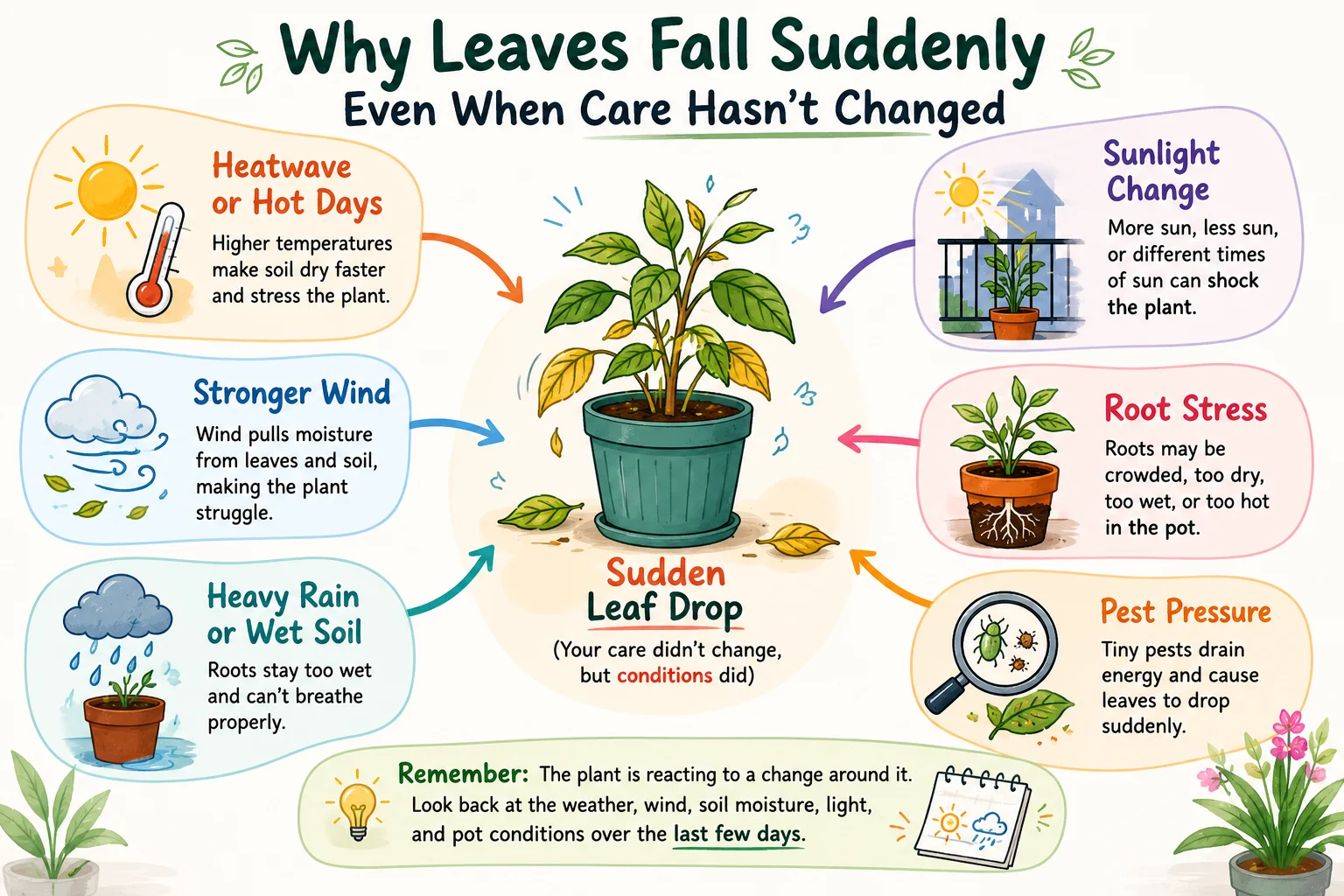
Many people notice leaf drop and think, “But I did not change anything.” That can be true. The plant may still be reacting to something that changed around it.
A heatwave can make soil dry faster. Strong wind can pull moisture from leaves. Heavy rain can keep roots wet for too long. A change in sunlight can make a plant warmer, cooler, brighter, or darker than before.
Plants often drop older leaves first because those leaves are easier to sacrifice. The plant may keep newer growth while letting older leaves fall to reduce stress. This can look dramatic, but it is not always a sign that the whole plant is dying.
Watering Changes and Leaf Drop
Watering is one of the most common reasons for balcony plant leaves falling off suddenly, but it is not always as simple as “too much” or “too little”. The real issue is often a fast change in moisture around the roots.
If the pot dries out more than usual, the plant may drop leaves to reduce how much water it needs. This is common during hot, windy, or dry weather. It can also happen when a plant has grown larger but is still in the same small pot.
Wet soil can cause a similar result for a different reason. When potting mix stays wet for too long, roots may struggle to breathe properly. The leaves may yellow, droop, or fall because the roots are not working well.
If your pots often dry quickly, this article on balcony soil drying out too fast may help you understand why moisture disappears so quickly in containers.
Wind Stress on Balcony Plants
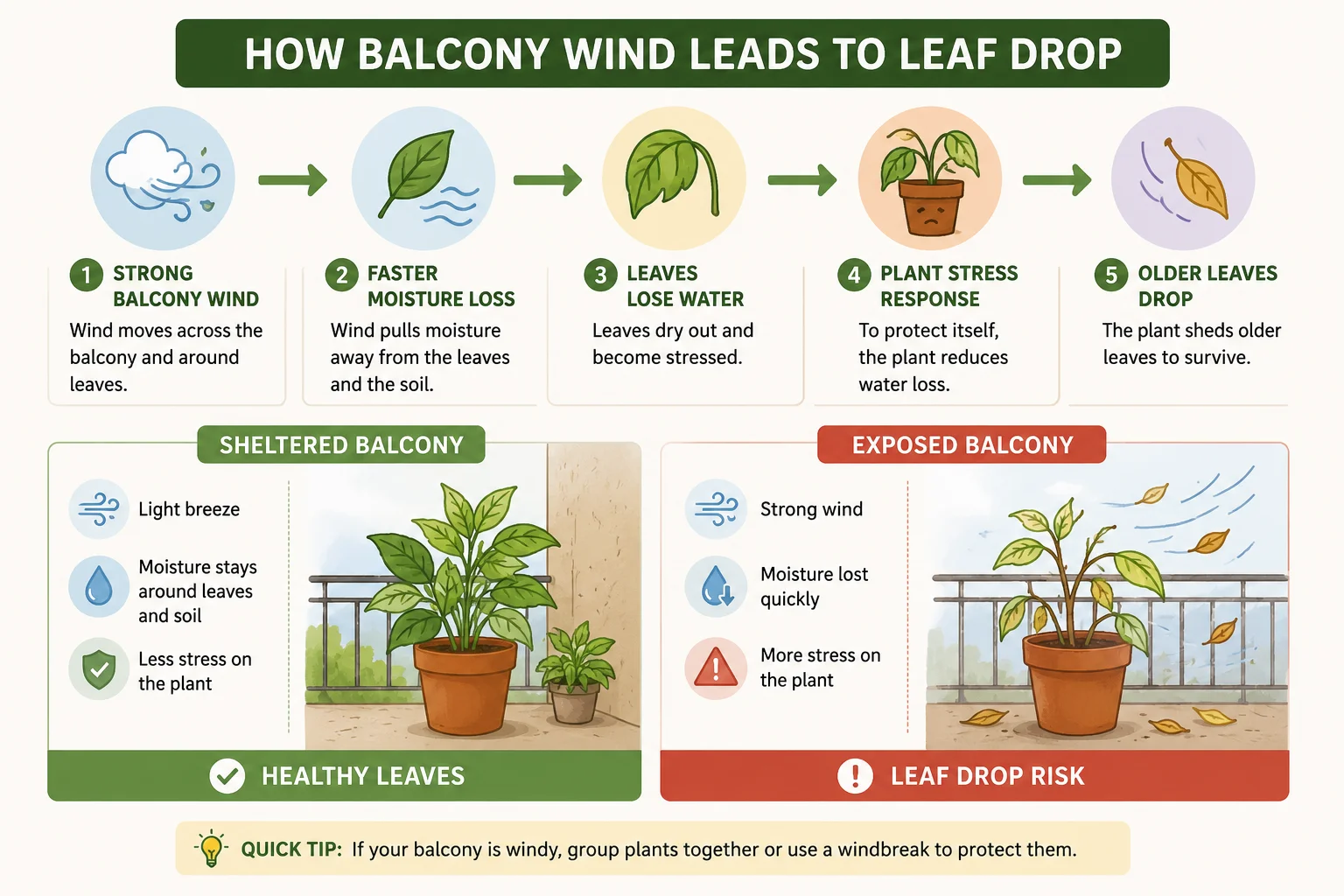
Wind is one of the biggest hidden reasons balcony plants lose leaves. Even a balcony that feels comfortable to stand on can be harsh for leaves if wind moves through the space for hours.
Wind dries leaves and soil at the same time. It can also shake soft stems and damage tender growth. Some plants respond by dropping leaves because the plant is trying to reduce water loss and protect itself.
This is especially common near railings, exposed corners, and higher apartment levels. Buildings can push air through narrow gaps and create wind tunnels that feel much stronger than ground-level wind.
If wind is a regular issue, you may find what are the best plants for a windy balcony useful. For pot safety and placement, protecting balcony pots from strong winds is also closely related.
Heat, Reflected Sun, and Hot Pots
A balcony can be much hotter than it looks. Afternoon sun, reflected light, and heat stored in hard surfaces can make the plant and pot warm quickly.
When plants become too hot, they may drop leaves to lower their water needs. This can happen even when the soil is not completely dry. The roots may be warm, the leaves may be losing moisture fast, and the plant may react by shedding older foliage.
West-facing balconies, glass balustrades, and concrete floors can make this worse. A plant may seem fine in the morning but look stressed by late afternoon.
For related heat problems, see why balcony plants wilt in the afternoon sun and overheating balcony pots in summer.
Root Stress Inside Small Containers
Leaf drop can also begin below the soil. When roots become crowded, damaged, too dry, too wet, or too hot, the leaves often show the stress first.
Small balcony pots leave little room for mistakes. A plant may grow well for months, then suddenly begin losing leaves because the root system has filled the pot. Water may run through quickly, or the pot may stay wet in some areas while the root ball stays dry in others.
This is why a plant can look like it is failing even when it receives regular care. The problem may not be the leaves. It may be that the pot no longer supports the size of the plant.
If wet roots are possible, this article on root rot in small balcony pots explains why container roots can struggle when moisture stays trapped.
Pests and Hidden Leaf Stress
Pests do not always cause leaves to fall immediately. Sometimes they weaken the plant slowly, then leaf drop appears suddenly once the plant is already stressed by weather, watering, or poor airflow.
On balconies, small pests can hide under leaves, along stems, or near new growth. Whiteflies, aphids, mites, and scale insects can all drain energy from plants. Leaves may curl, yellow, become sticky, or drop.
Ants can also be a clue because they sometimes appear around sap-sucking pests. The ants themselves may not be eating the leaves, but their presence can point to another issue on the plant.
If you notice small insects, this article on white bugs on balcony chilli plants may help you compare what you are seeing. If the leaves have holes as well as falling, why are my plant leaves getting holes may be more relevant.
Seasonal and Weather Changes
Some leaf drop is connected to seasonal change. Plants adjust to different light levels, temperatures, humidity, and day length. On balconies, these changes can feel stronger because buildings affect how sun and wind reach the plants.
A plant may drop older leaves when moving from warm weather into cooler conditions. Another plant may lose leaves after the first strong heat spell of the season. Some herbs and leafy plants also become stressed when the balcony shifts from mild weather to hot, dry days.
Sudden leaf loss after moving a plant is also common. A plant taken from a nursery, indoor room, or sheltered spot into an exposed balcony may need time to adjust to brighter light, stronger wind, and changing temperatures.
If your plant problem started after moving young plants outside, this guide on why seedlings die after moving to a balcony explains how balcony shock can happen.
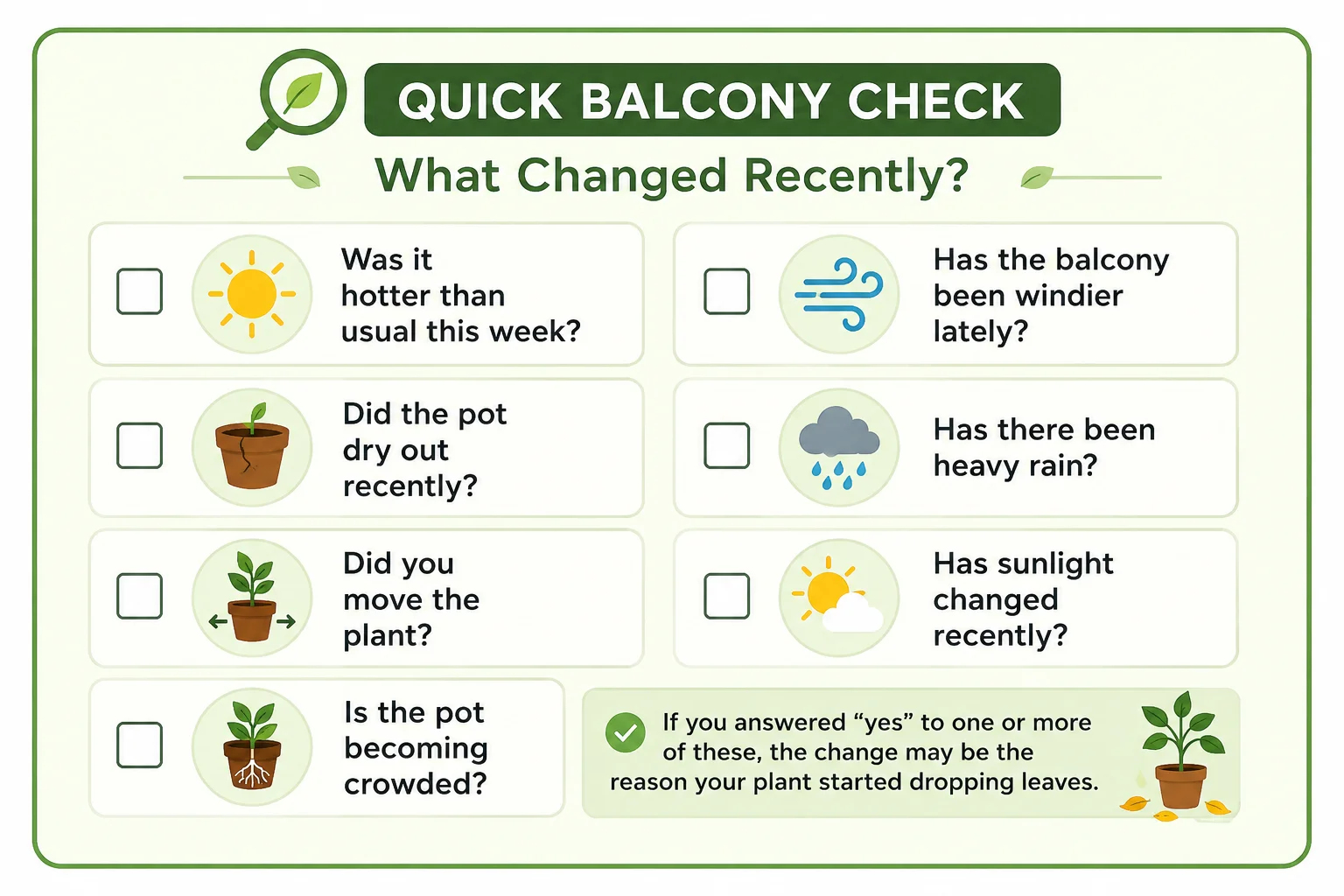
Common Clues to Compare
The table below can help you compare what you are seeing. It is not a perfect diagnosis, but it can make the most likely cause easier to notice.
| What You Notice | Possible Balcony Cause | Why It Happens |
|---|---|---|
| Dry, crispy leaves falling | Dry soil, wind, heat, or hot pots | The plant loses moisture faster than the roots can replace it. |
| Yellow leaves dropping | Wet soil, root stress, or low light | The roots may not be working well, or the plant may be shedding older leaves. |
| Green leaves falling suddenly | Quick environmental change | The plant reacts fast to heat, wind, movement, or shock. |
| Leaves drop after hot afternoons | Reflected heat or strong afternoon sun | Balcony surfaces can increase heat around leaves and roots. |
| Leaves drop after rain | Pots staying wet too long | Small containers may hold too much moisture if drainage or airflow is poor. |
| Leaves drop near the railing | Wind exposure | Open balcony edges often dry plants faster than sheltered spots. |
| Older leaves fall but new growth remains | Normal stress response | The plant may be reducing older growth while keeping newer leaves alive. |
Practical Insights for Balcony Gardeners
Sudden leaf drop is easier to understand when you look at recent balcony changes rather than only looking at the fallen leaves.
- Leaf drop often follows a change in wind, heat, water, light, or pot conditions.
- Small pots react faster than large containers or garden beds.
- Older leaves often fall first when the plant is under stress.
- Wind and heat can make normal watering feel like not enough.
- Wet roots and dry roots can both lead to leaves falling.
- One stressed plant does not mean the whole balcony setup has failed.
Common Misunderstandings
Leaf drop often feels more worrying when the cause is unclear. These misunderstandings are common among balcony gardeners.
- Falling leaves do not always mean the plant is dying.
- Green leaves can drop after sudden stress.
- Watering is not always the only cause.
- A balcony can be hotter or windier than the weather forecast suggests.
- A plant can struggle even if it looked healthy last week.
- Moving a pot can change light, wind, and heat exposure all at once.
Seasonal Context for Australian Balconies
In many Australian apartments, leaf drop can become more noticeable during hot weather, dry windy spells, or sudden seasonal changes. A balcony that feels gentle in spring may become much harsher in summer once heat builds up in walls, railings, and floors.
In cooler months, some plants may slow down and drop older leaves as light levels reduce. In humid or rainy periods, the issue may shift from drying out too fast to staying wet too long. This is why the same balcony can create different leaf problems at different times of the year.
Balcony Haven Note: I have noticed that sudden leaf drop often makes more sense when I think back over the last few days, not just the day the leaves fell. A windy afternoon, a hot wall, or a pot staying wet after rain can explain more than the leaves themselves. Every balcony seems to have its own small pattern, so the same plant can behave differently even in nearby apartments.
Frequently Asked Questions
Why are leaves falling off my balcony plants suddenly?
Leaves often fall suddenly when balcony plants react to a quick change in moisture, wind, heat, light, root conditions, pests, or seasonal weather. Small pots make these changes affect the plant faster.
Can a plant recover after dropping leaves?
Yes, many balcony plants can recover if the main stress does not continue. New growth is usually a better sign than the fallen leaves, especially if stems remain firm and the plant is not collapsing.
Why are green leaves falling off my plant?
Green leaves can fall when a plant reacts quickly to stress. This may happen after heat, wind, moving the pot, sudden dryness, wet roots, or a sharp change in balcony conditions.
Does overwatering cause leaves to fall?
Overwatering can cause leaf drop if the pot stays wet long enough to stress the roots. The leaves may turn yellow first, but some plants also drop leaves before the problem looks severe.
Can wind make balcony plants lose leaves?
Yes. Strong or constant wind can dry leaves, dry soil, and shake soft growth. This is a common balcony-specific reason for sudden leaf loss, especially near railings and exposed corners.
Should I remove fallen leaves from the pot?
Fallen leaves can be removed if they are sitting on wet soil or starting to rot. This keeps the pot cleaner and makes it easier to notice whether new leaves are still falling.
Final Thoughts
When leaves fall off balcony plants suddenly, the plant is often reacting to a change in its small growing environment. The cause may be dry soil, wet roots, wind, heat, pests, root stress, or seasonal change.
The most helpful clue is usually what changed recently. A hotter week, stronger wind, heavy rain, moving the pot, or a shift in sunlight can explain sudden leaf drop better than looking at the leaves alone.
Balcony gardening becomes easier when you see leaf drop as information, not failure. Each plant response helps you understand your balcony’s pattern of light, heat, wind, and moisture a little better.

Leave a Reply