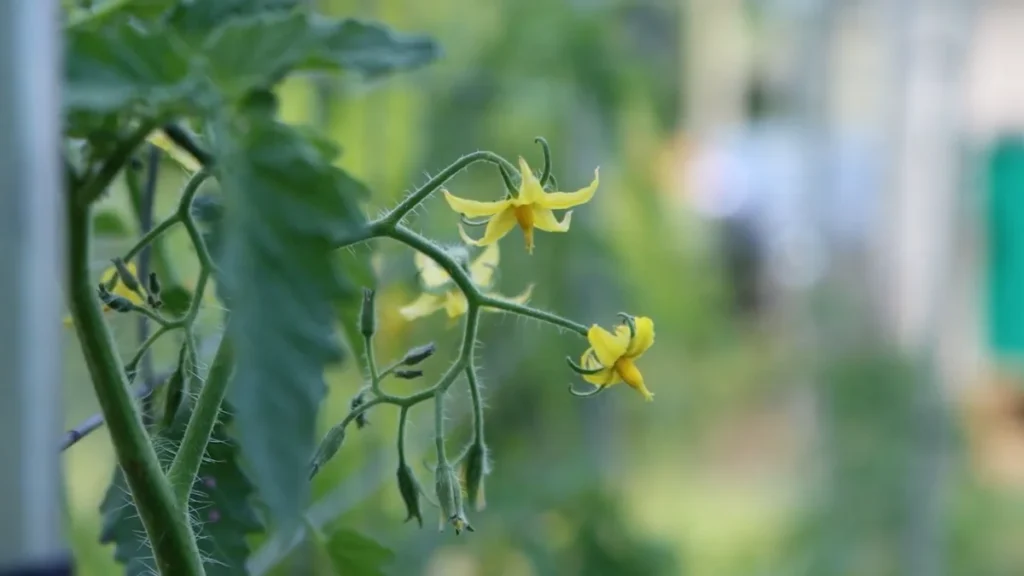
Tomato flowers dropping on a balcony can feel disappointing because flowers usually look like the first real sign that tomatoes are coming. The plant may look green, healthy, and full of promise, but then the yellow flowers dry, loosen, and fall before any fruit appears.
Tomatoes dropping flowers on a balcony usually happens because the plant is reacting to stress around flowering time. Heat build-up, strong wind, uneven watering, small containers, poor pollination, or sudden changes in balcony conditions can cause tomato flowers to fall before fruit forms. It is usually an environmental problem, not a sign that the plant is diseased or that you have failed.
This problem is especially common in balcony gardens because tomatoes in pots live in a much smaller and less stable growing space than tomatoes in garden beds. A balcony can heat up quickly, dry out faster than expected, and expose plants to wind patterns that are hard to notice until flowers start dropping.
This article explains why tomato flowers fall off on balconies, what most general tomato advice misses, which balcony conditions matter most, and what practical changes can help tomato plants hold more flowers long enough to form fruit.
Why Tomato Flower Drop Is So Common on Balconies
Tomatoes can grow well on balconies, but flowering is one of the more sensitive stages of the plant’s life. Leaf growth can continue even when conditions are not ideal. Fruit set is different. Flowers need a more stable period where heat, moisture, airflow, and pollination are all reasonable at the same time.
Balconies often make this harder because they behave differently from garden beds. Concrete floors, glass railings, brick walls, and nearby buildings can reflect and store heat. A balcony that feels warm to a person may be much hotter around the pot and plant leaves, especially during the afternoon.
Wind is another hidden issue. Some balconies are calm near the doorway but windy near the railing. Others become wind tunnels because air moves between buildings. Tomato flowers need some movement for pollination, but strong or constant wind can dry flowers out or shake the plant too aggressively.
Containers also change the situation. A tomato plant in a pot has limited root space and a smaller amount of soil holding moisture. This means the plant can move from comfortable to stressed much faster than a tomato growing in the ground.
What Most Tomato Advice Misses
Most tomato-growing advice is written for backyard gardens, raised beds, or open outdoor spaces. That advice is not always wrong, but it often assumes the plant has more root space, more stable soil moisture, and more natural airflow than a balcony tomato usually gets.
On a balcony, a tomato plant can experience several different conditions in one day. It may receive gentle morning sun, then reflected heat from a wall, then drying wind in the afternoon. The plant may still look healthy, but the flowers can be the first part to show stress.
This is why tomatoes dropping flowers on a balcony is often confusing. The leaves may look fine. The plant may still be growing. But if the flowering stage happens during heat, wind, or moisture swings, the plant may drop blossoms instead of turning them into fruit.
Why Tomato Flowers Fall Off Before Fruit Forms
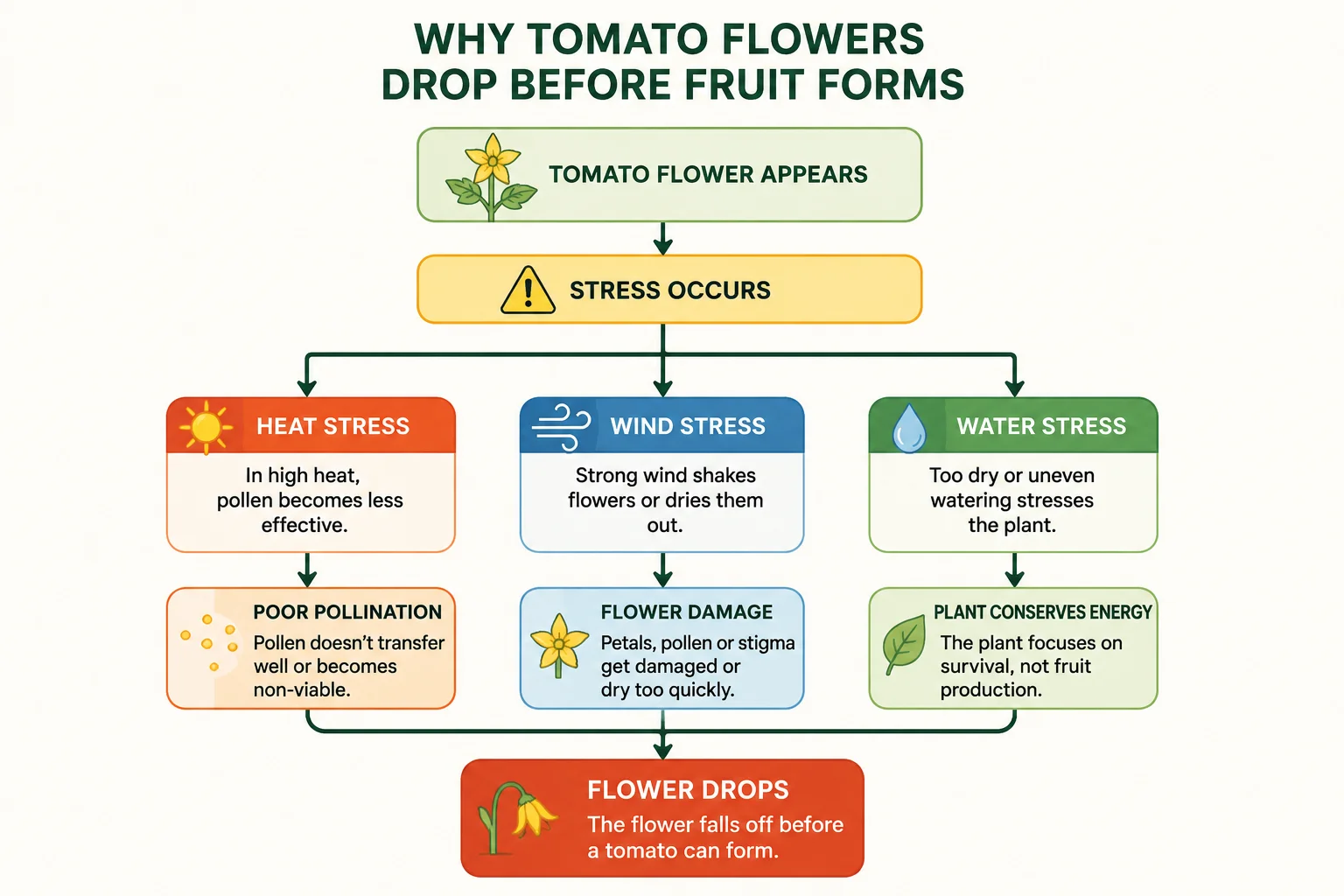
Tomato flowers usually fall off when pollination does not happen properly or when the plant decides it cannot support fruit at that moment. The flower opens, but if pollen is not released well, becomes less useful because of heat, or dries out too quickly, the flower may drop.
This does not always mean something is seriously wrong with the plant. It often means the plant is waiting for better conditions. Many tomato plants will keep producing new flowers and may begin setting fruit later when the weather becomes milder or the balcony environment becomes more stable.
The main causes on balconies usually come back to heat, wind, watering, and container size. These factors often work together rather than appearing alone.
Heat Stress Can Stop Flowers From Setting Fruit
Heat is one of the most common reasons tomato flowers drop before fruit forms. Tomato plants may enjoy warmth, but flowers are more sensitive than leaves. When the air around the plant becomes too hot, pollination can become less successful.
On balconies, heat stress is often stronger than gardeners expect. Hard surfaces can reflect heat upward, and walls can hold warmth long after the sun has moved. A tomato plant sitting close to a hot wall or glass railing may be experiencing more heat than the general outdoor temperature suggests.
This is similar to what happens when other balcony plants struggle in harsh afternoon heat. If your balcony becomes very hot later in the day, this guide on why balcony plants wilt in the afternoon sun may help explain how reflected heat affects plants in small spaces.
Flower drop caused by heat often appears during warm spells. Flowers may open normally, look healthy for a short time, and then dry or fall without forming small green fruit.
Wind Can Make Pollination Harder
Tomatoes are self-pollinating, which means each flower can usually pollinate itself. They still need gentle movement to help pollen shift inside the flower. A light breeze can help. Strong wind can create the opposite problem.
On exposed balconies, wind can dry flowers quickly, shake stems constantly, and make the plant use more water. This can create stress at the same time the plant is trying to set fruit.
Windy balconies often show the same pattern: the tomato plant grows, flowers appear, but fruit set remains poor. This can happen even when the plant receives good sunlight and enough water.
If wind is a regular problem in your space, the article on protecting balcony pots from strong winds may be useful because flower drop is not only about the flowers themselves. It is also about how stable the whole plant feels in its container.
Uneven Watering Can Interrupt Flower Development
Tomato plants in balcony pots can dry out quickly, especially during warm or windy weather. When the soil becomes very dry and then suddenly very wet, the plant experiences a stress cycle. This can interrupt flowering and fruit setting.
Uneven watering does not always look dramatic. The leaves may not fully wilt, but the roots may still be moving between dry and soaked conditions. During flowering, that instability can be enough to make blossoms drop.
Many balcony gardeners notice this most during hotter weeks. The pot dries faster than expected, then receives a large amount of water to recover. The plant survives, but the flowers may not hold.
If your balcony pots seem to dry out faster than you expect, this article on why balcony plants are drying out overnight gives more context on moisture loss in containers and exposed balcony spaces.
Small Pots Can Add Hidden Stress
Tomatoes can look surprisingly healthy in small pots during early growth. The problem often appears later, when the plant starts flowering and needs more resources to support fruit.
A small container limits the root system, dries faster, and gives the plant less buffer during heat or wind. The plant may still produce flowers, but it may not have enough stable moisture and root support to carry every flower through to fruit.
This is one reason tomato plants on balconies sometimes flower repeatedly without producing much. The plant is trying, but the growing space may be too restricted for steady fruiting.
For a deeper look at container size, the guide on best pot size for balcony tomatoes explains why root room matters for flowering, watering, and fruit production. You may also find the best soil depth for balcony vegetable pots helpful if you are comparing shallow, medium, and deeper containers.
Common Causes of Tomato Flower Drop on Balconies
The table below gives a simple way to compare the most common balcony causes. In real life, more than one of these may be happening at the same time.
| Cause | What Happens | Common Balcony Signs |
|---|---|---|
| Heat stress | Pollination becomes less successful and flowers drop before fruit forms. | Flowers open during hot weather but fall without tiny green tomatoes appearing. |
| Strong wind | Flowers dry out, stems move too much, and the plant loses moisture faster. | The plant sits near an exposed railing, corner, or wind tunnel between buildings. |
| Uneven watering | The plant moves between dry and wet stress instead of steady growth. | Soil feels very dry one day and very wet after heavy watering. |
| Small container | Limited roots make it harder for the plant to support fruiting. | The plant looks leafy but keeps dropping flowers instead of setting fruit. |
| Overwatering | Roots stay too wet and cannot work efficiently. | Soil remains wet for long periods, growth slows, and flowers still fall. |
Can Overwatering Cause Tomato Flowers to Drop?
Yes, overwatering can contribute to tomato flower drop, especially in balcony containers. When soil stays wet for too long, roots may not get enough air. This makes the plant less efficient at taking up water and nutrients, even though the pot is wet.
This can confuse gardeners because underwatering and overwatering can both lead to stress. In both cases, the plant may protect itself by dropping flowers instead of supporting fruit.
Overwatering is more likely when a pot has poor drainage, a saucer holds water under the container, or the balcony receives less sun than expected. It can also happen when gardeners water more often during hot weather but the soil has not actually dried enough between waterings.
Should You Pull Flowers Off Tomato Plants?
Pulling flowers off tomato plants can sometimes make sense when the plant is very young, newly transplanted, or still too small to support fruit. Removing early flowers may allow the plant to focus on root and leaf growth for a little longer.
Once the tomato plant is established, removing flowers regularly is usually less helpful. If flowers are already dropping on their own, the plant is responding to stress. Taking off more flowers does not fix heat, wind, watering, or root-space problems.
On a balcony, it is usually more useful to understand why the flowers are dropping than to focus only on removing them. A plant that has better moisture, calmer airflow, and less heat stress has a better chance of holding future flowers.
Practical Ways to Help Tomato Flowers Stay On
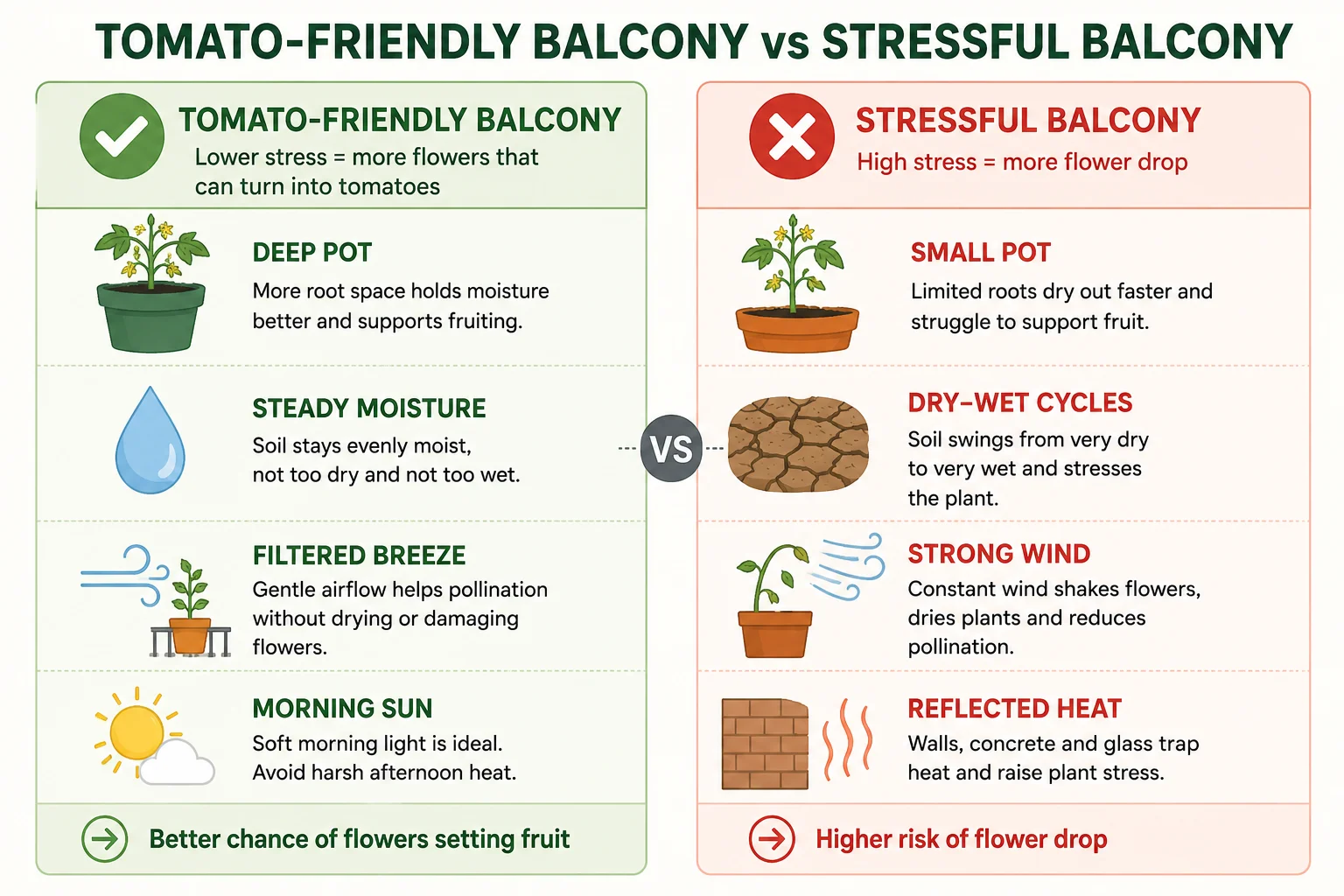
Flower retention often improves when balcony conditions become steadier. These ideas are not strict rules, but they reflect the small changes that usually matter most in container-grown tomatoes.
- Keep soil moisture more even instead of letting the pot swing between very dry and very wet.
- Move pots slightly away from heat-reflecting walls if the plant is exposed to strong afternoon warmth.
- Use a deeper container where possible so roots have more space and moisture changes happen more slowly.
- Place tomatoes where wind is filtered rather than fully exposed or completely trapped.
- Check the soil before watering instead of relying only on a fixed schedule.
- Expect some flower drop during heat waves and watch whether fruit set improves later.
Many balcony gardeners focus on fertiliser first, but flower retention is often more closely linked to stable moisture, temperature, airflow, and root space than extra feeding. If the plant already looks leafy and green, adding more fertiliser may not solve blossom drop caused by heat, wind, or dry-wet watering cycles.
Moisture stability is especially important in pots. If this is a recurring problem on your balcony, the article on how to keep soil constantly moist on a balcony may help with realistic ways to reduce dry-wet cycles without overwatering.
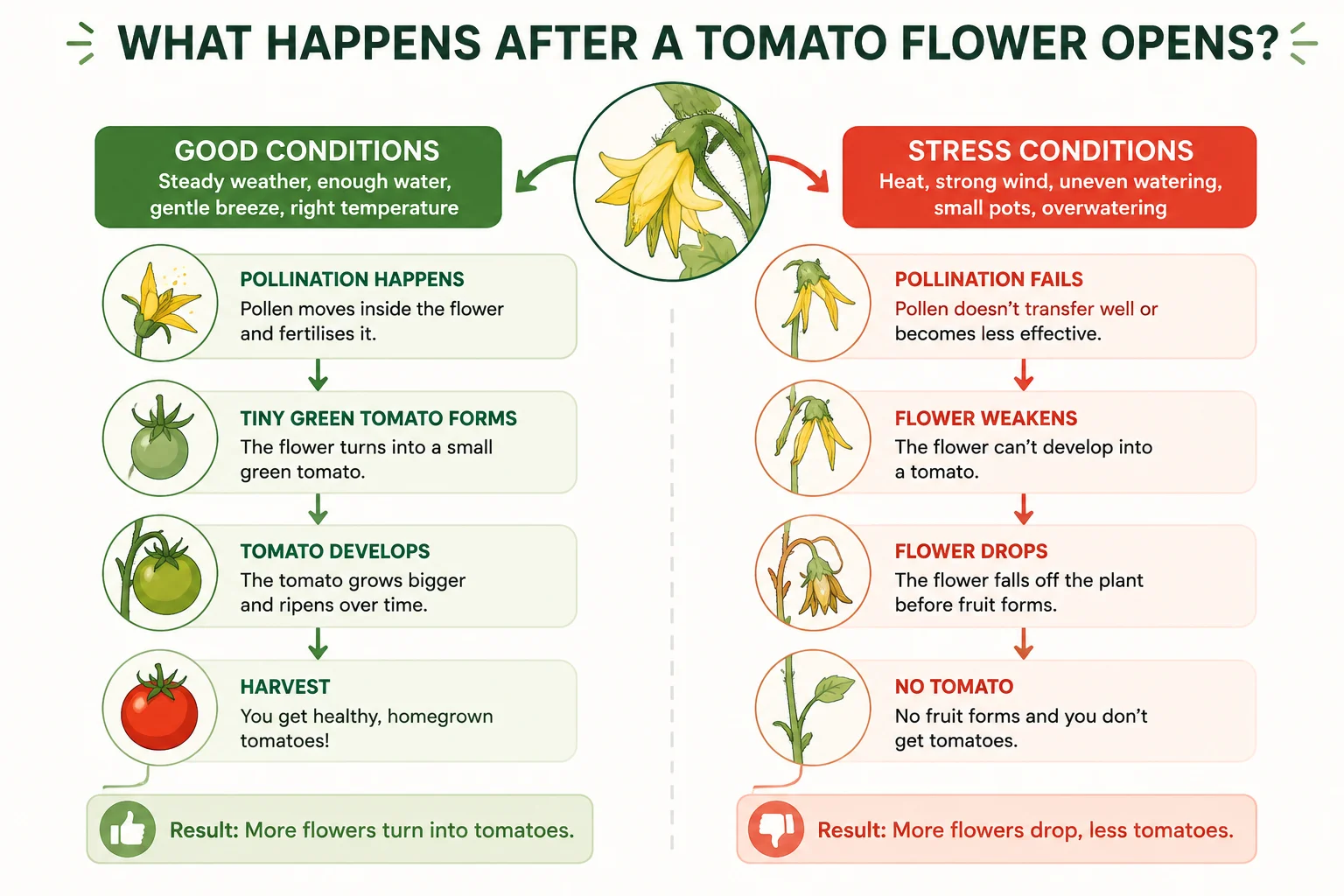
The difference between successful fruit set and flower drop often comes down to what happens immediately after a flower opens. Stable conditions help pollination succeed, while stress can interrupt the process before fruit has a chance to form.
Common Misunderstandings About Tomato Blossom Drop
Tomato blossom drop is frustrating because the plant often looks healthy enough to fruit. This makes it easy to blame the wrong thing or make sudden changes that add more stress.
- Assuming flowers always mean fruit will follow.
- Thinking healthy green leaves mean the plant is not stressed.
- Adding more fertiliser when the real issue is heat, wind, or watering.
- Watering heavily every time flowers fall.
- Expecting balcony tomatoes to behave exactly like garden-bed tomatoes.
- Giving up too early during a hot or windy period.
Flower drop is not the same as total plant failure. Sometimes it is a temporary pause in fruiting while the plant waits for more suitable conditions.
Seasonal Notes for Australian Balconies
In many Australian apartments, tomato flowering often happens during periods of rising heat. This can make blossom drop more common in late spring and early summer, especially on balconies that receive strong reflected warmth or afternoon exposure.
Some tomato plants drop early flowers during hot spells and then begin setting fruit later when temperatures become more stable. This pattern can be surprising, but it is not unusual. A plant that drops flowers in one week may still produce tomatoes later in the season.
Balconies also vary widely. A sheltered east-facing balcony may behave very differently from a west-facing balcony with glass panels, even in the same suburb. The most useful clues often come from watching when the flowers drop, where the pot sits, and how quickly the soil dries.
Balcony Haven Note: I have noticed that tomato flower drop often appears when a balcony is changing conditions quickly rather than when the plant looks unhealthy. Some balconies become much hotter, drier, or windier than they first appear, especially around flowering time. In many cases, the same plant may start setting fruit later once the weather or watering pattern becomes steadier, so the first dropped flowers do not always tell the whole story.
Frequently Asked Questions
Why do tomatoes drop blossoms before fruit forms?
Tomatoes drop blossoms when pollination fails or when the plant is under stress during flowering. On balconies, the most common causes are heat build-up, wind exposure, uneven watering, and limited root space in containers.
How do I stop tomato flowers from dropping off?
Flower drop usually improves when the plant has steadier conditions. Reducing strong heat, filtering harsh wind, keeping soil moisture more even, and using a container with enough root space can all help future flowers hold better.
Why are my tomato flowers turning yellow and falling off?
Yellowing flowers often mean the flower did not set fruit successfully. This may happen when heat affects pollination, wind dries the flower, or the plant is stressed by moisture swings in the pot.
Can tomato plants recover after blossom drop?
Yes, many tomato plants recover after blossom drop. If the plant is otherwise healthy, it may produce new flowers and begin setting fruit later when temperatures, watering, or balcony conditions become more stable.
Can overwatering cause blossom drop?
Yes. Overwatering can stress tomato roots, especially in containers with poor drainage. When roots stay too wet, the plant may struggle to support flowers and may drop blossoms before fruit forms.
When should I stop pulling flowers off my tomato plant?
Once the tomato plant is established and growing strongly, it is usually better to stop removing flowers. Continued flower removal can delay fruiting, while the real issue may be heat, wind, watering, or container size.
Final Thoughts
Tomatoes dropping flowers on a balcony can feel like a setback, but it is usually a response to changing conditions rather than a sign that the plant is ruined. Flowers are sensitive, and balcony environments often shift faster than garden beds.
Heat build-up, wind, uneven watering, and small containers can all make fruit set harder. These issues are common in apartment gardening because balcony tomatoes grow in limited soil and often sit close to hard surfaces that affect temperature and moisture.
The encouraging part is that blossom drop is often temporary. Many tomato plants start holding flowers and forming fruit once conditions become more settled. Every balcony creates its own microclimate, and learning how that environment affects heat, wind, and moisture often makes tomato flower drop far easier to understand and manage.
Leave a Reply