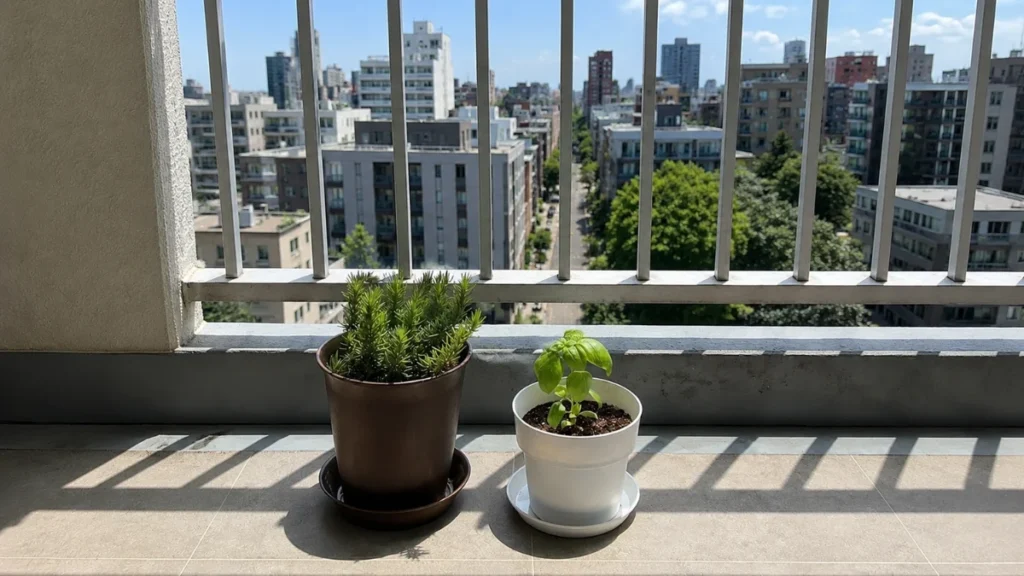
Some balconies seem to dry every pot within a few hours, while others stay damp long after watering. This difference can make plant shopping confusing, especially when a plant labelled “easy care” still wilts beside a hot wall or exposed railing.
Plants with thick, waxy, narrow, leathery, or water-storing leaves usually cope best in balcony pots that dry quickly. Rosemary, thyme, lavender, jade plant, aloe vera, snake plant, portulaca, geraniums, and some hardy native plants can stay healthy through short dry periods, provided their light and container conditions suit them.
No living plant can remain moist forever without water. When people search for the Best Plants for Balconies That Never Dry Out, they are usually looking for plants that do not wilt quickly, need constant watering, or collapse when a pot dries sooner than expected.
This article explains which plants are realistic choices, why some plants lose water more slowly, how balcony conditions change drying speed, and what to consider before choosing a supposedly drought-tolerant plant for a small outdoor space.
What “Never Dry Out” Really Means for Balcony Plants
A plant that never dries out does not really exist. Every container eventually loses moisture through drainage, evaporation, plant roots, and leaves. Even succulents need water after their stored moisture has been used.
The more useful goal is to choose plants that remain stable when the top layer of potting mix becomes dry or when watering is delayed for a short time. These plants usually recover more calmly than soft-leaved plants that wilt within hours.
This distinction matters because a plant that tolerates dry soil is not necessarily a plant that enjoys being neglected. Rosemary may cope well with a short dry period, but it can still struggle in a tiny black pot beside a west-facing glass wall. Aloe vera stores water in its leaves, but its roots can still overheat in a shallow container.
The right plant reduces watering pressure. It does not remove the effects of heat, wind, pot size, root crowding, or unsuitable sunlight.
| People Often Think | Balcony Reality |
|---|---|
| Some plants never dry out. | Every plant eventually uses or loses moisture, even succulents. |
| Drought-tolerant means no watering. | It means the plant can handle a short dry period better than a thirstier plant. |
| All full-sun positions are similar. | Sun beside concrete, glass, metal, or a pale wall can create much stronger heat. |
| A hardy plant will cope in any container. | A small, shallow, dark, or root-crowded pot can make even a hardy plant dry quickly. |
Why Balcony Pots Dry So Quickly
Balcony plants grow in a small amount of potting mix surrounded by air. Unlike garden soil, a container cannot draw moisture from deeper or cooler ground. Once the moisture inside the pot is used or evaporated, the roots have nowhere else to reach.
Wind can pull moisture from leaves and exposed potting mix. Afternoon sun can heat the pot itself, especially when the container sits against concrete, glass, metal, or a pale wall that reflects light. Elevated balconies can also receive stronger air movement than gardeners notice at street level.
A pot may therefore dry from several directions at once. The leaves lose water, the soil surface evaporates moisture, the container walls heat up, and the roots continue absorbing what remains.
This is why balcony gardeners can water in the morning and still find a plant drooping by late afternoon. The article on why balcony plants wilt in the afternoon sun looks more closely at that daily pattern.
What Most Plant Advice Misses
General drought-tolerant plant lists often assume the plant will grow in the ground. Garden soil usually stays cooler and gives roots more room to follow moisture. A balcony pot offers much less protection.
The phrase “full sun” can also be misleading. Six hours of sun in an open garden is not the same as six hours beside a heat-reflecting apartment wall. The amount of light may be similar, but the temperature around the leaves and roots can be much higher.
Another overlooked detail is the stage of the plant. An established rosemary plant with a healthy root system may cope with a short dry spell. A newly planted rosemary seedling in the same pot may dry out quickly because its roots have not yet spread through the mix.
Plant shape matters too. A compact plant with thick leaves may lose moisture slowly, while a large leafy plant can use water quickly even when both are described as hardy. Balcony plant choice works better when drying speed, leaf type, pot size, wind, and sunlight are considered together.
A Simple Balcony Observation
Imagine basil and rosemary growing side by side on the same sunny balcony. Both plants are watered in the morning, and both receive the same afternoon warmth.
By late afternoon, the basil may have soft, drooping leaves, while the rosemary still looks firm and unchanged. This does not necessarily mean the basil was watered incorrectly or that the rosemary received more water.
Basil has broad, soft leaves that can lose moisture quickly in heat and moving air. Rosemary has much smaller, firmer leaves that expose less surface area and slow water loss.
The two plants experience the same balcony, but their leaf structures cause them to respond differently. This is why choosing plants by appearance alone can be misleading. A lush, leafy plant may need much more consistent moisture than a plant with narrow, waxy, or fleshy leaves.
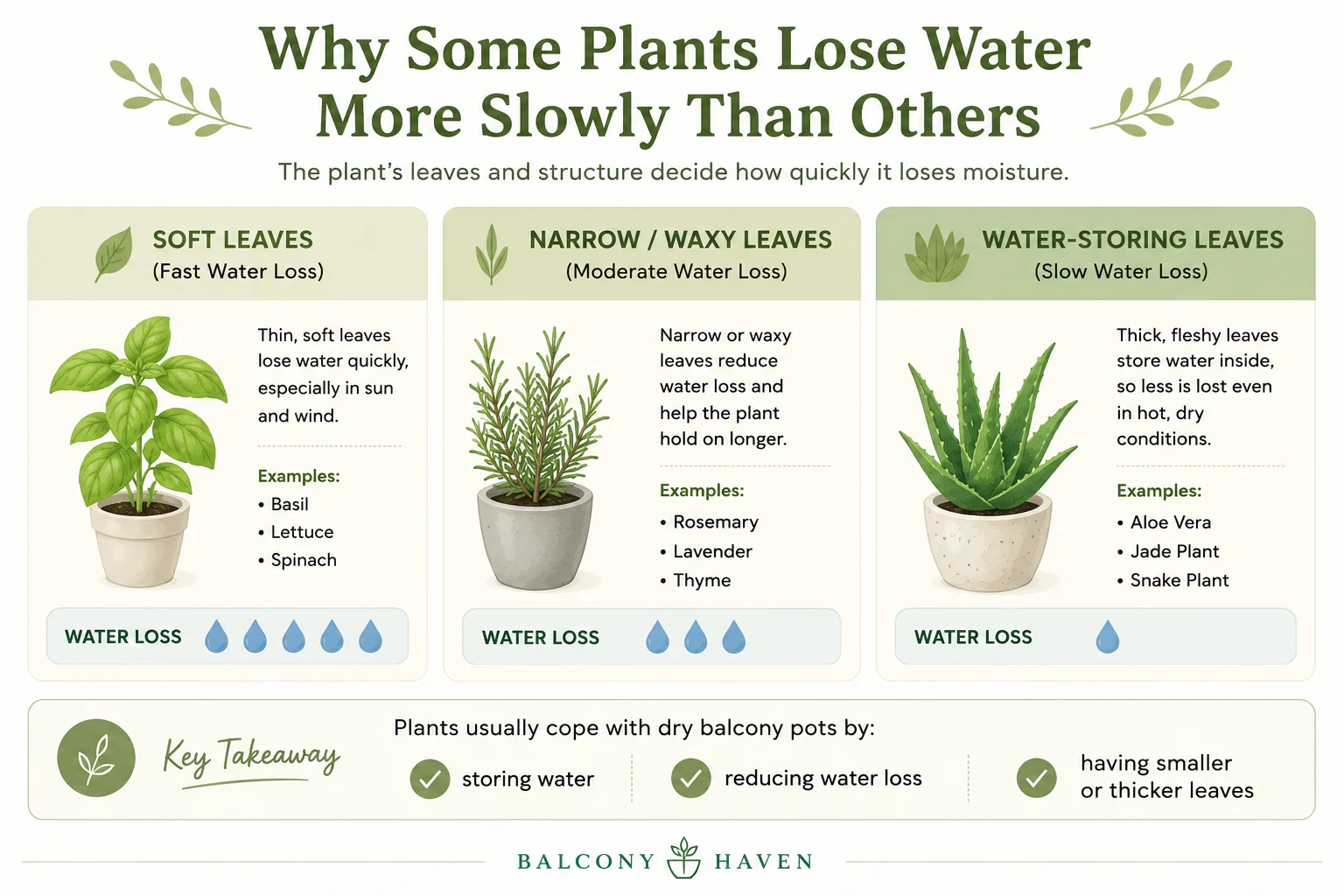
Why Some Plants Stay Hydrated Longer
Plants cope with dry periods in different ways. Succulents such as aloe vera and jade plant store water inside fleshy leaves. Rosemary, thyme, and lavender have smaller leaves that expose less surface area to dry air. Snake plants have thick, upright leaves with a protective outer surface.
These features slow moisture loss, but they do not make every plant suitable for every balcony. Lavender may handle dry soil but struggle in deep shade. Snake plant may cope with missed watering but burn in sudden harsh afternoon sun. Portulaca enjoys heat and dryness but may produce fewer flowers without enough direct light.
The helpful question is not only, “Can this plant survive dry soil?” It is also, “Does this plant suit the light, heat, wind, and container conditions on this particular balcony?”
Best Plants for Balconies That Never Dry Out Quickly
The following plants are realistic starting points for people who want balcony plants that tolerate short dry periods. Their performance still depends on climate, sunlight, container size, exposure, and how established the plant is.
| Plant | Why It Copes With Drying | Best Balcony Conditions | Main Limitation |
|---|---|---|---|
| Rosemary | Narrow, firm leaves lose moisture slowly once the plant is established. | Sunny, open, warm balconies | Dislikes soil that stays wet and heavy |
| Thyme | Small leaves and compact growth reduce water loss. | Sunny balconies and railing planters | Can weaken in deep shade or humid, still corners |
| Lavender | Fine, silvery leaves suit dry air and sunny conditions. | Bright, sunny, well-ventilated balconies | Struggles in humid shade and constantly wet mix |
| Aloe vera | Stores water inside thick, fleshy leaves. | Bright balconies with gentle sun | Can burn in sudden intense sun or rot in wet soil |
| Jade plant | Fleshy leaves hold moisture through short dry periods. | Bright, sheltered balconies | Heavy rain and poor drainage can damage roots |
| Snake plant | Thick upright leaves and slow growth reduce water demand. | Bright shade, covered or sheltered balconies | Harsh direct sun may scorch leaves |
| Portulaca | Succulent leaves store moisture and tolerate strong heat. | Hot, sunny balcony edges and railing boxes | Flowers poorly in low light |
| Geranium | Established plants can handle brief drying between watering. | Sunny balconies with moderate airflow | Small pots can still dry very quickly |
| Pelargonium | Firm leaves and woody stems make mature plants fairly resilient. | Sunny, warm, partly sheltered balconies | May slow down during extreme heat |
| Westringia | Small leaves and naturally hardy growth suit dry, exposed conditions. | Sunny, windy, coastal or exposed balconies | Needs enough container space as it matures |
| Native pigface | Fleshy leaves store moisture and tolerate heat and salt exposure. | Sunny balcony edges and coastal apartments | Needs direct light for compact growth and flowers |
| ZZ plant | Stores moisture in thick stems and underground rhizomes. | Covered balconies with bright indirect light | Not suitable for harsh sun or constantly wet soil |
The focus keyword Best Plants for Balconies That Never Dry Out is most useful when understood as a search for forgiving plants, not permanently wet plants. The strongest choices are plants that can pause, conserve moisture, and recover without immediate damage when their potting mix becomes moderately dry.
Plants for Hot and Sunny Balconies
Rosemary, thyme, lavender, portulaca, pigface, pelargoniums, and westringia are among the more suitable choices for balconies with strong direct light. Their leaves are generally better adapted to sunny and drier conditions than soft leafy plants such as basil or lettuce.
Heat tolerance and dry-soil tolerance are connected, but they are not identical. A plant may tolerate dry soil while its roots remain cool, yet struggle when a container becomes extremely hot. Black plastic pots, thin metal planters, dark tiles, and reflected light can push root temperatures beyond what the leaves suggest.
For balconies affected by hot walls or glass, the guide to plants that grow best with reflected heat can help separate ordinary sunshine from the more intense heat created by apartment surfaces.
Rosemary and lavender are usually strongest where the balcony is bright and reasonably open. Portulaca and pigface are useful for shallow or exposed planters because their fleshy leaves store water, although a larger soil volume still gives them a steadier root environment.
Plants for Bright but Sheltered Balconies
A sheltered balcony may not lose water through wind as quickly, but pots can still dry from warmth, limited soil volume, and reflected light. Aloe vera, jade plant, snake plant, and ZZ plant can suit these spaces when direct sun is not too intense.
Snake plants and ZZ plants are often described as low-water plants, but they are better matched to bright shade or filtered light than an exposed west-facing railing. Their leaves conserve water well, yet that does not protect them from sunburn.
Jade plants often cope with a few missed waterings once established. However, a young jade plant in a small terracotta pot may dry much faster than a mature plant in a deeper glazed or plastic container.
Aloe vera also benefits from bright light, but a sudden move from indoors to strong balcony sun can mark or scorch the leaves. Its ability to store water does not mean it is immediately ready for the hottest part of the balcony.
Flowering Plants That Cope With Short Dry Spells
Portulaca is one of the most realistic flowering plants for hot balcony planters. Its succulent leaves hold moisture, and its low growth makes it suitable for railing boxes, shallow bowls, and sunny edges.
Geraniums and pelargoniums can also handle a little drying once their roots are established. They usually perform better in a reasonably sized pot than in a narrow decorative container that heats quickly.
Lavender adds flowers as well as structure, but it needs the right environment. It is not a good match for every “low-water” balcony because it dislikes deep shade, trapped humidity, and potting mix that remains wet around the roots.
Flowering plants often use more water while producing new buds and flowers. A plant that copes well during a quiet growth period may need more moisture while blooming heavily, especially during warm weather.
Edible Plants That Are More Forgiving
Most leafy vegetables are not ideal for gardeners seeking plants that cope with dry pots. Lettuce, spinach, coriander, basil, and many Asian greens have soft leaves and relatively shallow roots. They can wilt quickly when the container loses moisture.
Woody herbs are more forgiving. Rosemary, thyme, oregano, and sage can tolerate some drying once established, although sage may struggle in very humid or poorly ventilated balcony corners.
Chives can recover from mild dryness, but they still grow better with more even moisture than rosemary or thyme. Spring onions may also remain usable after slight drying, although growth can slow and leaf tips may brown.
Edible plants grown for fruit, such as tomatoes and cucumbers, are not low-water choices in containers. Their large leaves, flowers, and developing fruit create high water demand. A drought-tolerant herb is usually more realistic than a fruiting vegetable for a balcony that regularly dries out.
Matching Plants to Balcony Conditions
The best plant depends on what is causing the pot to dry. Wind, reflected heat, direct sun, dry air, and a small container can produce similar symptoms, but they do not favour exactly the same plants.
| Balcony Condition | More Suitable Plants | Why They Fit | Plants Requiring More Care |
|---|---|---|---|
| Hot afternoon sun | Portulaca, pigface, rosemary, thyme | They cope with strong light and short dry periods. | Snake plant, peace lily, soft herbs |
| Windy and exposed | Westringia, rosemary, thyme, pigface | Smaller or firmer leaves lose less moisture in moving air. | Ferns, basil, large soft-leaved plants |
| Bright but covered | Aloe vera, jade plant, snake plant, ZZ plant | They conserve moisture and do not need constant direct sun. | Lavender and portulaca if light is too weak |
| Dry indoor-like air | Snake plant, ZZ plant, jade plant | Thick leaves and slow growth reduce water demand. | Ferns and moisture-loving foliage plants |
| Coastal or salty exposure | Westringia, pigface, some pelargoniums | They are generally more tolerant of exposed seaside conditions. | Delicate herbs and thin-leaved flowering plants |
| Small sunny railing planter | Thyme, portulaca, pigface | Compact growth suits limited soil volume better. | Rosemary shrubs and large geraniums |
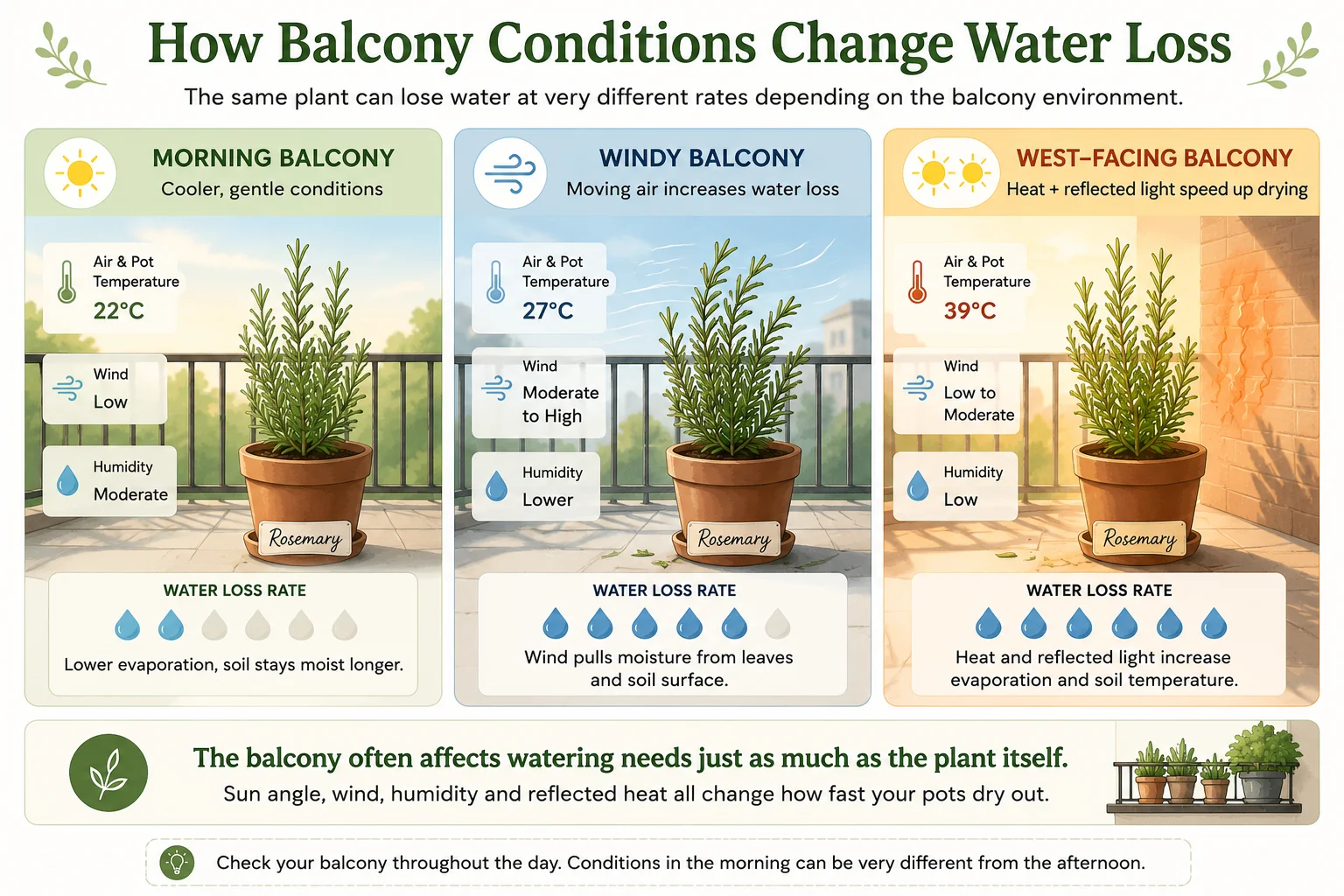
This comparison explains why the same plant can be easy on one balcony and difficult on another. Rosemary may remain steady on an open sunny balcony but struggle in a humid covered corner. A snake plant may stay healthy in bright shade yet develop scorched patches near hot glass.
How Containers Change the Result
Plant choice is only half of the drying problem. The container controls how much potting mix surrounds the roots, how quickly heat reaches them, and how much moisture can be stored between watering.
A small pot can make a drought-tolerant plant behave like a thirsty one. It holds less soil, heats faster, and leaves little room for roots to spread. A plant that appears compact above the soil may still have a large or crowded root system below it.
Terracotta allows moisture to move through its porous walls, which can help plants that dislike wet soil. On a hot or windy balcony, however, it may also dry faster than glazed ceramic or plastic. Thin nursery pots can heat rapidly, while oversized pots may stay wet too long around young roots.
The right container is therefore not simply the largest or most water-retentive pot available. It needs to suit the plant’s root size, the balcony’s drying speed, and the amount of rain or watering the plant receives. The guide on how to choose pots for balcony gardening explains these trade-offs in more detail.
Potting mix condition also matters. Old, compacted mix may allow water to run down gaps around the root ball without evenly wetting the centre. This can make a pot appear watered while some roots remain dry. If this pattern happens regularly, the article on balcony soil drying out too fast covers the container and soil factors that may be involved.
Plants That May Still Dry Out Quickly
Some popular balcony plants are less suitable when the main goal is reducing watering pressure. They are not bad plants, but their leaves, roots, or growth habits make them less forgiving in fast-drying containers.
| Plant | Why It Dries or Wilts Quickly | When It May Still Work |
|---|---|---|
| Basil | Soft leaves lose moisture quickly in heat and wind. | In a larger pot with morning sun and shelter from dry wind |
| Mint | Dense leafy growth uses a surprising amount of water. | In a roomy container with more even moisture |
| Lettuce | Shallow roots and soft leaves respond quickly to dry soil. | During milder weather with protection from afternoon heat |
| Parsley | Can wilt when a small pot dries through during warm weather. | In deeper containers with gentle light |
| Ferns | Many prefer even moisture and react badly to dry air. | On shaded, humid, sheltered balconies |
| Tomatoes | Large leaves and fruit production create high water demand. | In deep containers with consistent moisture |
| Cucumbers | Broad leaves lose water quickly and fruiting increases demand. | In large pots protected from severe wind and heat |
| Hydrangeas | Large leaves and flower heads can wilt quickly in hot pots. | On cooler balconies with morning sun and roomy containers |
A plant that wilts quickly is not necessarily dying. Some plants lower or soften their leaves temporarily to reduce water loss during the hottest part of the day. Repeated severe wilting, dry potting mix, scorched edges, and slowed growth are more concerning than a brief afternoon droop that recovers later.
Practical Insights for Choosing Plants
A few observations can make plant selection more realistic without turning the balcony into a complicated watering project.
- Thick, waxy, narrow, silver, or fleshy leaves usually lose moisture more slowly.
- A plant suited to dry soil may still need protection from extreme root heat.
- Small pots can cancel out much of a plant’s natural drought tolerance.
- Young plants usually dry out and stress faster than established plants.
- Wind exposure can matter as much as the number of sunlight hours.
- Plants that store water generally dislike potting mix that stays constantly wet.
For gardeners who are away from home during the day, the most reliable setup is usually a forgiving plant in a reasonably sized container, placed where the light suits that plant. A “low-water” label cannot compensate for an unsuitable balcony position.
Common Misunderstandings
Balcony dryness creates confusing advice because several different ideas are often grouped together under the term drought tolerant.
- “Drought-tolerant means no watering.” It means the plant can cope with some dryness, not that it can live permanently without moisture.
- “Succulents can handle any sunny balcony.” Some succulents burn when moved suddenly into strong afternoon sun.
- “A dry surface means the whole pot is dry.” The lower mix may still hold moisture, especially in a deep or glazed pot.
- “A bigger pot is always safer.” A pot that is much too large may stay wet around a small root system.
- “Morning and afternoon sun affect plants equally.” Afternoon sun often arrives with warmer air and hotter balcony surfaces.
- “Wilting always means more water is needed.” Roots affected by heat or poor drainage can also produce drooping leaves.
When a plant wilts while the soil still feels damp, adding more water may make the underlying problem worse. The guide on balcony plants wilting even with wet soil explains why root stress can look like thirst.
Seasonal Considerations for Australian Balconies
Australian balcony conditions can change sharply between seasons. A sunny balcony that feels manageable in winter may become much hotter in summer when the sun angle changes and surrounding walls store heat.
Warm, dry weather increases water loss, but humidity can complicate the picture. In humid coastal areas, leaves may lose water more slowly while roots remain warm and active. In drier inland conditions, wind and low humidity may pull moisture from leaves even when the temperature is not extreme.
Summer storms can also create a sudden change from dry pots to saturated pots. Rosemary, lavender, aloe vera, jade plants, and other dry-tolerant plants may cope well between watering but struggle if saucers or decorative outer pots hold rainwater around their roots.
During cooler months, the same containers may dry much more slowly. Watering habits that suit summer can leave potting mix damp for too long in winter. Plant choice reduces stress, but seasonal observation still matters.
Balcony Haven Note: I have noticed that the plants needing the least attention are not always the ones labelled as the toughest. They are usually the plants placed in the right part of the balcony, with enough soil around their roots. A sheltered corner, exposed railing, and heat-reflecting wall can create very different conditions within the same small space.
Frequently Asked Questions
What are the best low-water plants for a balcony?
Rosemary, thyme, aloe vera, jade plant, snake plant, portulaca, pigface, westringia, lavender, and pelargoniums are useful low-water choices. The best option depends on whether the balcony is sunny, shaded, windy, sheltered, humid, or affected by reflected heat.
Which balcony plants can survive missed watering?
Established aloe vera, jade plant, snake plant, ZZ plant, rosemary, thyme, portulaca, and pigface can usually tolerate a short delay better than soft-leaved herbs and vegetables. Small pots and extreme heat can still shorten the safe period.
Are drought-tolerant plants suitable for small pots?
Some compact plants such as thyme, portulaca, and pigface suit smaller planters better than large shrubs. However, every small pot dries faster than a larger container, so even drought-tolerant plants may need closer attention during hot or windy weather.
Do plastic pots keep balcony plants moist longer?
Plastic usually loses less moisture through its sides than unglazed terracotta. The result also depends on pot size, drainage, colour, sunlight, wind, and the potting mix. A small plastic pot in direct afternoon sun can still dry very quickly.
Can low-water plants grow on shaded balconies?
Snake plant, ZZ plant, and some jade plants can suit bright shade or covered balconies. Lavender, rosemary, portulaca, and pigface generally need stronger direct light, so they may become weak or sparse in deep shade.
Why does my drought-tolerant plant keep wilting?
The pot may be too small, the roots may be overheating, the plant may still be establishing, or the balcony may be windier than expected. Wilting can also happen when roots remain wet and cannot function normally, so the condition of the potting mix matters as much as its surface dryness.
Final Thoughts
The Best Plants for Balconies That Never Dry Out are really plants that handle short dry periods without collapsing quickly. Rosemary, thyme, portulaca, pigface, aloe vera, jade plant, snake plant, ZZ plant, westringia, lavender, and pelargoniums are all worth considering when their preferred light and exposure match the balcony.
The plant name alone does not decide how often watering will be needed. Pot size, root development, wind, afternoon sun, reflected heat, dry air, container material, and seasonal weather can all change how quickly moisture disappears.
A forgiving plant in the right location can make balcony gardening feel much easier. The aim is not to find a plant that lives without water, but one whose natural way of storing or conserving moisture fits the conditions already present on the balcony.
The most successful balcony gardeners do not simply choose the plant described as the toughest. They choose a plant whose light, root space, leaf structure, and moisture needs match the balcony where it will actually grow.
Leave a Reply