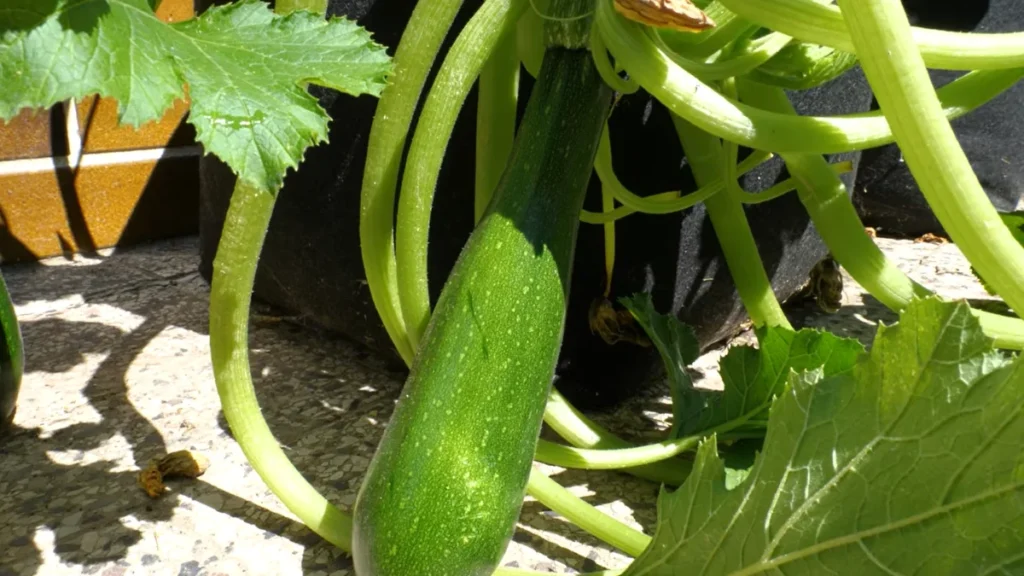
Zucchini looks like a simple vegetable to grow until it meets a small balcony. The plant grows quickly, opens large leaves, and can take up more room than expected. This often makes balcony gardeners wonder whether the space is too small, the pot is too limited, or the balcony conditions are not strong enough for fruit.
Zucchini can grow on a small balcony if the plant has enough direct light, a large enough container, steady moisture, and reasonable airflow. It may not behave the same way it would in an open garden, but it can still grow well in containers when the balcony gives it enough root space and sunlight to support both leaves and fruit.
The confusion usually comes from advice written for garden beds. In a garden, zucchini has room to spread, deeper soil, and more even airflow. On a balcony, the same plant has to deal with pot limits, wall heat, railing shade, wind tunnels, and less floor space.
This article explains what to expect when growing zucchini on a small balcony, which balcony setups give it the best chance, why some plants grow leaves but few fruits, and how realistic the harvest may be in a container.
Why Zucchini Feels Challenging on Small Balconies
A small balcony is not just a smaller version of a backyard garden. It has its own conditions. Sunlight may only reach one side of the space. Heat may bounce off walls, tiles, glass doors, or nearby buildings. Wind may move through the balcony in short bursts instead of a steady breeze.
Zucchini reacts strongly to these conditions because it is a fast-growing plant with big leaves and a hungry root system. It can grow quickly at first, then slow down when the pot, light, or airflow starts to limit it.
This does not mean zucchini is impossible on a balcony. It means the plant is more sensitive to small differences. A sunny open balcony with a large pot may grow zucchini well. A shaded narrow balcony with a small container may grow leaves but struggle to fruit.
What Most Zucchini Advice Misses
Most zucchini advice assumes the plant has open ground, wide spacing, and deep soil. That makes sense for garden beds, but it does not always match apartment growing.
On a balcony, the pot becomes the plant’s whole growing space. The balcony wall may create extra heat. The railing may block low morning or afternoon sun. The floor may dry pots quickly in summer, while a covered balcony may keep soil wet for longer than expected.
This is why two people can grow the same zucchini variety in containers and get different results. The difference is often not skill. It is the balcony microclimate.
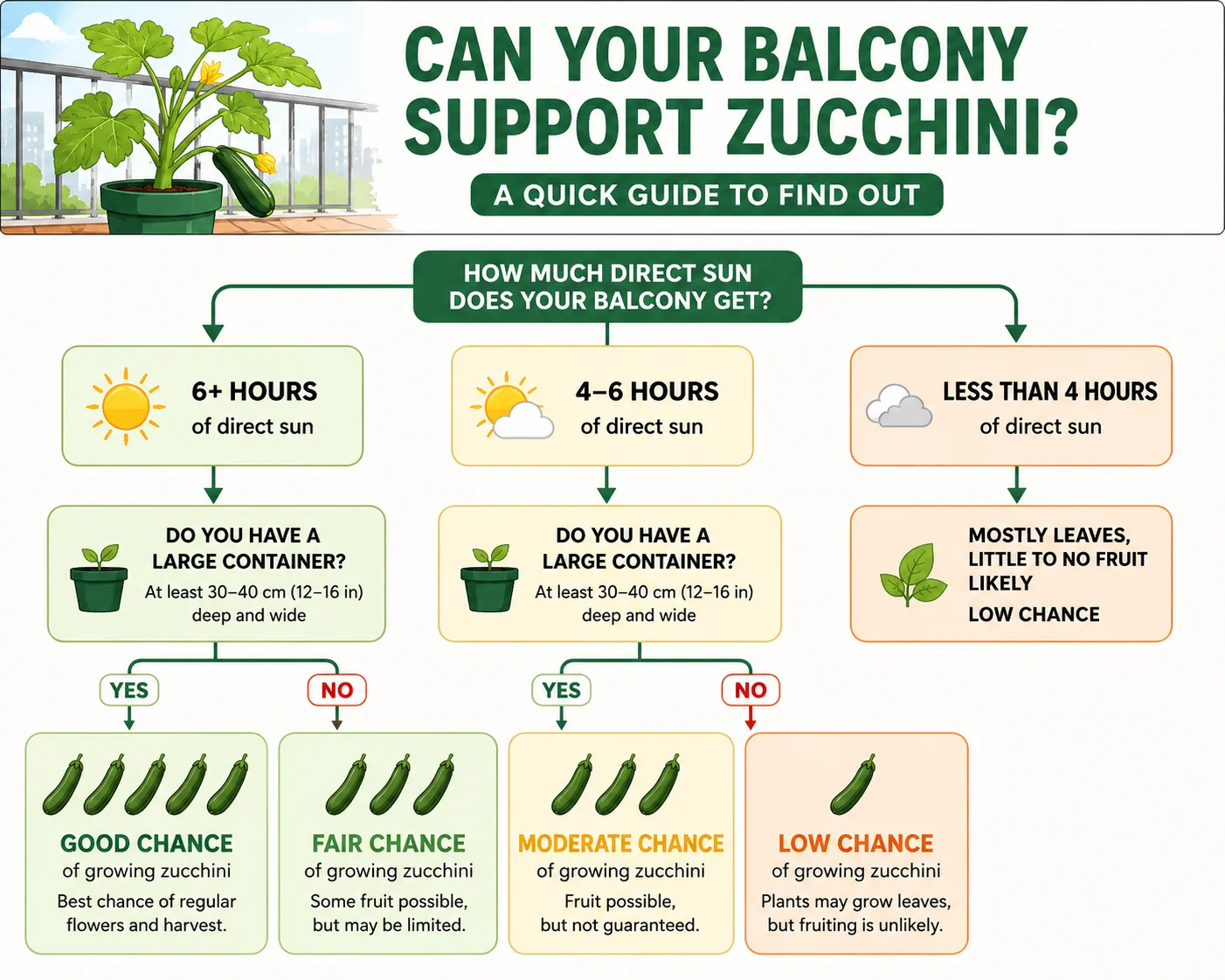
Can Your Balcony Support Zucchini?
The easiest way to think about balcony zucchini is to look at the main support factors: light, container size, airflow, and usable space. The plant does not need a perfect balcony, but it does need enough of these conditions working together.
A small balcony can still support zucchini if the brightest area has enough room for a large pot and the plant is not trapped in a dark, still corner. The plant can grow more upright than expected, but its leaves still need room to open without rubbing against walls or other pots all day.
If your balcony only gets a short amount of soft light, zucchini may grow but may not fruit well. For balconies with limited sun, this guide on plants for balconies with 2–4 hours sun may be more useful for choosing easier crops.
Small Balcony Space vs Zucchini Growth
Zucchini is often described as a large plant, and this is partly true. Its leaves can become wide, and a healthy plant can quickly look bigger than expected. But the real issue on a balcony is not only the plant’s width. It is how the plant uses light and airflow around those leaves.
When zucchini grows in a tight corner, the leaves may overlap and hold moisture. This can make the plant feel crowded even if the pot itself fits. When the plant sits closer to the open edge of the balcony, the same plant may feel easier to manage because light and air reach it better.
This is similar to other balcony vegetables. Tomatoes, cucumbers, and eggplants can also grow in tight spaces, but they usually do better when their leaves are not pressed against walls or packed too closely with other pots.
Sunlight and Fruiting on Balcony Zucchini
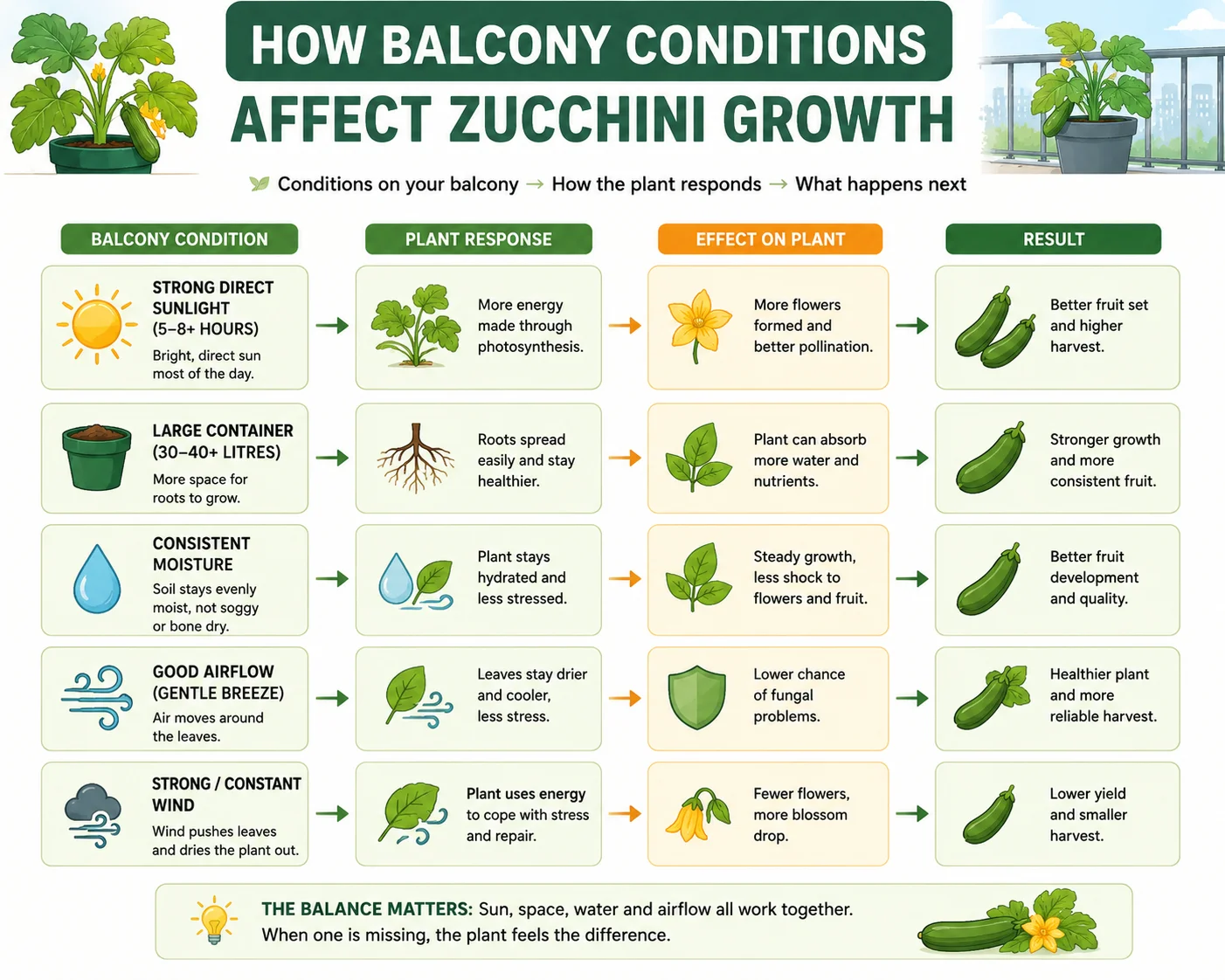
Zucchini usually needs strong light to move beyond leaf growth. A balcony that receives several hours of direct sun gives the plant a much better chance of producing flowers and fruit.
Morning sun is often easier on the plant because it gives useful light without the harshest heat. Afternoon sun can also work, but on hot balconies it may come with extra stress from reflected heat, warm walls, and fast-drying soil.
When zucchini grows healthy leaves but produces few fruits, light is one of the first things to consider. The plant may have enough energy to grow foliage but not enough steady energy to keep fruit developing. This pattern is also common in other fruiting plants, as explained in why balcony plants grow but do not produce fruits.
Container Size and Root Pressure
Zucchini grows fast above the soil because it also wants to grow fast below the soil. In a garden bed, the roots can keep spreading. In a balcony pot, they eventually meet the container wall.
When roots run out of room, the plant may still survive, but growth can become less steady. Leaves may stay smaller, watering may become harder to manage, and fruit production may become more uneven.
A larger container usually gives zucchini a better chance because it holds more soil, more moisture, and more root space. A very small pot may grow a young zucchini plant for a while, but it is less likely to support strong fruiting for long.
If you are comparing pot depth for balcony vegetables, this article on deep vs shallow pots for balcony veggies explains why root space changes how vegetables behave in containers.
Wind, Airflow, and Large Leaves
Zucchini leaves are large, soft, and easy for wind to push around. On higher balconies or exposed corners, wind can make the plant lose moisture faster and place stress on the stems and leaves.
Some airflow is helpful because crowded leaves need air movement. The problem is strong or constant wind. A zucchini plant that is always being pushed around may spend more energy coping with stress and less energy settling into steady growth.
This is one reason placement matters. A position that gets light but avoids the strongest wind may be better than the most exposed edge of the balcony. For broader wind-tolerant options, see what are the best plants for a windy balcony.
Balcony Type vs Zucchini Suitability
The table below gives a simple way to compare different balcony conditions. It does not guarantee results, but it helps show why zucchini works better in some small spaces than others.
| Balcony Setup | Zucchini Suitability | What Usually Happens |
|---|---|---|
| Sunny open balcony with room for a large pot | Good | The plant has the best chance of growing leaves, flowers, and regular fruit. |
| Morning-sun balcony with moderate airflow | Good to moderate | Growth is usually steadier, especially if the container is large enough. |
| Hot west-facing balcony | Moderate | The plant may grow fast early but can struggle with heat and drying soil. |
| Covered balcony with bright indirect light | Moderate to low | Leaves may grow, but fruiting can be limited if direct sun is weak. |
| Shaded narrow balcony | Low | The plant may survive but often produces few or no fruits. |
| Very windy exposed balcony | Low to moderate | Large leaves may become stressed unless the plant has some shelter. |
This is why balcony size alone is not the full answer. A tiny but sunny balcony may support zucchini better than a larger balcony that is shaded, enclosed, or windy all day.
What Harvest Can You Expect?
Balcony zucchini harvests are usually more variable than garden harvests. In a good setup, the plant may produce several fruits over time. In a limited setup, it may produce a few flowers and one or two fruits, or mostly leaves.
This does not always mean something went wrong. In containers, zucchini often reflects the limits of the space more clearly than slower-growing plants. The result depends on how much energy the balcony setup allows the plant to collect and use.
Many balcony gardeners focus on whether zucchini can survive, but the more useful question is what kind of harvest the space can realistically support. Two balconies may both keep a zucchini plant alive, yet produce very different results depending on sunlight, container size, airflow, and watering consistency.
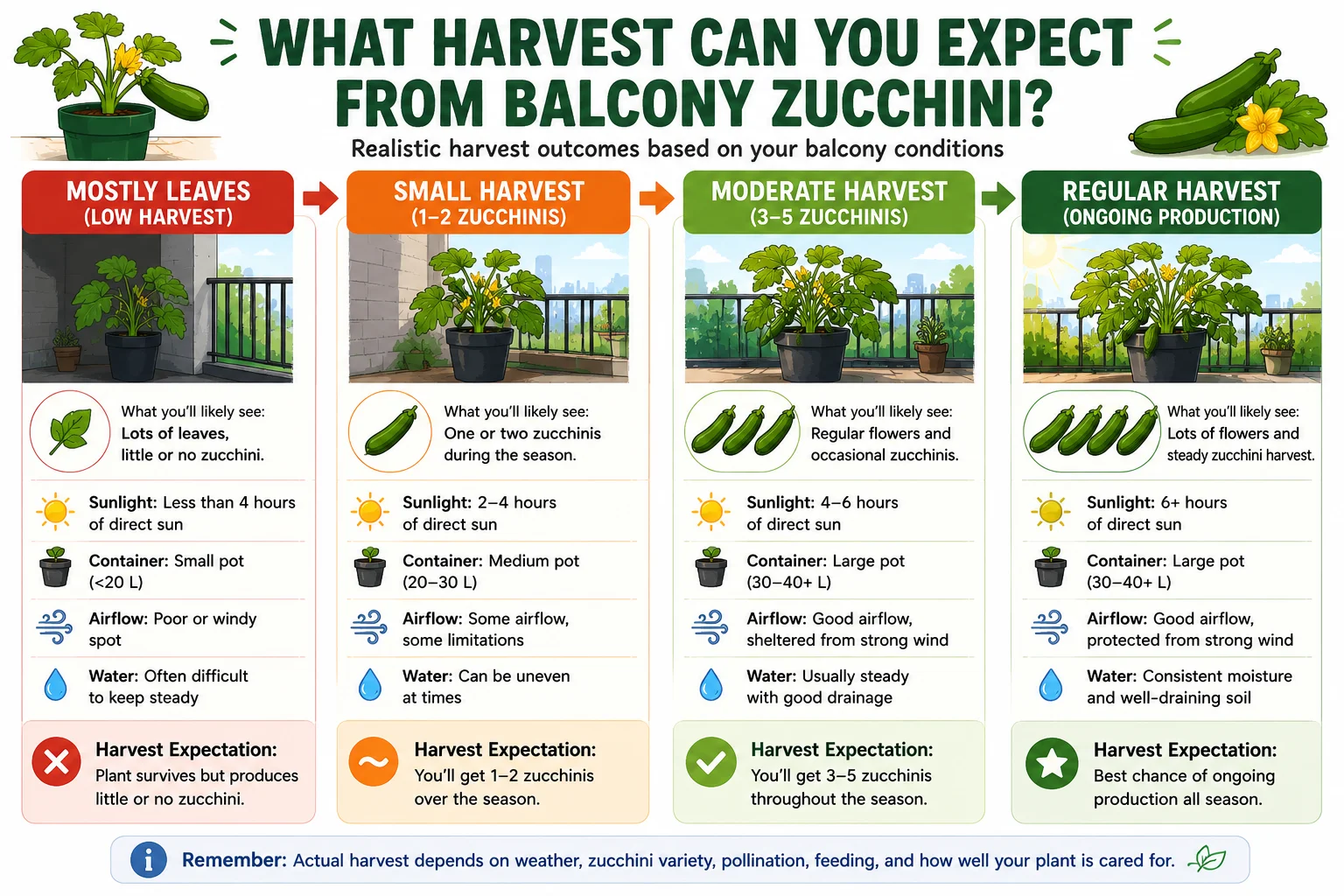
The diagram above shows general harvest expectations, but balcony conditions rarely fit perfectly into one category. The table below provides a more detailed comparison of common balcony setups and the results they typically produce.
The table below gives a realistic expectation guide for small balcony zucchini. It is better to think in ranges rather than fixed numbers because light, weather, variety, pot size, and pollination all affect results.
| Setup | Likely Growth | Realistic Harvest Expectation |
|---|---|---|
| Large pot, strong sun, good airflow | Strong leaves and regular flowers | Best chance of several zucchinis over the growing period. |
| Large pot, morning sun only | Healthy growth with slower fruiting | Some fruit is possible, but production may be lighter. |
| Medium pot, strong sun | Fast early growth, then possible slowing | A small harvest is possible, but the plant may become thirsty and root-limited. |
| Small pot, partial sun | Leaves may grow first | Fruit is less reliable and may be limited. |
| Shaded balcony | Soft leaf growth | Mostly foliage, with little chance of strong fruiting. |
If your balcony space is very tight, it may also help to compare zucchini with smaller edible plants. This guide on best edible plants for tiny balconies gives more compact options that may suit limited spaces better.
Practical Insights
Growing zucchini on a small balcony becomes easier to understand when expectations match the space. These are the main points that matter most.
- Strong light matters more than balcony size alone.
- A larger container gives the plant a better chance of steady growth.
- Healthy leaves do not always mean the plant has enough energy to fruit.
- Wind can stress zucchini because the leaves are large and soft.
- Small harvests are normal in limited balcony conditions.
- Compact or bush-style zucchini varieties usually make more sense than sprawling types.
The most useful approach is to treat zucchini as a space-sensitive plant. It can adapt, but it shows stress quickly when light, roots, water, or airflow are not balanced.
Common Misunderstandings
Many problems with balcony zucchini come from expecting garden behaviour in a container space. The plant may still be doing what it can, even when the result looks disappointing.
- A small balcony is not always the problem; poor light often matters more.
- A fast-growing plant does not always become a productive plant.
- Big leaves can make the plant look healthier than it really feels.
- A small pot may work early but become limiting later.
- Fruit may fail if flowers are not pollinated or conditions are too stressful.
- One zucchini plant can still feel large in a tiny space.
For gardeners comparing other fruiting vegetables, can you grow tomatoes on a tiny balcony is a useful related article because tomatoes have similar space, light, and container challenges.
Local and Seasonal Context
In warmer parts of Australia, including places like Brisbane and coastal Queensland, zucchini may grow quickly during warm periods. This can be helpful, but it can also make balcony limits appear faster. A plant that grows strongly in the first few weeks may suddenly need more water, more root space, and more airflow than the balcony setup can provide.
Hot balconies can also create extra stress. Reflected heat from walls, tiles, and glass can make the plant feel hotter than the general weather forecast suggests. On these balconies, zucchini may grow quickly at first but struggle during long hot spells if the pot dries too fast.
Cooler balconies or shaded balconies may have the opposite issue. The plant may stay alive and leafy but take longer to flower and fruit. This is why the same vegetable can feel easy in one apartment and frustrating in another.
Balcony Haven Note: I have noticed that large-leaf vegetables often reveal the true conditions of a balcony very quickly. A zucchini plant may look strong when young, then start showing whether the pot, sun, wind, and heat are really working together. Even on the same balcony, one corner can grow a plant differently from another.
Frequently Asked Questions
Can zucchini grow in pots on a balcony?
Yes, zucchini can grow in pots on a balcony if the container is large enough and the balcony receives strong light. Small pots may support early growth, but they are less reliable for steady fruiting.
How much sun does balcony zucchini need?
Balcony zucchini usually does best with several hours of direct sun. Bright indirect light may support leaves, but fruiting is more likely when the plant receives stronger, more consistent sunlight.
Will zucchini take over a small balcony?
Zucchini can feel large on a small balcony because of its wide leaves. Bush-style varieties are usually more manageable than sprawling types, but even compact plants still need space around the pot.
Why does my balcony zucchini flower but not fruit?
This can happen when flowers are not pollinated, the plant is stressed, or conditions are not strong enough to support fruit development. Light, heat, wind, watering, and root space can all affect the result.
Is zucchini worth growing on a tiny balcony?
It can be worth trying if the balcony is sunny and has room for a large container. If space and light are very limited, smaller edible plants may give more reliable results.
What type of zucchini is best for small balconies?
Compact, bush-style, or container-friendly zucchini varieties are usually more suitable than long sprawling types. They still need good light and root space, but they are easier to manage in a small area.
Final Thoughts
Can Zucchini Grow on a Small Balcony? Yes, but it depends on more than the size of the balcony. The real question is whether the plant has enough light, root room, moisture, and airflow to support both leaves and fruit.
Zucchini is not the easiest vegetable for a tiny balcony, but it is not unrealistic either. It simply shows balcony limits faster than many smaller crops. A good setup may produce a useful harvest, while a limited setup may mostly produce leaves.
The best expectation is practical rather than perfect. If the balcony is sunny, the pot is generous, and the plant has room to breathe, zucchini can be a rewarding container vegetable. If the space is shaded, cramped, or very windy, the plant may still grow, but the harvest may be small or uncertain.
Leave a Reply