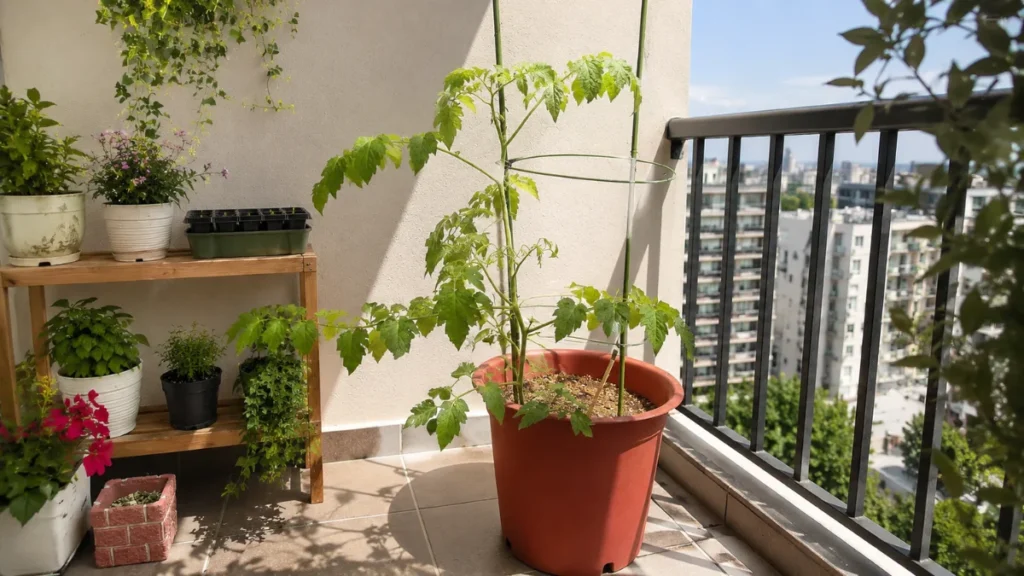
Your tomato, basil or chilli plant may be getting taller every week, yet the stem still looks thin, floppy or unable to support the leaves. Instead of becoming fuller, the plant may lean towards the balcony railing, bend after watering, or sway heavily whenever the wind picks up.
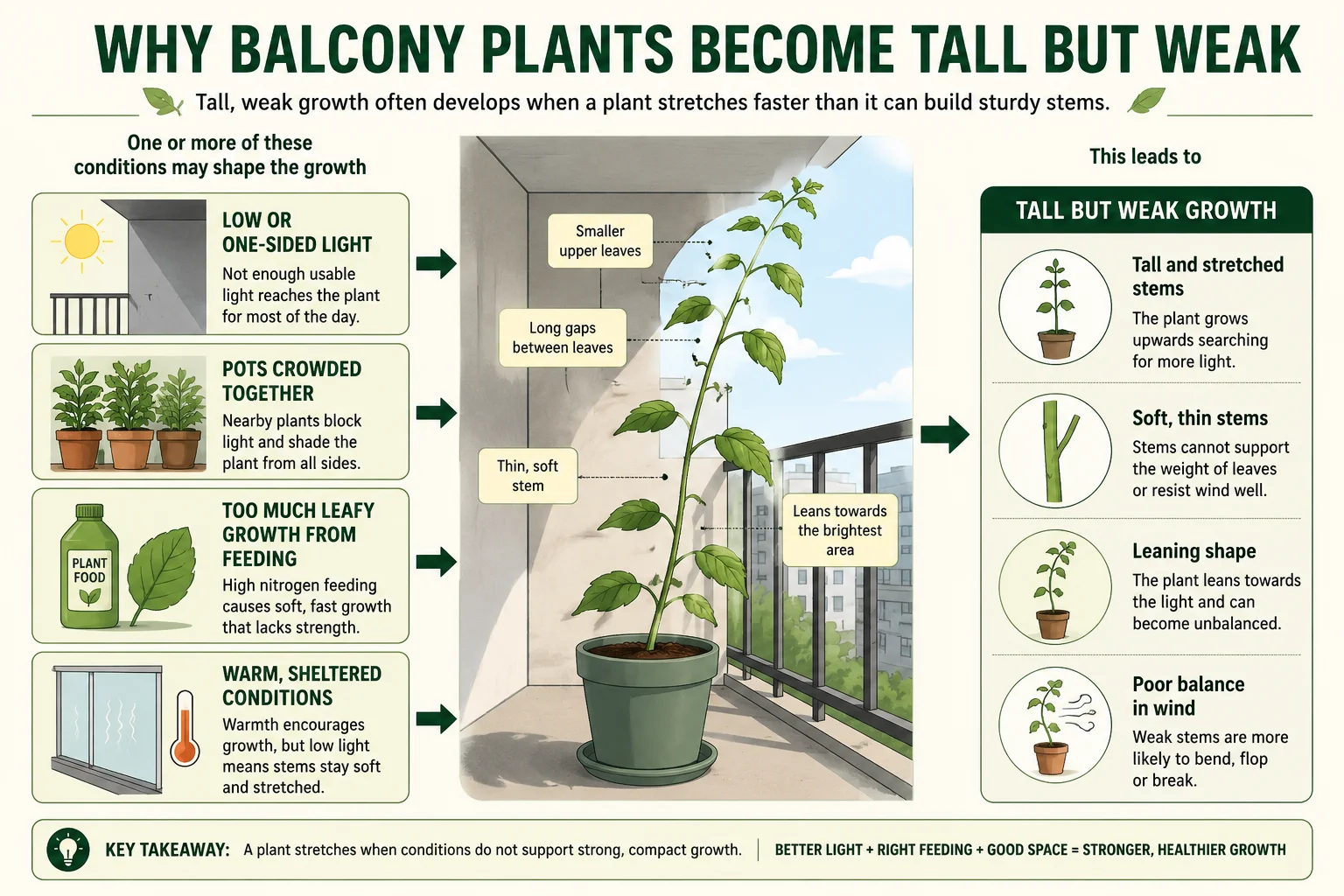
Tall, weak growth usually means the plant is stretching faster than it can build strong stems. Limited light is the most common reason, but crowded placement, excess nitrogen, warm sheltered conditions, root stress and sudden changes in sunlight can also affect how sturdy the new growth becomes.
Balconies make this problem more complicated because the brightest-looking area is not always receiving useful direct light. A balcony may feel open to a person while still being shaded for much of the day by the roof above, a neighbouring building, privacy screens or the balcony wall.
Balcony plants growing tall but weak are not necessarily unhealthy beyond recovery. Their shape often reflects the conditions around them rather than a lack of gardening skill. Understanding where the stretching comes from makes it easier to decide whether the plant needs more usable light, more space, steadier feeding or simply better support while new growth strengthens.
Signs a Balcony Plant Is Stretching Rather Than Thriving
A plant may be stretching for light when several of these signs appear together:
- Long spaces between one set of leaves and the next.
- A thin stem that bends under the weight of normal leaves.
- Growth leaning strongly towards the railing, window or open side.
- Smaller, paler or widely spaced new leaves.
- Fewer side branches and more upward growth.
Many balcony gardeners first notice the pattern after rotating a pot. The plant may briefly face a new direction, then begin leaning back towards the brighter side of the balcony within several days. That repeated lean is often a stronger clue than the plant’s height alone.
This article explains why thin, stretched growth develops in balcony containers, how to separate low-light stretching from other problems, and what the plant’s growth pattern can reveal about its position and care.
Why Balcony Plants Can Grow Tall Without Growing Strong
A plant uses light as both energy and information. When enough useful light reaches the leaves, the plant can usually produce shorter spaces between leaves, firmer stems and more balanced growth. When light is limited, some plants respond by extending their stems towards the brightest direction.
This stretching is often called leggy growth. The distance between one set of leaves and the next becomes longer, the stem remains narrow, and the plant may lean towards a window, railing opening or uncovered edge of the balcony.
On a balcony, this can happen even when the area does not look dark. Human eyes adjust easily to shade, but plants respond to the strength and duration of usable light. Bright indirect light under a deep balcony roof may feel pleasant while still being too weak for a sun-loving herb, vegetable or flowering plant.
Containers also limit the resources available for building new growth. A plant growing in a small pot may be trying to produce stems and leaves while dealing with restricted roots, uneven moisture and changing pot temperatures. The result can be growth that is fast in length but poor in strength.
What Most Leggy Plant Advice Misses
Common gardening advice often treats weak, stretched growth as a simple sign that a plant needs more sun. That explanation is useful, but it can be incomplete on an apartment balcony.
A plant may already be sitting in the sunniest available position, yet the light could arrive from one narrow angle for only a short part of the day. Nearby railings, walls and larger plants can also cast moving shadows. This creates a situation where the plant receives some direct sun but still spends most of the day reaching towards brighter light.
Moving the plant suddenly into strong afternoon sun is not always a simple solution. Leaves that formed in shade may be softer and less prepared for intense heat. A rapid change can replace stretching with leaf scorch, wilting or overheated potting mix.
Generic advice also tends to overlook wind. Gentle movement can encourage stems to develop more strength, but strong balcony wind can bend or damage an already weak plant. A very sheltered balcony may produce soft growth, while an exposed high-rise balcony may place more pressure on stems than they can handle.
Main Causes of Tall, Weak Balcony Growth
Not Enough Usable Light
Low or uneven light is the most common reason balcony plants become tall and skinny. The plant continues reaching upwards or sideways in search of brighter conditions, creating long sections of stem between leaves.
This is common on covered balconies, inward-facing balconies, lower-floor apartments and balconies shaded by nearby buildings. It can also happen when pots are placed behind solid railings or pushed against a wall where only the upper leaves receive good light.
The article on how to measure sunlight on a balcony can help clarify the difference between a balcony that looks bright and one that receives enough direct or useful light for a particular plant.
Plants Crowding and Shading Each Other
Small-space gardeners often group pots closely to fit more plants into a limited area. This can look attractive, but taller or broader plants may block light from reaching the plants behind them.
The shaded plant may start leaning through gaps or growing above its neighbours. Its upper growth can look healthy while the lower stem stays thin and bare. This is especially common when herbs, seedlings and vegetables are placed together at the same height.
Plant organisation matters because a few centimetres of height difference can change how much light reaches a small pot. The guide on organising pots for maximum sunlight explains how pot height and balcony position can create hidden shade.
Too Much Nitrogen for the Available Light
Fertiliser can encourage leafy growth, but the plant still needs enough light to support that growth. When a plant receives more nitrogen than it can use comfortably under its current light conditions, it may produce soft, fast stems and large but delicate leaves.
This does not mean fertiliser is always the problem. It is more often a mismatch between feeding and light. A plant growing in strong sun may use nutrients well, while the same feeding level in shade may produce softer and more stretched growth.
Warm, Sheltered Conditions
A covered or enclosed balcony can stay warmer than the outdoor air, especially near windows and walls. Warmth encourages some plants to keep growing, even when winter light or shaded conditions are too weak to support compact growth.
This combination of warmth and low light can create long, tender stems. The plant is receiving a signal to grow from the temperature, but it is not receiving enough energy from light to build sturdy growth.
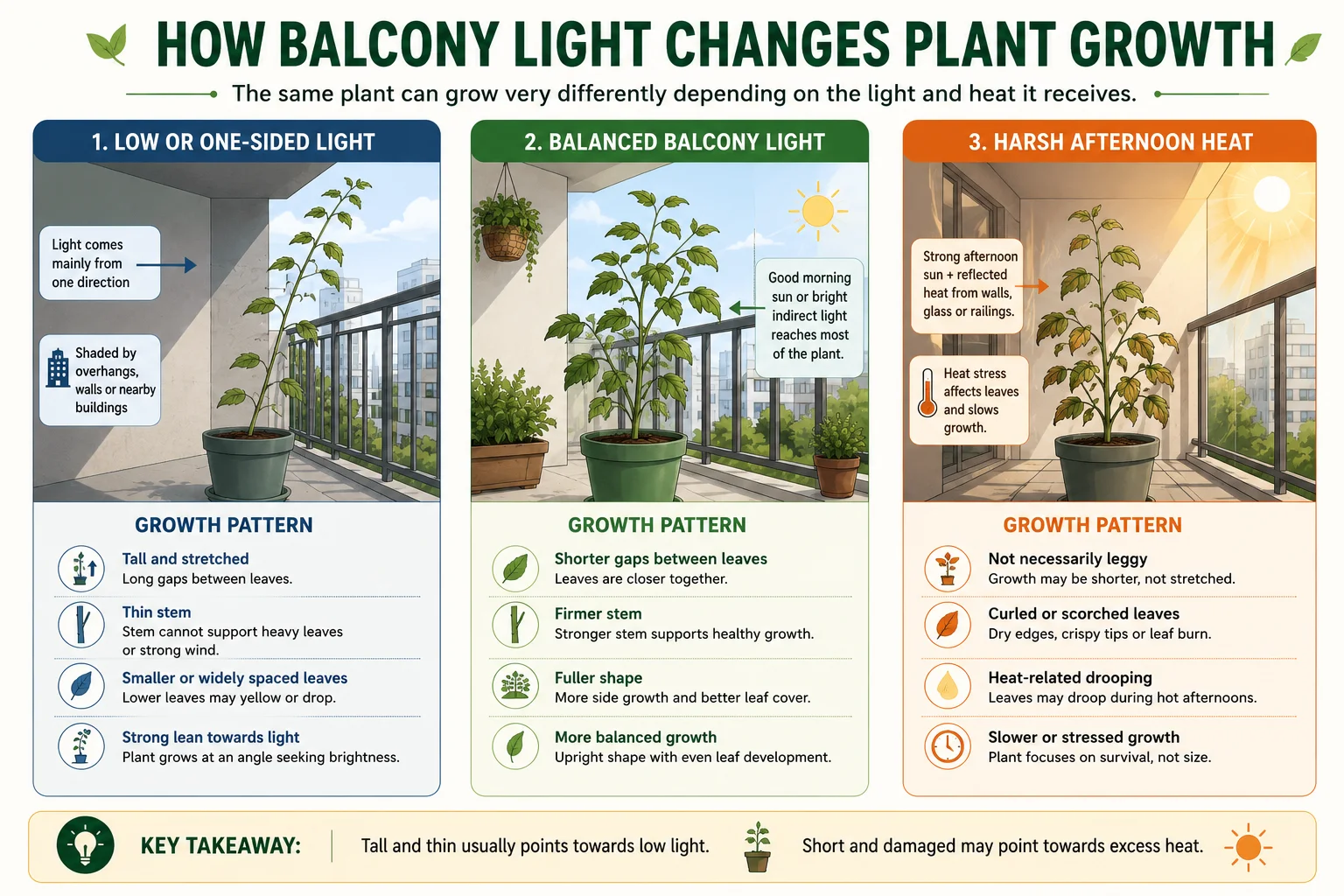
How Balcony Light Changes Plant Shape
The shape of the plant often gives more useful information than its height alone. A naturally climbing tomato, pea or vine can grow tall without being unhealthy. The concern is when the height comes with thin stems, wide gaps between leaves, leaning growth or an inability to support normal foliage.
A low-light plant often grows towards one clear direction. It may lean towards the open edge of the balcony or turn its leaves towards the brightest gap. New leaves may be smaller or paler, and older lower leaves may receive so little light that they stop contributing much energy.
In balanced light, the same type of plant is more likely to produce shorter gaps between leaves, stronger branching and a fuller shape. It may still lean slightly as the sun moves, but the whole plant does not appear to be escaping its position.
Harsh afternoon exposure creates a different pattern. Growth may be shorter rather than stretched, while leaves curl, wilt or develop dry edges. This distinction matters because a plant affected by reflected heat does not necessarily need even more sun. The guide on plants for balconies that receive reflected heat explains why bright and hot conditions are not always the same as balanced light.
When Light Is Not the Only Cause
A Pot That Is Too Small for the Plant
A crowded root system can affect the plant’s ability to supply water and nutrients evenly to new growth. The plant may continue extending upwards, but the stems and leaves can become less robust because the root space is struggling to keep up.
Pot size is not judged by height alone. A deep but very narrow container may still provide limited room for a broad root system. The article on how to choose pots for balcony gardening explains how plant size, drainage, stability and available balcony space work together.
Uneven Watering in Small Containers
Repeated drying and soaking can produce inconsistent growth. During a moist period, the plant may extend quickly. When the pot dries again, the new stem may not develop as evenly or firmly as it would under steadier conditions.
Small pots near railings are especially likely to dry faster because they receive more wind. Pots close to walls may stay moist for longer. Two plants watered at the same time can therefore experience very different moisture conditions.
Weak Seedling Growth Continuing Into Maturity
Some plants begin stretching while they are still seedlings. If they were raised indoors, behind glass or in a shaded nursery position, the first stem may already be long and thin before the plant reaches the balcony.
Later growth can become stronger, but the original lower stem may remain narrow. The article on why seedlings struggle after moving to a balcony covers the extra stress caused by sudden changes in wind, heat and sunlight.
Natural Growth Habit
Not every tall plant is leggy. Climbing beans, peas, cucumbers, tomatoes and many flowering vines naturally produce long stems. Some herbs also become taller as they prepare to flower.
The useful question is not simply whether the plant is tall. It is whether the stem thickness, leaf spacing and overall balance look normal for that type of plant.
Quick Signs to Compare
The table below can help separate common reasons for thin or weak balcony growth. These signs are not strict diagnoses, but they can make the pattern easier to understand.
| What You Notice | What It May Suggest | Why It Happens on a Balcony |
|---|---|---|
| Long gaps between sets of leaves | Low or uneven light | The plant extends its stem while searching for a brighter position. |
| Plant leans strongly towards the railing or open edge | One-sided light | Most usable light is arriving from one direction. |
| Fast growth with large, soft leaves | High nitrogen combined with limited light | Leafy growth develops faster than strong supporting tissue. |
| Lower stem is thin but newer upper growth is firmer | Earlier seedling stretching | The plant may have started life in weak indoor or nursery light. |
| Several plants lean in the same direction | Balcony-wide light pattern | A wall, roof, screen or nearby building may be blocking light. |
| Only one crowded pot becomes tall and weak | Local shading or root restriction | Nearby leaves, a small container or uneven moisture may affect that plant. |
| Stem is tall but firm, with normal leaf spacing | Natural growth habit | The plant may be a climber, vine or naturally upright variety. |
| Growth is short but leaves curl or scorch | Heat stress rather than low light | Reflected afternoon heat may be stressing the leaves and pot. |
What Different Plant Responses Can Mean
Herbs such as basil can become tall and sparse when light is low, but they can also grow upwards as they prepare to flower. A flowering stem usually looks more organised, with buds or smaller leaves near the top. Low-light stretching tends to affect the spacing and strength of the whole plant.
Vegetable seedlings often show the problem more clearly. Their first stems may become long, pale and unable to support the leaves. Because young plants have little stored energy, limited light can change their shape quickly.
Established indoor-style foliage plants may tolerate low light without collapsing, but their new growth can still become smaller, thinner or more widely spaced. The change may be gradual rather than dramatic.
Tomatoes and cucumbers naturally grow tall, so support is expected. However, very long gaps between leaves, poor branching and weak stems can still suggest that the plant is receiving less light than it prefers.
Practical Insights for Balcony Gardeners
The most helpful clues usually come from comparing the plant’s shape with its exact position, recent growth and the conditions around the pot.
- Long spaces between leaves often reveal stretching more clearly than height alone.
- Several plants leaning the same way usually point to one-sided balcony light.
- Soft, fast growth can reflect a mismatch between feeding and available light.
- A plant behind a solid railing may receive less light than one raised slightly higher.
- New growth may improve even when older stretched stems remain thin.
- Sudden exposure to harsh sun can create a new problem rather than solving the first one.
Small changes in height and position can matter on a balcony because the light often arrives through narrow openings. A pot placed on the floor, a low stand or a raised shelf may experience three different light patterns even when all three positions are only a short distance apart.
Common Misunderstandings
Tall growth is often mistaken for vigorous growth, while any weak stem is blamed entirely on watering. Both ideas can hide what the plant is actually responding to.
- “Fast growth means the plant is thriving.” Rapid upward growth can be a search for light rather than a sign of strength.
- “A bright balcony provides full sun.” Bright shade and direct sun create very different plant responses.
- “More fertiliser will strengthen the plant.” Extra feeding may produce softer growth when light remains limited.
- “Every tall plant is leggy.” Climbers and flowering plants may naturally produce long stems.
- “Moving straight into afternoon sun will fix it.” Shade-grown leaves may struggle with a sudden increase in heat and light.
- “A stake solves the cause.” Support can hold the plant upright, but it does not change the condition that produced weak growth.
Australian Balcony and Seasonal Context
In many Australian apartments, weak stretched growth becomes more noticeable during cooler months. The balcony may remain warm enough for some plants to keep producing new stems, while shorter days and lower sun angles reduce the amount of useful light reaching beneath the balcony roof.
During summer, the situation can change quickly. A position that was shaded in winter may receive stronger direct sun, while west-facing walls, concrete floors and glass railings can add reflected heat. This seasonal shift is one reason a permanent plant position does not always provide the same growing conditions throughout the year.
Coastal and high-rise balconies add wind to the picture. Soft stems may need protection from strong gusts, but a completely enclosed position can also create still, warm growth. The aim is not a perfect balcony climate. It is recognising which part of the plant’s shape is being influenced by light, warmth, wind and container conditions.
Balcony Haven Note: I have noticed that the brightest-looking corner of a balcony is not always the place where plants grow most strongly. A plant near the open edge may stay shorter and firmer, while one only a metre behind it stretches towards the same light. Every balcony has its own shadows, and those shadows can change as the season and sun angle change.
Frequently Asked Questions
Why are my balcony plants growing tall and skinny?
Tall, skinny growth usually develops when a plant stretches towards stronger light. It can also be influenced by crowding, warm sheltered conditions, excess nitrogen, root restriction or weak growth that began while the plant was still a seedling.
Can a plant receive sunlight and still become leggy?
Yes. A plant may receive a short period of direct sun but remain in weak or one-sided light for most of the day. The total duration, direction and strength of the light matter more than seeing a brief patch of sun on the leaves.
Will weak plant stems become stronger later?
New growth can become firmer when conditions improve, but older stretched sections may remain thin. The plant may still grow well, although taller varieties can continue to need support.
Does weak growth mean the plant needs fertiliser?
Not necessarily. Fertiliser can encourage more growth, but it cannot replace suitable light. When a plant is already growing quickly and softly, extra nitrogen may make the imbalance more noticeable.
Why is my plant leaning towards the balcony railing?
The railing side may be receiving the strongest usable light. This is common on covered balconies where the roof and rear wall block overhead light, leaving the open edge as the brightest direction.
Are tall tomato and cucumber plants always weak or leggy?
No. Tomatoes and cucumbers naturally produce long stems and usually need support. Leggy growth is more likely when the stems are unusually thin, leaf spacing is very wide, growth is pale, or the whole plant is reaching strongly towards one light source.
Final Thoughts
Balcony plants growing tall but weak are often responding to a mismatch between how quickly they are trying to grow and the conditions available to support that growth. Limited or one-sided light is the most common reason, but pot size, feeding, moisture, warmth, wind and earlier seedling growth can all influence the final shape.
The plant’s structure usually offers useful clues. Long gaps between leaves, strong leaning and soft stems point towards stretching, while compact growth with scorched or curled leaves suggests a different balcony problem.
It also helps to remember that older weak growth may not become completely thick and compact. Improvement may appear first in the newest leaves and stems. That gradual change can be more useful than expecting the whole plant to correct its shape immediately.
Balcony gardening rarely comes down to one perfect position or one fixed rule. Each pot sits within its own mix of shade, reflected heat, airflow and root space. Once those conditions are understood, tall and weak growth becomes less mysterious and much easier to respond to calmly.
A tall plant is not automatically a strong plant. On a balcony, the direction and quality of the light often shape the plant more than the amount of growth you can see.
Leave a Reply