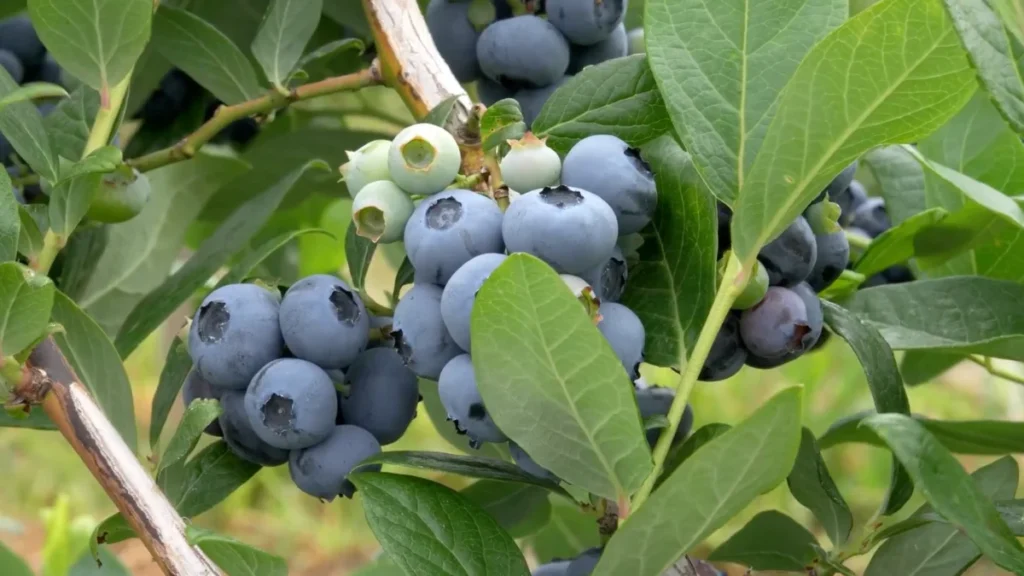
Balcony-friendly dwarf fruit plants can make fruit growing feel possible in an apartment, especially when there is no garden, no backyard, and only a few pots to work with. But fruit plants also raise more questions than herbs or leafy greens because they need enough light, steady moisture, and time before they produce anything useful.
Balcony-friendly dwarf fruit plants include strawberries, dwarf lemons, dwarf limes, dwarf mandarins, dwarf blueberries, and some compact dwarf peaches or nectarines. These plants are better suited to pots and apartment balconies because they stay smaller, use less root space, and are easier to manage than full-size fruit trees.
The main challenge is not only the plant variety. On a balcony, fruit plants also deal with wind, reflected heat, shallow containers, changing light, and limited room for roots. These small-space conditions can affect flowering and fruiting faster than many beginners expect.
This article explains which dwarf fruit plants are most realistic for balconies, how to match them to your space, what pot sizes make sense, and how long different fruit plants usually take before they start rewarding your patience.
Why Fruit Plants Behave Differently on Balconies
Fruit plants behave differently on balconies because they are growing in containers instead of open ground. In a garden, roots can spread wider and deeper to find water, nutrients, and cooler soil. In a balcony pot, everything the plant needs must come from one small space.
This matters because fruiting plants need steady growth before they can flower and produce fruit. A plant that dries out too often, overheats in a small pot, or sits in soggy soil may stay alive but struggle to fruit well.
Balconies also create their own small microclimates. A pot beside a glass door may heat up quickly. A railing planter may dry out faster because of wind. A sheltered corner may stay damp for longer than expected. These small differences can change how fruit plants grow even on the same balcony.
If your balcony dries out quickly, this guide on why balcony plants dry out overnight may help explain why moisture disappears faster in small exposed spaces.
Why Dwarf Fruit Plants Suit Apartment Balconies Better
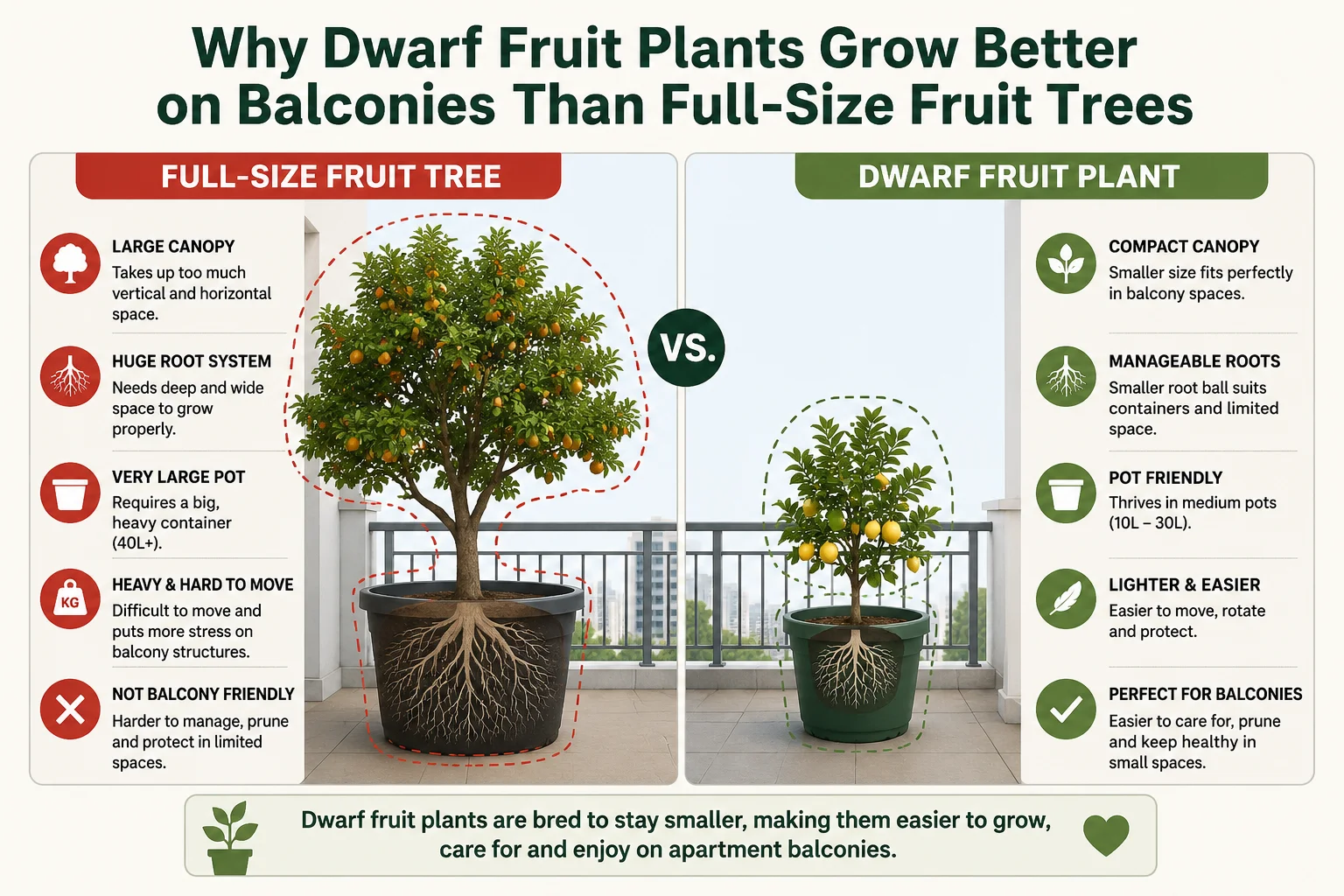
Dwarf fruit plants are usually better for balconies because they are bred or selected to stay smaller. They do not try to become large backyard trees, so they are easier to keep in pots and easier to place in small spaces.
A full-size fruit tree may need a large root system, wide canopy, and heavy container to stay healthy. That can be difficult or unrealistic on many apartment balconies. A dwarf fruit plant still needs care, but its natural size is closer to what a balcony can support.
Dwarf fruit plants also make observation easier. It is easier to notice dry soil, yellow leaves, wind stress, or slow flowering when the plant is compact and close to eye level.
Best Balcony-Friendly Dwarf Fruit Plants
The best balcony-friendly dwarf fruit plants are the ones that stay compact, tolerate containers, and still have a realistic chance of fruiting in small spaces. Some fruit plants are naturally easier than others.
| Fruit Plant | Balcony Suitability | Best For | Realistic Expectation |
|---|---|---|---|
| Strawberries | Very good | Small pots, narrow planters, railing boxes | One of the easiest fruit plants for beginners and small balconies. |
| Dwarf lemon | Good | Bright balconies with room for a larger pot | Slow but rewarding if light, drainage, and pot size are suitable. |
| Dwarf lime | Good | Warm, bright balconies | Similar to dwarf lemon, but still needs steady light and care. |
| Dwarf mandarin | Good | Balconies with strong light and protected airflow | Can work well but usually needs patience before strong fruiting. |
| Dwarf blueberry | Good | Morning sun, bright shade, and medium pots | Compact and tidy, but prefers consistent moisture and acidic potting mix. |
| Dwarf peach or nectarine | Moderate | Larger balconies with strong sun | Possible, but less beginner-friendly than strawberries, citrus, or blueberries. |
Strawberries are the easiest starting point because they grow quickly, have shallow roots, and fit well in small containers. If strawberries are your main interest, this article on strawberries in narrow balcony planters explains why they suit tight spaces so well.
Dwarf citrus plants are also popular because they look attractive all year and can stay productive in pots. If you are mainly interested in lemons, this guide on whether lemon trees can grow in small balcony pots is a useful next read.
Blueberries are another realistic option for apartment balconies, especially where the space receives gentle morning sun. This related article on growing a blueberry bush on a balcony looks more closely at what blueberries need in containers.
Choosing Fruit Plants Based on Balcony Size
Balcony size matters because fruit plants do not only need floor space. They also need pot width, root space, airflow around the leaves, and enough room for watering without making the balcony hard to use.
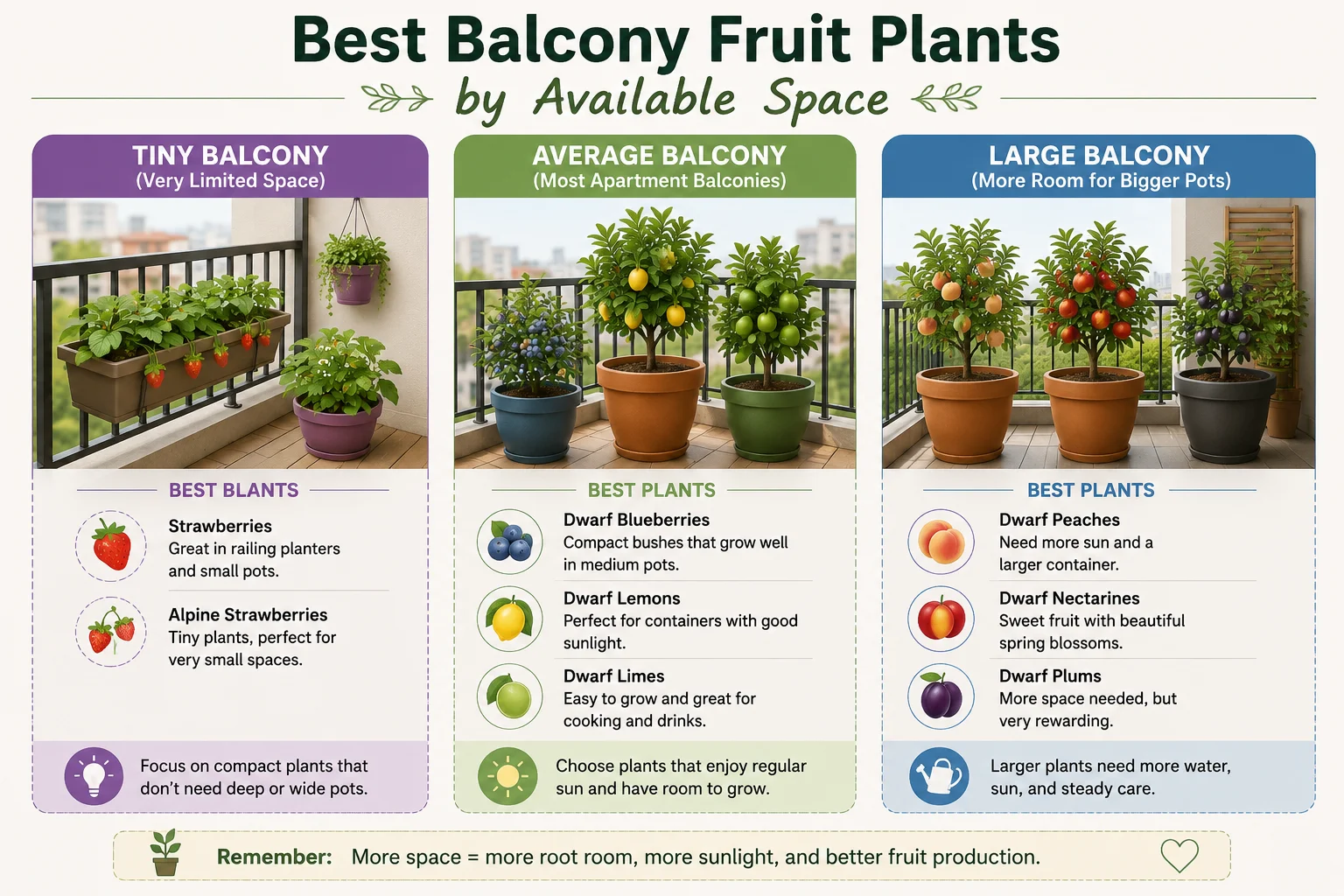
On a tiny balcony, strawberries are usually the most realistic fruit plant. They can grow in railing planters, troughs, hanging baskets, or narrow containers. They do not need the same heavy pot as a dwarf tree.
On an average apartment balcony, dwarf blueberries and dwarf citrus become more realistic. These plants need bigger containers, but they can still stay tidy if placed carefully near the brightest part of the balcony.
On a large balcony, compact stone fruit such as dwarf peach or dwarf nectarine may be worth considering. These plants need more sun, more pot space, and more patience, so they are better treated as a special project rather than a first choice.
Recommended Pot Sizes for Dwarf Fruit Plants
Pot size strongly affects how well fruit plants grow on balconies. A pot that is too small dries out quickly and gives the roots little room. A pot that is too large can become heavy, difficult to move, and slow to dry in shaded or cool conditions.
The table below gives practical starting points for common balcony fruit plants.
| Fruit Plant | Minimum Pot Size | Better Pot Size | Root Style | Difficulty |
|---|---|---|---|---|
| Strawberries | 3–5 litres | 5–10 litres | Shallow roots | Easy |
| Dwarf blueberry | 20 litres | 30–40 litres | Medium root system | Moderate |
| Dwarf lemon, lime, or mandarin | 30 litres | 40–60 litres | Deeper container roots | Moderate |
| Dwarf peach or nectarine | 40 litres | 60+ litres | Deeper and wider roots | Advanced |
These sizes are not strict rules, but they help show the difference between small fruit plants and dwarf fruit trees. For more general container depth guidance, this article on the best soil depth for balcony vegetable pots explains why root depth matters so much in small spaces.
How Much Sun Do Balcony Fruit Plants Need?
Most fruit plants need more light than leafy plants because producing flowers and fruit takes extra energy. A fruit plant may grow leaves in lower light, but it may not produce much fruit unless the balcony is bright enough.
Many beginners mistake healthy green leaves for successful fruit production, but fruit plants often need stronger light to flower and set fruit consistently.
Strawberries and blueberries can often cope with gentler light than citrus or stone fruit. They usually suit balconies with morning sun, bright shade, or filtered light. Dwarf citrus usually prefers stronger light and performs best where the balcony receives several hours of direct or bright sun.
Balcony direction makes a difference. East-facing balconies can be good for many fruit plants because they often receive morning sun without the harshest afternoon heat. North-facing balconies may work if they are bright and open. South-facing or shaded balconies can be more difficult for fruiting plants, especially if there is no direct sun at all.
If your balcony receives limited light, this article on gardening on balconies with no direct sun may help you decide whether fruit plants are realistic or whether leafy and shade-tolerant plants are a better fit.
Which Dwarf Fruit Plants Produce Fruit the Fastest?
One of the easiest ways to avoid disappointment is to understand fruiting time before choosing the plant. Some balcony fruit plants reward patience quickly, while others grow slowly for a long time before they produce much.
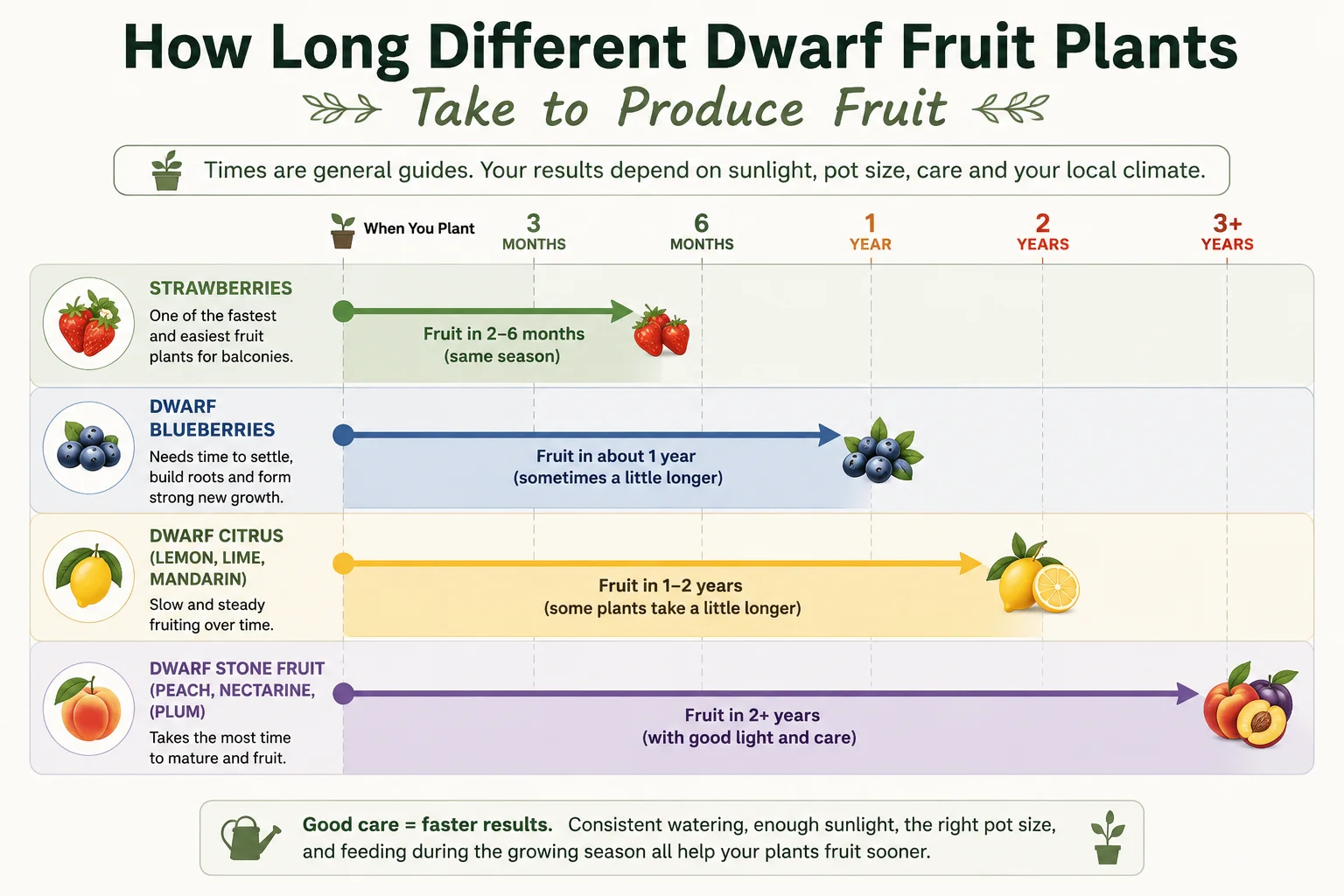
Strawberries are usually the fastest fruiting option for balconies. They can produce fruit within months when the season, light, and watering are suitable. This makes them a good choice for beginners, children, and small-space gardeners who want visible progress.
Blueberries usually take longer. A young plant may need time to settle into its pot before producing a useful harvest. Dwarf citrus can also take one to two years or more depending on the plant size when bought, the season, and how stable the balcony conditions are.
Dwarf stone fruit often takes the most patience. These plants can be beautiful and productive, but they usually need more sun, larger pots, and a stronger growing setup than many small balconies can provide.
Practical Tips for Growing Fruit on Balconies
Fruit plants usually respond best when balcony conditions stay steady. The goal is not to create a perfect garden, but to reduce the stress that small containers often create.
- Start with one or two fruit plants instead of filling the balcony too quickly.
- Choose the brightest realistic spot before choosing the plant.
- Use pots with drainage holes so roots are not sitting in water.
- Protect taller fruit plants from strong wind where possible.
- Expect slower growth in winter, heatwaves, or shaded periods.
- Check pot weight and balcony space before choosing larger dwarf trees.
Fruit plants also need more patience than many herbs. A slow month does not always mean something is wrong. Sometimes the plant is simply adjusting to light, temperature, pot size, or season.
Common Mistakes With Balcony Fruit Plants
Most balcony fruit problems come from expecting a pot-grown plant to behave like a garden tree. The plant may be healthy, but the balcony may limit how fast it grows or how much fruit it can carry.
- Choosing a full-size fruit tree instead of a dwarf or compact variety.
- Using a pot that dries out too quickly for a fruiting plant.
- Expecting heavy harvests in the first season.
- Putting citrus or stone fruit in a balcony with too little light.
- Moving plants too often between sun and shade.
- Forgetting that wind can dry flowers, leaves, and potting mix.
Another common mistake is treating every fruit plant the same. Strawberries, blueberries, citrus, and dwarf stone fruit do not all want the same pot size, soil moisture, or sunlight level.
Australian Balcony Conditions and Seasonal Reality
In Australian apartments, balcony fruit plants often deal with stronger sun, hotter surfaces, and drying winds. Concrete, tiles, glass doors, and walls can reflect heat back onto pots, especially during summer.
This can make a fruit plant slow down during very hot periods. Leaves may look tired, flowers may drop, or fruiting may pause until conditions become milder again. That does not always mean the plant has failed. It may simply be reacting to heat stress.
Winter can bring the opposite problem. Growth may slow because light is weaker, days are shorter, and potting mix stays wet longer. For balcony fruit plants, seasonal pauses are normal.
Balcony Haven Note: I have noticed that fruit plants on balconies often respond more to pot size, wind, and heat than to the plant label alone. Two people can buy the same dwarf plant and get different results because one balcony may be brighter, hotter, or more exposed than the other.
Frequently Asked Questions
What fruits grow best on apartment balconies?
Strawberries, dwarf citrus, and dwarf blueberries are usually the most realistic fruit plants for apartment balconies. They stay compact, grow in pots, and are easier to manage than full-size fruit trees.
Can dwarf fruit trees really grow in pots?
Yes, dwarf fruit trees can grow in pots when the container is large enough and the balcony receives enough light. They usually grow more slowly than garden trees, but that slower growth can suit small spaces.
What is the easiest fruit plant for a small balcony?
Strawberries are usually the easiest fruit plant for a small balcony. They have shallow roots, fit in narrow planters, and can produce fruit faster than most dwarf fruit trees.
Do balcony fruit plants need full sun?
Many fruit plants prefer strong light, but not all need all-day sun. Strawberries and blueberries can cope with gentler light than citrus or stone fruit, while dwarf citrus usually needs a brighter balcony to fruit well.
Can fruit plants survive windy balconies?
Some fruit plants can survive windy balconies, but strong wind can dry leaves, flowers, and potting mix quickly. Compact plants usually cope better than tall, top-heavy fruit trees.
How long do dwarf fruit plants take to produce fruit?
Strawberries may fruit within months, while blueberries and dwarf citrus often take longer. Dwarf stone fruit can take even more patience, especially when grown in balcony pots.
Final Thoughts
Balcony-friendly dwarf fruit plants make fruit growing possible in apartments, but the best choice depends on the space, light, pot size, and patience available. A small balcony may suit strawberries beautifully, while a brighter and wider balcony may support dwarf citrus or blueberries.
The most helpful way to choose is to match the plant to the balcony instead of forcing the balcony to behave like a garden. Fruit plants in pots can still be healthy and rewarding, but they usually grow within smaller limits.
Start with a fruit plant that fits your real conditions, observe how it responds, and adjust slowly. Balcony fruit growing is less about perfect harvests and more about learning what your small space can realistically support.
Leave a Reply